
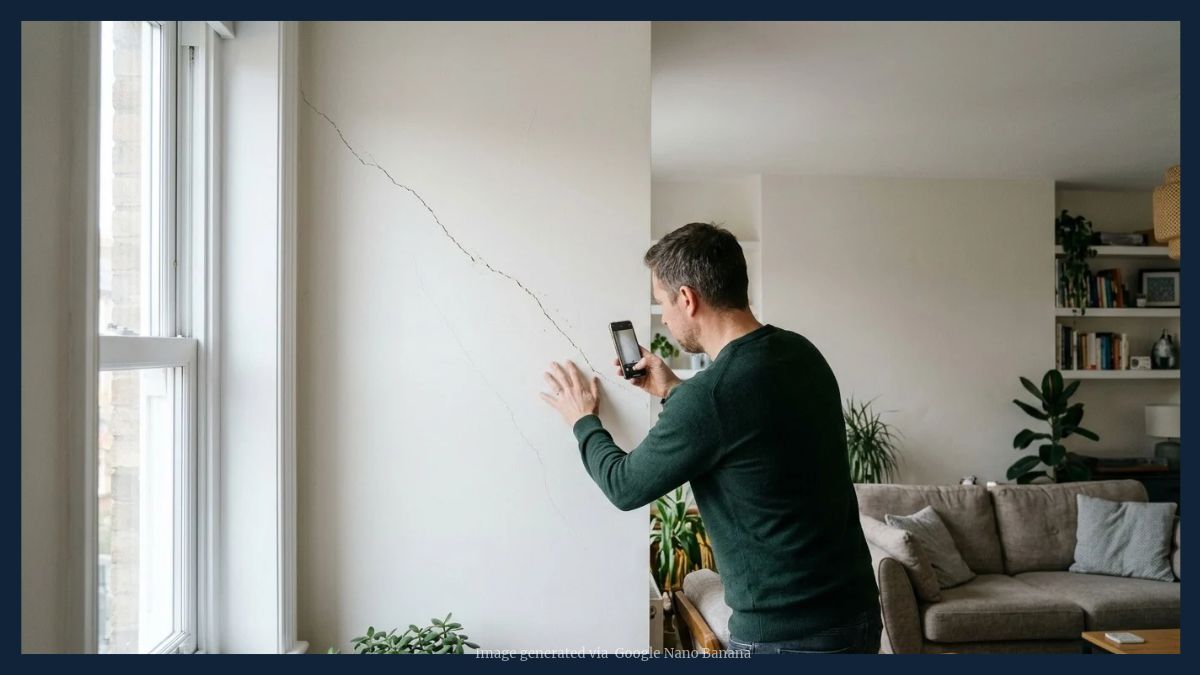
Cracks in interior walls can develop because of normal building movement, drying materials, temperature and humidity changes, poor drywall installation, foundation settlement, or moisture damage.
- Normal settling: Small cracks can appear as a building settles and construction materials adjust.
- Drywall or plaster shrinkage: Joint compound, plaster, and other finishing materials can shrink as they dry.
- Temperature and humidity changes: Wood framing and other building materials expand and contract as conditions change.
- Poor drywall installation: Weak joints, insufficient joint compound, or improper fastening can cause cracks.
- Moisture damage: Leaks and persistent dampness can weaken wall finishes and cause cracking.
- Foundation movement: Uneven settlement or other structural movement can produce wider, diagonal, or recurring cracks.
- Structural stress: Changes in loads or movement around doors, windows, and supporting walls can cause cracking.
Not every wall crack is a structural warning. However, growing cracks, noticeable wall displacement, or cracks accompanied by other signs of movement should be professionally assessed before cosmetic repairs are attempted.
Common reasons your interior walls are cracking
Interior walls are made from materials that can move, shrink, expand, and deteriorate over time. Even small changes in the building’s structure or indoor environment can create enough stress to produce visible cracks.
Here are the most common causes.
1. Your house is settling
Some movement is normal as a building adjusts to its surroundings. Soil conditions, construction materials, and changes in moisture can all influence how a house settles.
As the foundation and framing adjust, small amounts of movement can place stress on interior wall finishes.
This may cause cracks to appear in drywall, plaster, or the joints between different wall sections.
Settlement-related cracks are more likely to be minor when they are narrow, stable, and isolated. However, uneven or ongoing foundation movement can produce more noticeable damage.
Signs that settlement may be contributing to wall cracks:
- Hairline cracks appear in several areas.
- Cracks develop near door or window openings.
- Previously repaired cracks reopen.
- Some cracks become longer or wider over time.
- Doors or windows become difficult to open or close.
- Floors develop noticeable slopes or uneven areas.
What to do:
Monitor the cracks rather than immediately covering them with filler.
Take photographs, record their locations, and measure their approximate width. If the cracks remain stable and there are no other warning signs, they may be cosmetic.
If they continue to grow or appear alongside other signs of movement, arrange an assessment by a qualified building professional or structural engineer.
2. Drywall or plaster is shrinking as it dries
Drywall joint compound and plaster are used to create smooth wall surfaces. These materials can shrink as they dry, particularly when applied too thickly or under unsuitable conditions.
When the material shrinks, small cracks may develop along the finished surface.
This is especially common around joints, corners, and areas where repairs have been made.
In newer homes, minor finishing cracks may also appear as construction materials dry and adjust during the early stages of occupancy.
Signs of shrinkage-related cracks:
- Thin cracks appear along drywall seams.
- Small cracks develop around repaired areas.
- The damage is limited to the surface finish.
- Cracks remain narrow and do not noticeably spread.
- There are no accompanying signs of structural movement.
What to do:
If the crack is clearly limited to the wall finish and remains stable, it may be repaired with suitable joint compound or plaster repair material.
However, if the same crack repeatedly returns after repairs, investigate whether building movement, loose drywall, or another underlying problem is responsible.
3. Temperature and humidity changes are affecting building materials
Building materials respond to changes in temperature and moisture.
Wood framing can expand when it absorbs moisture and contract as it dries. Other materials, including plaster and drywall finishes, also respond to environmental changes.
When connected materials move at different rates, stress can develop around joints and corners.
This can cause small cracks to appear, particularly in areas where drywall meets ceilings, windows, doors, or other materials.
Signs of temperature- or humidity-related cracking:
- Cracks appear or become more noticeable during certain seasons.
- Small gaps develop near wall and ceiling junctions.
- Cracks appear where different materials meet.
- The damage is relatively narrow and does not involve visible wall displacement.
What to do:
Maintain reasonably consistent indoor temperature and humidity conditions where practical.
If you notice recurring cracks, check whether they change during seasonal weather conditions. Photographing them at regular intervals can help establish whether the movement is temporary or continuing.
Persistent or widening cracks should not automatically be attributed to seasonal changes. Other causes may need investigation.
4. The drywall was installed or finished incorrectly
The way drywall is installed can influence whether cracks develop later.
Drywall panels are typically attached to framing, with joints covered by tape and joint compound. If the panels are not properly secured or the joints are poorly finished, cracks can appear.
Possible installation problems include:
- Insufficient drywall fasteners.
- Incorrectly positioned fasteners.
- Missing or poorly applied joint tape.
- Inadequate joint compound.
- Poorly finished inside or outside corners.
- Movement between drywall panels.
- Improper framing support.
These defects can cause cracks even when the home’s foundation and structural framing are in good condition.
Signs of drywall installation problems:
- Cracks follow straight lines along panel joints.
- Cracks repeatedly appear in the same repaired areas.
- Small cracks form around drywall fasteners.
- Sections of drywall feel loose or move when lightly pressed.
- The damage is concentrated around poorly finished corners or seams.
What to do:
A drywall professional can determine whether the crack is limited to the joint compound or whether the panels themselves need to be refastened or replaced.
Simply applying more filler may not provide a lasting repair if the underlying joint continues moving.
5. Moisture is damaging the wall
Water damage is another possible cause of interior wall cracks.
When water enters a wall, it can affect drywall, plaster, joint compound, insulation, and wooden framing.
Persistent moisture may weaken the wall finish, cause materials to swell or deteriorate, and contribute to cracking or separation.
Common sources include:
- Leaking plumbing pipes.
- Roof leaks.
- Water entering through exterior walls.
- Poorly sealed windows.
- Condensation inside wall cavities.
- Leaking air-conditioning drain lines.
- Water intrusion from bathrooms or other wet areas.
Signs of moisture-related wall damage:
- Cracks appear alongside water stains.
- Paint begins bubbling, peeling, or blistering.
- The wall feels soft or unusually damp.
- Musty odors develop.
- Mold or dark discoloration appears.
- The damaged area becomes larger after rainfall or plumbing use.
What to do:
Find and address the source of moisture before repairing the wall.
For example, if the crack is below a bathroom pipe or near a window, inspect the surrounding area for signs of water entry.
If you suspect a hidden leak, arrange a plumbing or moisture inspection. Do not simply repaint or fill a damp wall because the damage may return.
If mold is present, follow appropriate moisture-remediation guidance rather than covering it with paint.
6. The foundation is moving unevenly
Foundation movement is a more serious potential cause of interior wall cracks.
A foundation may move when the soil beneath or around it changes, loses support, expands, contracts, or becomes saturated.
If one part of the building moves differently from another, stress can develop in the walls above it.
This is sometimes called differential settlement.
Possible contributing factors include:
- Poor soil conditions.
- Changes in soil moisture.
- Inadequate foundation support.
- Poor drainage around the property.
- Leaking underground water or drainage pipes.
- Nearby excavation or construction.
- Expansive soils that swell and shrink with moisture changes.
Not every foundation-related crack is dangerous, but ongoing movement can damage finishes and, in more serious cases, affect structural components.
Signs that foundation movement may be involved:
- Diagonal cracks appear near door or window corners.
- Cracks become progressively wider.
- Similar cracking appears in several rooms.
- Interior cracks correspond with visible exterior cracks.
- Doors and windows begin sticking.
- Floors become noticeably uneven.
- Gaps develop between walls, ceilings, or floors.
What to do:
Do not treat a potentially active foundation crack as a simple decorating problem.
Have the property assessed by a qualified structural engineer or other appropriately qualified building professional. They can investigate the movement, determine whether the foundation is involved, and recommend suitable repairs.
7. Structural stress is affecting the wall
Walls can crack when building components experience more stress than their finishes can accommodate.
This may happen because of changes in structural loads, damaged framing, inadequate support above an opening, or movement in connected building components.
For example, a wall may develop cracks after a major renovation if a supporting wall was altered without appropriate structural design.
Other possible contributing factors include:
- Changes to load-bearing walls.
- Poorly supported openings.
- Damaged wall framing.
- Roof or floor movement.
- Excessive loads placed on structural components.
- Deterioration of supporting materials.
Signs of possible structural stress:
- Cracks appear around several door or window openings.
- A wall begins bowing or bulging.
- Cracks extend across large sections of the wall.
- There is visible separation between structural components.
- Cracks appear after major renovation or construction work.
- The wall or ceiling shows noticeable deformation.
What to do:
If you suspect structural damage, arrange a professional assessment before attempting repairs.
Do not remove wall sections, add supports, or alter structural components based on the appearance of a crack alone.
What different types of wall cracks may mean
The direction and shape of a crack can provide useful clues about what is happening behind the wall.
However, no crack pattern can establish the cause on its own. A professional assessment may be necessary, particularly when the damage is extensive or changing.
Hairline cracks
Hairline cracks are very narrow surface cracks that may appear in drywall, plaster, or paint.
They commonly result from drying materials, minor movement, or changes in temperature and humidity.
They are often cosmetic when they remain stable and are not accompanied by other signs of damage.
What to check:
- Is the crack very narrow?
- Does it follow a drywall joint?
- Has it remained unchanged?
- Is there any nearby moisture damage?
- Are doors, windows, and floors functioning normally?
A stable hairline crack may only need a surface repair.
Vertical cracks
Vertical cracks run up and down the wall.
They can develop because of material shrinkage, settlement, drywall joint movement, or separation between connected building materials.
A narrow, stable vertical crack is not automatically a structural defect.
However, a wider or growing vertical crack, particularly one accompanied by displacement or other signs of movement, deserves further investigation.
What to check:
- Whether the crack is getting wider.
- Whether one side of the crack sits higher than the other.
- Whether the crack extends from the ceiling to the floor.
- Whether similar damage appears on the opposite side of the wall.
Horizontal cracks
Horizontal cracks run across the wall from side to side.
Their significance depends on the type of wall and what is happening behind it.
A crack along a drywall seam may result from finishing or installation problems. However, horizontal cracks in structural masonry or basement foundation walls can indicate pressure, wall movement, or other structural concerns.
What to check:
- Whether the wall is bowing or bulging.
- Whether the crack extends across a large area.
- Whether the crack is widening.
- Whether there is moisture or water pressure behind the wall.
Horizontal cracks in foundation walls, especially when accompanied by inward movement, should be professionally assessed.
Diagonal cracks
Diagonal cracks run at an angle across the wall.
They may develop near doors and windows, where openings create areas of concentrated stress.
Some are caused by minor movement in the wall finish. Others can indicate differential settlement or structural stress.
What to check:
- Whether the crack starts at a door or window corner.
- Whether it becomes wider toward one end.
- Whether it continues through the surrounding wall.
- Whether similar cracks appear on exterior walls.
- Whether doors or windows near the crack have become difficult to operate.
Growing diagonal cracks around openings deserve closer attention.
Stair-step cracks
Stair-step cracks follow a stepped pattern, often along the joints between masonry blocks or bricks.
This pattern is more commonly associated with masonry walls than ordinary drywall surfaces.
It can occur when different parts of a wall move relative to one another.
What to check:
- Whether the crack follows mortar joints.
- Whether it is visible on an exterior masonry wall.
- Whether it is widening.
- Whether nearby walls, doors, or windows show signs of movement.
Stair-step cracks that are growing or accompanied by displacement should be inspected by a qualified professional.
How to tell if a wall crack is cosmetic or structural
The difference between cosmetic and structural cracking is not always obvious.
A narrow crack may look harmless but could be associated with ongoing movement. A wider crack may be limited to damaged plaster or poorly installed drywall.
Rather than relying on width alone, consider several factors together.
| What to examine | More consistent with a cosmetic issue | More concerning signs |
|---|---|---|
| Width | Very narrow and stable | Noticeably widening or several millimeters across |
| Direction | Fine cracks along drywall joints | Growing diagonal, horizontal, or stepped patterns |
| Location | Isolated surface areas or corners | Around multiple openings or across several walls |
| Progression | Remains unchanged | Becomes longer or wider over time |
| Wall condition | Flat and firmly attached | Bulging, bowing, or visibly displaced |
| Nearby features | Doors and windows operate normally | Doors stick, windows jam, or gaps develop |
| Moisture | No dampness or staining | Water stains, soft surfaces, or persistent dampness |
The U.S. Department of Housing and Urban Development’s rehabilitation guidance notes that stationary hairline cracks in certain wall materials are often nonstructural, while wider cracks may reflect settlement or displacement. This is a useful distinction, but the significance of a crack depends on the material and the surrounding conditions.
Important: Do not use a single width measurement as a definitive structural safety test. The crack’s behavior, location, wall construction, and associated symptoms all matter.
How to inspect and monitor cracks in your interior walls
If you discover a crack, document its condition before attempting to repair it.
Monitoring can help you determine whether the damage is stable or changing.
Step 1: Photograph the crack
Take a clear photograph that shows the entire crack and its surrounding area.
Include a ruler or measuring scale beside it so you can compare its size later.
Record the date and the room where the crack appears.
Step 2: Measure its approximate width
Use a ruler or suitable crack-width gauge to estimate how wide the crack is.
Record the measurement in millimeters or inches.
Avoid assuming that a narrow crack is harmless simply because of its size.
Step 3: Mark the crack’s endpoints
If the crack is small and there are no signs of serious movement, lightly mark its endpoints with a pencil.
This makes it easier to see whether it becomes longer.
Do not mark or disturb a wall that appears unstable or significantly displaced.
Step 4: Check for nearby warning signs
Inspect the surrounding area for:
- Additional cracks.
- Gaps between walls and ceilings.
- Doors or windows that stick.
- Uneven floors.
- Bulging or bowing surfaces.
- Water stains or dampness.
- Similar damage on exterior walls.
These observations can help establish whether the problem is isolated or part of a larger pattern.
Step 5: Compare the condition over time
Take another photograph and measurement after a reasonable monitoring interval, such as a few weeks.
If the crack is changing quickly, do not wait for the next scheduled check. Arrange a professional assessment.
If the crack remains stable, has no associated warning signs, and appears limited to the wall finish, a cosmetic repair may be appropriate.
How to repair cracks in interior walls
The correct repair depends on the material and the underlying cause.
A cosmetic repair will not solve foundation movement, a leaking pipe, or a loose drywall installation.
Always address the cause before repairing the visible crack.
Repairing small hairline cracks
If the crack is narrow, stable, and limited to the wall finish, you may be able to repair it yourself.
Typical steps include:
- Remove loose paint or damaged finishing material around the crack.
- Clean away dust and debris.
- Apply a suitable filler or joint compound.
- Allow the material to dry according to the product instructions.
- Sand the repaired area lightly if required.
- Apply primer where appropriate.
- Repaint the surface.
Use a repair product suitable for the wall material.
Repairing cracks along drywall joints
If the crack follows a drywall seam, simply filling the visible line may not provide a lasting repair.
The joint tape may have detached, or the drywall panels may be moving.
A proper repair may involve:
- Removing loose joint compound and damaged tape.
- Checking that the drywall panels are securely attached.
- Refastening loose panels where appropriate.
- Applying new joint tape.
- Covering the joint with suitable joint compound.
- Allowing the compound to dry and sanding the surface.
- Priming and repainting.
If the panels are moving because of framing or structural problems, those issues should be addressed first.
Repairing cracks in plaster walls
Older homes may have plaster walls rather than modern drywall.
Plaster can develop cracks because of shrinkage, movement, moisture, or separation from the underlying support.
Small, stable cracks may be repaired with a compatible plaster repair product.
However, if large sections of plaster are loose, bulging, or separating from the wall, the underlying support may need attention.
Avoid simply filling a crack in plaster that is visibly detached or unstable.
Do not repair potentially structural cracks before inspection
If a crack is growing, significantly wide, accompanied by wall displacement, or associated with sticking doors and uneven floors, have it assessed before applying filler or paint.
Covering the crack may make it harder to monitor the original damage.
A structural engineer or qualified building professional can determine whether the wall needs structural repair, foundation work, or another intervention.
When should you call a professional?
Some interior wall cracks are minor decorating issues. Others may indicate water damage or movement that requires a more detailed inspection.
- A crack continues to grow or widen.
- Several walls develop cracks around the same time.
- A diagonal crack appears near a door or window and keeps spreading.
- A horizontal crack appears in a basement or structural masonry wall.
- The wall is bowing, bulging, or visibly displaced.
- Doors and windows become difficult to open or close.
- Floors become noticeably uneven.
- Cracks appear alongside persistent moisture or water stains.
- A repaired crack repeatedly reopens.
- Cracking begins after significant renovation or structural alterations.
If a wall appears unstable, is moving visibly, or shows signs of imminent failure, keep people away from the affected area and seek urgent professional assistance.
Which professional should you contact?
The right professional depends on what you suspect is causing the crack.
| Suspected problem | Professional to contact |
|---|---|
| Small drywall or plaster damage | Drywall or plaster repair contractor |
| Water stains or damp wall surfaces | Plumber, leak detection specialist, or moisture professional |
| Cracks with possible foundation movement | Structural engineer or qualified foundation specialist |
| Cracks after renovation or wall removal | Structural engineer or appropriately qualified building professional |
| Loose or poorly installed drywall | Drywall contractor |
| Cracks in a basement foundation wall | Structural engineer or foundation specialist |
For possible structural problems, an independent structural engineer can provide an assessment before you commit to a particular repair proposal.
Should you hire a professional?
If the crack is small, stable, and clearly limited to the paint, plaster, or drywall finish, a DIY repair may be reasonable.
However, cracks that keep returning or appear alongside other signs of movement should not be treated as ordinary decorating problems.
A professional can assess the wall, check for moisture, inspect nearby structural elements, and determine whether the damage is cosmetic or related to a larger building issue.
If structural movement is suspected, consider obtaining an independent assessment before hiring a contractor to perform major repairs.
Frequently asked questions
Small hairline cracks are common in homes. They can develop because of drying materials, minor building movement, temperature changes, or drywall joint movement.
No. Many interior wall cracks have nothing to do with the foundation.
New cracks can appear when building materials experience changes in moisture, temperature, or structural stress.
A crack may return if the underlying cause has not been resolved.
Not necessarily. Narrow, stable vertical cracks can result from material shrinkage or normal movement.
Diagonal cracks can sometimes indicate differential movement, especially when they start near door or window corners and continue to grow.
Yes. Changes in humidity can cause wood framing and other building materials to expand and contract.
Not before checking why it developed. If the crack is stable and cosmetic, it can be filled, primed, and painted.
Sources and references:
- U.S. Department of Housing and Urban Development: Rehab guide, crack repair, coatings and finishes
- International Association of Certified Home Inspectors: Structural issues for home inspectors
- This Old House: Understanding basement foundation wall cracks
- U.S. Department of Housing and Urban Development: Earthquake damage assessment guidance
- Hong Kong Buildings Department: Non-structural cracks that appear on walls
