
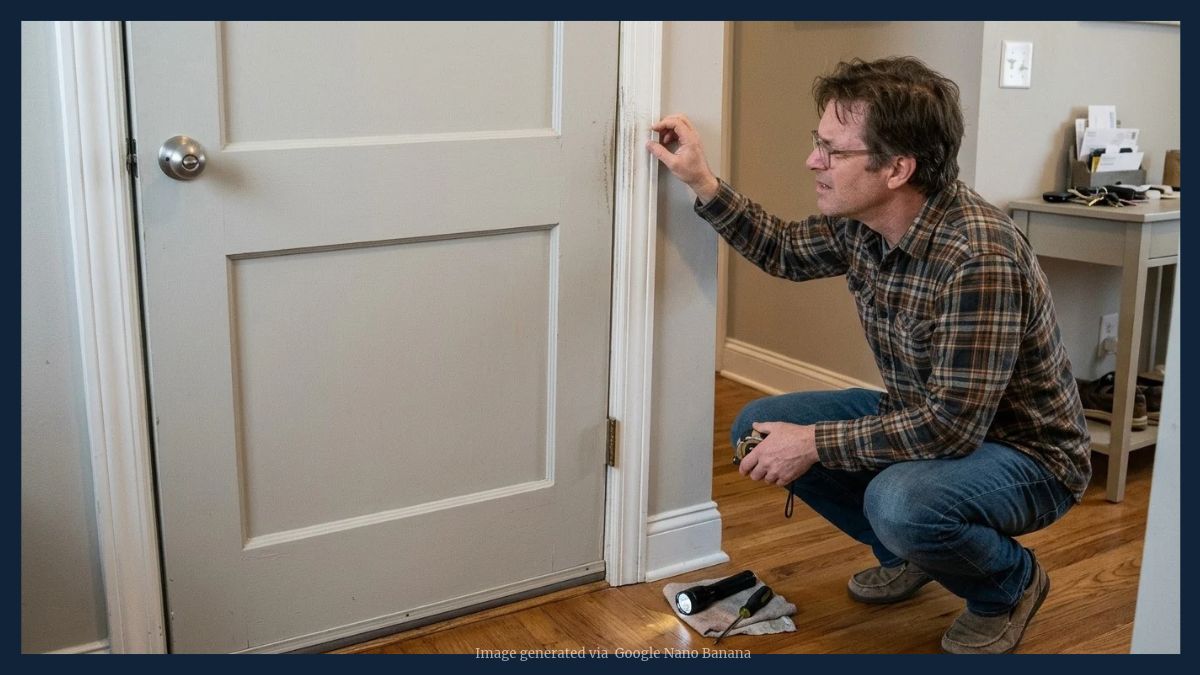
Doors or windows that suddenly become difficult to open, close, or latch can be caused by several problems. Humidity can make wooden components swell, loose hinges can change a door’s alignment, and damaged frames can prevent windows from moving smoothly.
- High humidity can cause wooden doors and frames to swell.
- Loose hinges, worn hardware, and paint buildup can interfere with normal operation.
- A damaged or misaligned frame can make a door or window stick.
- Several affected openings may indicate changes in the home’s structure.
- Foundation movement can distort frames and cause doors or windows to bind.
- New wall cracks, uneven floors, and gaps around trim are important accompanying signs.
- Avoid trimming doors or forcing windows before identifying the underlying problem.
The first step is to determine whether the problem is isolated or happening throughout the house, then look for other signs that help identify the cause.
What causes doors or windows to suddenly stick?
The cause can range from a minor maintenance issue to a change in the home’s structure. These are some of the most common possibilities.
1. High humidity and moisture-related swelling
Wood naturally absorbs and releases moisture from the surrounding air. When humidity rises, wooden doors, frames, and window components can absorb moisture and expand.
Even a relatively small amount of expansion can affect how closely a door or window fits within its frame.
You may notice:
- A wooden door rubbing against the top or side of its frame
- A window that becomes harder to slide
- Doors that stick more during humid or rainy periods
- Problems that improve when indoor conditions become drier
This is particularly common with solid-wood doors and older wooden windows.
If the problem appears during a period of high humidity and affects only a few wooden openings, moisture-related swelling is worth investigating before assuming there is foundation damage.
2. Loose hinges or worn hardware
Doors rely on properly secured hinges to remain aligned within their frames.
Over time, screws can loosen, hinge components can wear, and the door may begin to sag. This changes the clearance between the door and frame.
Possible signs include:
- The door rubs against the upper corner
- The latch no longer lines up with the strike plate
- The door drops slightly when opened
- You can see loose or damaged hinge screws
- The door moves unevenly when operated
For windows, worn rollers, damaged tracks, loose locks, or deteriorating hardware can create similar problems.
If only one opening is affected, inspect its hardware before investigating more extensive structural causes.
3. Changes in the door or window frame
The frame surrounding an opening can become distorted, damaged, or misaligned.
For example, wooden framing members may warp, moisture can damage surrounding materials, and previous installation work may leave the frame out of square.
A frame problem may cause:
- A door that rubs along one edge
- Uneven gaps around the door
- A window that binds at one corner
- A latch that no longer meets the strike plate
- Visible separation between the frame and surrounding wall
Check the frame for cracks, loose trim, water stains, and signs of previous repairs.
If the frame itself appears distorted, adjusting the hinges may not solve the underlying problem.
4. Paint buildup or deteriorating finishes
Repeated painting can gradually create thick layers around door edges, window tracks, and frame surfaces.
The additional thickness may interfere with movement, particularly in older homes where openings already have tight clearances.
Other finish-related problems include:
- Peeling paint that catches against the frame
- Swollen or damaged wooden edges
- Debris inside window tracks
- Hardened sealant interfering with a moving component
Inspect the contact points carefully. Do not immediately sand or cut the door, since the apparent clearance problem may be caused by moisture or frame movement.
5. Foundation settlement or movement
A house’s foundation supports the walls, floors, and framing above it. When part of the foundation moves, the structure can become slightly distorted.
This may affect the shape of door and window openings, causing frames to move out of alignment.
Possible signs include:
- Several doors becoming difficult to close
- Windows sticking in different rooms
- New diagonal cracks above doorways or window corners
- Gaps appearing between walls and ceilings
- Uneven or sloping floors
- Exterior cracks in brickwork or masonry
Foundation movement does not always mean the house has a serious structural defect. Some movement can be seasonal or historical rather than ongoing.
However, several openings becoming difficult to operate at around the same time is a reason to investigate the broader pattern rather than adjusting each door separately.
6. Soil movement beneath the house
The soil supporting a home can change as moisture conditions vary.
Some clay-rich soils expand when wet and shrink when dry. These changes can affect the support beneath the foundation and contribute to uneven movement.
Prolonged dry conditions can also cause certain soils to shrink, potentially affecting foundation support.
If the foundation moves unevenly, the walls and frames above it may become distorted.
Look for other clues, such as:
- New or widening foundation cracks
- Cracks in interior walls
- Stair-step cracks in exterior masonry
- Gaps between exterior walls and attached structures
- Changes in floor level
The relationship between soil conditions and foundation movement depends on the property’s location, soil type, foundation design, and drainage.
7. Water leaks or moisture damage around the opening
A leak around a window, exterior door, or nearby plumbing can damage the surrounding framing.
Wood that remains wet may swell, warp, or eventually deteriorate. Moisture can also damage wall materials and affect the stability of the opening.
Check for:
- Water stains around the frame
- Peeling or bubbling paint
- Soft or discolored wood
- Musty odors
- Damaged caulking or weatherstripping
- Water entering during heavy rain
Do not assume that a sticking window is caused by humidity alone if there are visible signs of water intrusion.
Find and address the moisture source before replacing or adjusting damaged components.
8. Poor installation or previous renovation work
Doors and windows can become difficult to operate when they were installed incorrectly or when later renovation work changes the surrounding structure.
Examples include:
- Frames installed out of square
- Incorrectly adjusted hinges or rollers
- Poorly supported openings
- Changes to walls or framing during renovations
- New flooring that reduces clearance beneath a door
If the problem began shortly after a renovation, replacement, or flooring installation, review the work that was performed.
A qualified contractor may need to inspect the opening and determine whether it can be corrected through adjustment or requires more extensive repairs.
How can you tell whether the problem is local or structural?
One of the most useful diagnostic steps is to determine how many openings are affected and where they are located.
| What you notice | Possible explanation | What to check |
|---|---|---|
| One wooden door sticks during humid weather | Wood swelling | Indoor humidity and door clearance |
| One door rubs near the top corner | Loose hinges or sagging door | Hinge screws and alignment |
| One window is difficult to slide | Track, roller, or hardware problem | Window tracks and moving parts |
| Several doors stick in different rooms | Possible framing or foundation movement | Wall cracks, floors, and other openings |
| Doors and windows stick alongside wall cracks | Possible structural movement | Crack patterns and frame alignment |
| A door sticks after new flooring is installed | Reduced clearance | Floor height and door bottom |
| A window sticks and has water stains around it | Moisture damage | Caulking, flashing, and surrounding materials |
This comparison is a starting point, not a diagnosis. More than one issue can occur at the same time.
How to check for possible foundation problems
If several doors or windows have become difficult to operate, look for other changes throughout the house.
1. Check how many openings are affected
Walk through the house and test the doors and windows.
Record which ones stick, where they are located, and whether the problem appeared recently.
Pay attention to openings in different rooms. Several unrelated openings becoming difficult to operate may suggest a broader change than one isolated hardware problem.
2. Look for cracks around doors and windows
Inspect the drywall, plaster, and trim surrounding the openings.
Look for:
- Diagonal cracks extending from the corners of doors or windows
- Cracks above door frames
- Gaps between the frame and wall
- Cracks that appear to be widening
- Separation between trim and the surrounding surface
Small isolated cracks are not proof of foundation damage. Their significance depends on their size, progression, location, and other evidence.
3. Check the floors
Walk through the affected rooms and look for changes in floor level.
Possible warning signs include:
- Floors that appear noticeably sloped
- New gaps beneath baseboards
- Changes in how doors sit above the floor
- Uneven transitions between rooms
- Cracks in concrete flooring
A simple visual check can help identify areas that need further investigation, but it cannot establish the cause of uneven floors.
4. Inspect the exterior of the house
Walk around the property and look for changes in exterior walls and masonry.
Check for:
- New cracks in brickwork or concrete
- Stair-step cracks along mortar joints
- Gaps around exterior door and window frames
- Separation between attached structures and the main house
- Visible foundation cracks
Also look for drainage problems, including downspouts that discharge near the foundation and areas where rainwater collects.
5. Check whether the problem changes with the weather
Record when the sticking occurs.
If the problem becomes noticeable during humid weather and improves when conditions become drier, moisture-related swelling may be contributing.
If it appears during prolonged dry weather or following significant changes in ground moisture, soil movement may be worth investigating.
However, weather-related changes do not automatically establish the cause. A professional may need to assess the foundation and surrounding conditions.
What should you do when doors or windows suddenly stick?
The right response depends on the number of affected openings and the condition of the surrounding structure.
If only one door or window is affected
Start with the simplest checks:
- Inspect the hinges, screws, rollers, and other hardware.
- Look for paint buildup or debris around moving parts.
- Check whether the frame has visible damage.
- Look for signs of moisture or water intrusion.
- Observe whether the problem changes with humidity.
- If the issue is clearly related to loose hardware or a dirty track, a suitable adjustment or cleaning may resolve it.
- If the frame is distorted or damaged, contact a qualified repair professional.
If several doors or windows are affected
Do not assume that each opening needs a separate adjustment.
Instead:
- Record which openings are affected.
- Photograph cracks around the frames.
- Check for uneven floors or new gaps.
- Inspect the foundation and exterior masonry where accessible.
- Arrange an appropriate inspection if multiple warning signs are present.
A structural engineer can assess whether the changes may be related to foundation movement or another structural issue.
If the problem follows a renovation
Check whether new flooring, replacement windows, door installation, or changes to nearby walls may have affected the openings.
Contact the contractor responsible for the work if the problem began shortly afterward.
If there is visible water damage
Investigate the source of moisture before attempting cosmetic repairs.
A plumber may be needed for suspected plumbing leaks, while a qualified contractor or building-envelope specialist can assess leaks around exterior windows and doors.
When should you be concerned?
Sticking doors and windows deserve closer attention when the problem is sudden, affects several openings, or appears alongside other changes in the building.
- Several doors and windows becoming difficult to operate
- New or widening diagonal cracks around openings
- Noticeable floor sloping or sagging
- Gaps developing between walls, ceilings, or floors
- Exterior masonry cracks that continue to grow
- Foundation cracks accompanied by other signs of movement
- Frames that appear visibly distorted
Seek prompt professional advice if a wall or frame appears significantly displaced or the building shows signs of sudden structural instability.
Do not force a severely jammed window or door, particularly if the frame or surrounding wall appears damaged. A distorted opening can also create an emergency escape problem, so make sure occupants have another safe exit where possible.
How are sticking doors and windows repaired?
The repair depends on what is causing the problem. Adjusting the opening without correcting the underlying issue may only provide temporary relief.
Hinge adjustment or replacement
If a door is sagging because of loose or worn hinges, tightening or replacing the hardware may restore proper alignment.
Damaged screw holes may also need suitable repair before the hinges can be secured properly.
Window track and roller repairs
Sliding windows may need cleaning, roller adjustment, or replacement of damaged hardware.
If the frame itself is distorted, replacing the rollers may not solve the problem.
Moisture control and wood repairs
If swelling is caused by humidity, improving indoor moisture control may help.
If a leak is responsible, repair the source and allow affected materials to dry appropriately. Wood that has deteriorated may need replacement.
Frame adjustment or replacement
A damaged or incorrectly installed frame may need to be adjusted, repaired, or replaced.
The appropriate approach depends on the frame material, the amount of distortion, and whether the surrounding wall is stable.
Foundation or structural repairs
If the problem is caused by foundation movement, the repair must address the underlying structural or soil-related condition.
Depending on the assessment, work may involve drainage improvements, foundation stabilization, or other engineered repairs.
Simply trimming a door or adjusting a window to compensate for an actively moving structure does not resolve the cause.
Common mistakes to avoid
Assuming every sticking door means foundation damage
A single sticking door is often related to ordinary maintenance issues, such as loose hinges, swelling wood, or paint buildup.
Look for a wider pattern before assuming there is a structural problem.
Trimming the door immediately
Removing wood from a door may temporarily improve clearance, but it can hide a problem caused by moisture or frame movement.
Identify why the door is rubbing before making permanent changes.
Ignoring multiple affected openings
When several doors and windows become difficult to operate, adjusting each one separately may delay the discovery of a broader issue.
Check the rest of the house for related warning signs.
Forcing a stuck window or door
Applying excessive force can damage the hardware, glass, frame, or surrounding wall.
Stop if the opening does not move normally and investigate the obstruction.
Painting over cracks around the frame
Fresh paint can conceal evidence of movement without addressing the cause.
Photograph and document cracks before making cosmetic repairs.
Frequently asked questions
Yes. Foundation movement can cause walls and framing to shift, which may distort door and window openings. This can make several doors or windows difficult to open, close, or latch. The possibility becomes more concerning when sticking occurs alongside wall cracks, uneven floors, or gaps around trim.
If several doors become difficult to operate around the same time, possible explanations include changes in indoor humidity, framing movement, or foundation settlement. Check whether windows are also affected and look for other signs of structural movement.
Windows can become difficult to open because of swollen wooden frames, dirt in the tracks, worn rollers, damaged hardware, or frame distortion. Moisture damage and structural movement are other possibilities.
Yes. Wood can absorb moisture from humid air and expand. This can reduce the clearance between a wooden door and its frame. The problem may become more noticeable during humid or rainy periods.
No. Sticking doors can result from loose hinges, humidity, damaged frames, or other localized issues. Foundation settlement is one possible cause, particularly when multiple openings are affected and other structural warning signs are present.
A door that rubs at the top corner may have sagging hinges, a loose frame, or an opening that has become distorted. Check the hinge connections and look for cracks around the frame. If several openings have similar problems, investigate possible structural movement.
Yes. New flooring, underlayment, or carpeting can reduce the clearance between the bottom of a door and the floor. If the problem began immediately after flooring work, check the new floor height before assuming there is a structural issue.
For one opening with a clear hardware or installation problem, a door or window repair professional may be sufficient. If several openings are affected and there are signs of foundation or framing movement, a licensed structural engineer is a more appropriate starting point for assessing the structure.
Sources and references:
- Structural movement in buildings – Historic England
Explains how foundation movement, soil conditions, temperature changes, and structural alterations can affect buildings, including doors and windows. - Dry soil may cause building problems – North Dakota State University Extension
Explains how soil shrinkage during dry conditions can affect foundation support and contribute to sticking doors, windows, and wall cracks. - Homeowner’s checklist – Canada Mortgage and Housing Corporation
Provides practical inspection guidance for doors, windows, hinges, frames, and signs of house movement. - Maintaining your home – Natural Hazards Commission, New Zealand
Discusses common causes of sticking doors and windows, including hinge problems, frame movement, and settlement.
