
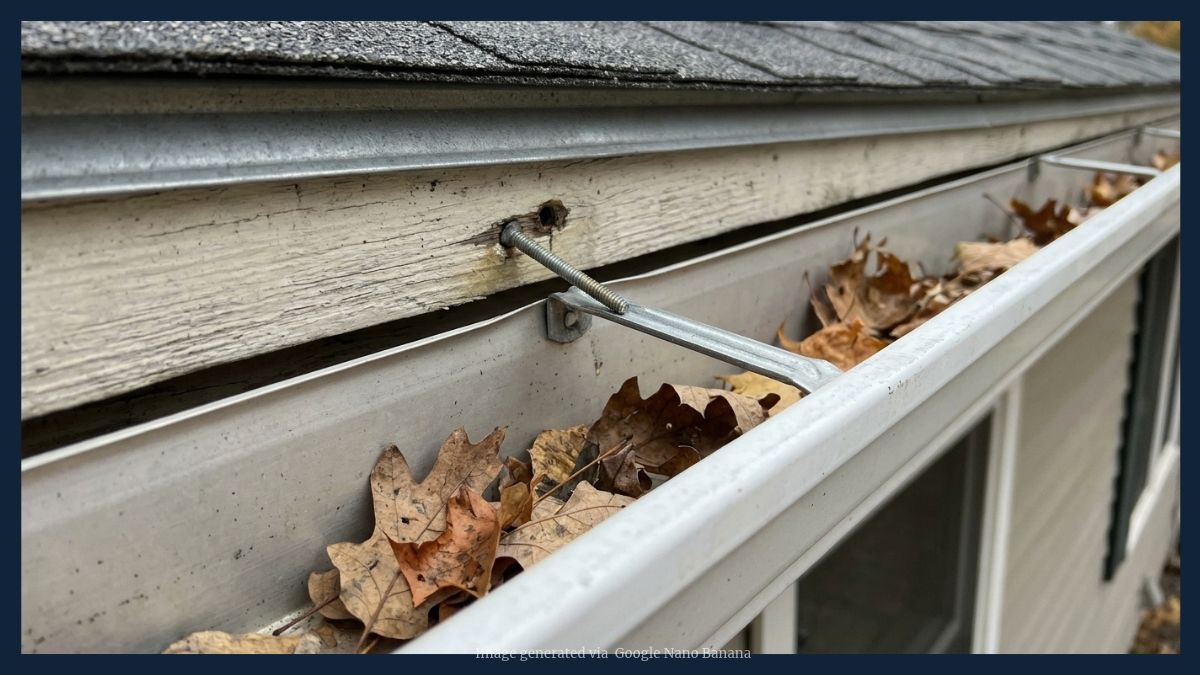
A gutter pulls away from the house when its fasteners or supporting fascia board can no longer hold it securely in place. Common causes include loose gutter hangers, rotted fascia, excessive weight from wet leaves or standing water, poor installation, and storm damage.
- A visible gap between the gutter and fascia usually indicates a problem with the attachment or supporting wood.
- Loose spikes and hangers can cause gutters to sag or pull away over time.
- Rotten fascia is a more serious problem because new fasteners may not hold securely in damaged wood.
- Wet leaves, standing water, and ice can add substantial weight to a gutter.
- Water flowing behind the gutter can damage the roof edge and exterior of the house.
- A professional should inspect gutters that are badly detached, hanging unevenly, or attached to visibly deteriorated wood.
- Fix the underlying cause before reinstalling or replacing the gutter.
Loose or failing gutter hangers and fasteners
Gutters are attached to the edge of a house using fasteners or support brackets called gutter hangers. These components hold the gutter against the fascia board and help it maintain its intended position and slope.
Over time, fasteners can loosen because of repeated loading, material deterioration, poor installation, or movement caused by temperature changes and weather.
Older gutter systems may use spike-and-ferrule fasteners. These consist of a long metal spike driven through the gutter and a sleeve that helps support it. The spikes can gradually work loose, leaving the gutter less securely attached.
Modern systems often use hidden hangers secured with screws. However, these can also fail if they are damaged, incorrectly installed, inadequately supported, or fastened into deteriorated wood.
Signs of loose or failing gutter fasteners include:
- A visible gap between the back of the gutter and the fascia.
- Fastener heads or spikes protruding from their original positions.
- A gutter section that appears lower than the surrounding sections.
- Missing, bent, or visibly damaged hangers.
- Separation concentrated around one or several attachment points.
If the fascia appears intact and the separation is limited to a few attachment points, the problem may be repairable by replacing or properly securing the hardware.
However, the condition of the wood behind the gutter should be checked before deciding that new fasteners are all that is needed.
Rotten or water-damaged fascia board
The fascia board is the long board running along the roof edge, typically behind the gutter. It provides a surface for attaching the gutter and helps cover the ends of the roof rafters.
When this board becomes rotten or weakened, it may no longer provide enough support for the gutter fasteners.
This is one of the more important causes to investigate because the gutter can appear to have a simple fastening problem when the actual issue is damaged wood.
What causes fascia boards to rot?
Moisture is the main concern. Water can reach the fascia through several routes:
- Leaking or overflowing gutters.
- Water running behind a poorly positioned gutter.
- Damaged or improperly installed roof-edge flashing.
- Roof leaks near the eaves.
- Persistent exposure to rain and moisture.
- Deteriorated paint or protective finishes that allow water to penetrate the wood.
Once moisture repeatedly reaches the fascia, the wood may begin to deteriorate. Fasteners driven into weakened sections can gradually lose their grip.
Signs of rotten fascia
Look for these possible warning signs from a safe location:
- Peeling or bubbling exterior paint.
- Dark discoloration or water stains.
- Soft, crumbling, or visibly deteriorated wood.
- Sections of fascia that appear warped or swollen.
- Repeated fastener pullout.
- A gutter that separates along a larger section rather than at one isolated bracket.
Not every dark stain means the fascia is rotten. However, discoloration combined with peeling paint, visible deterioration, or recurring gutter separation deserves further inspection.
Do not climb onto the roof or lean out of a window to press, probe, or pull at a damaged fascia board. Deteriorated wood may not support your weight or the pressure applied to it. If the gutter is hanging from visibly damaged wood, keep people and pets away from the area directly below it and arrange a professional inspection.
How is rotten fascia repaired?
If the wood is deteriorated, simply installing longer screws or new hangers may not provide a lasting repair.
Depending on the extent of the damage, a professional may need to:
- Remove the affected gutter section.
- Inspect the exposed fascia and nearby roof-edge materials.
- Identify and correct the source of moisture.
- Remove and replace deteriorated wood.
- Restore any necessary protective finishes or flashing details.
- Reinstall the gutter using suitable fasteners and supports.
The surrounding roof edge should also be inspected if there are signs that moisture has traveled beyond the fascia.
Heavy leaves and debris inside the gutter
Gutters are designed to collect rainwater and direct it toward downspouts. However, leaves, twigs, dirt, roof granules, and other debris can accumulate inside them.
When this material becomes wet, it can become considerably heavier than when it is dry.
That additional weight places stress on the gutter hangers and fasteners. If the supports are already loose or the fascia is weakened, the extra load can contribute to separation.
Signs of excessive debris buildup
- Leaves and twigs are visible above the gutter edge.
- Water overflows during rainfall.
- The gutter appears to sag or bow in the middle.
- Sections are pulling away near areas with heavy debris.
- Water remains in the gutter after rainfall.
Debris buildup may also obstruct the downspout, preventing water from draining properly.
Do not climb a ladder or reach over a roof edge to clean a gutter that is already pulling away. A loose gutter may shift unexpectedly, and a damaged support system may not withstand additional force. Avoid working from a wet or unstable ladder, and never lean a ladder against a damaged gutter. Have a qualified professional handle cleaning or repairs when access is unsafe.
Regular gutter maintenance can help prevent excessive debris accumulation and reduce unnecessary strain on the support system.
Standing water caused by poor drainage
A gutter should direct water toward its downspout rather than allowing it to collect in low areas.
If the gutter has an incorrect slope, a blocked outlet, or an obstructed downspout, water may remain inside after rainfall.
This creates additional weight that can place stress on the hangers and fasteners.
Standing water can also contribute to corrosion in susceptible metal components and repeated moisture exposure around the fascia.
Why does water remain inside the gutter?
Possible explanations include:
- The gutter has lost its intended slope.
- A low section has developed because its supports have loosened.
- Leaves or other debris are blocking the outlet.
- The downspout is obstructed.
- The gutter has become bent or distorted.
A gutter that is pulling away may also develop drainage problems as its position changes. In some cases, the drainage issue contributes to the separation; in others, it develops as a result of the gutter becoming loose.
How can you recognize poor drainage?
From the ground, look for:
- Water overflowing from the same area during rain.
- A visible dip along the gutter.
- Water spilling over the front or back edge.
- Downspout discharge that appears unusually weak during rainfall.
- Persistent water stains beneath the gutter.
A visual inspection cannot always confirm whether the slope or downspout is responsible. A professional may need to inspect the full gutter run and drainage system.
Incorrect gutter installation or insufficient support
Sometimes, a gutter begins pulling away because it was not installed correctly in the first place.
The gutter may have been attached with unsuitable fasteners, insufficient hangers, or supports that were not properly secured to the fascia.
If the gutter is not adequately supported, ordinary rainfall and accumulated debris may gradually expose the weakness.
Common installation-related problems
Hangers spaced too far apart
Gutter hangers provide support along the length of the gutter. If there are too few, sections may sag between attachment points and place additional strain on the remaining supports.
Unsuitable fasteners
Fasteners must be appropriate for the gutter system and the material they are being attached to. A fastener that does not provide adequate holding strength can gradually loosen.
Fasteners installed into weak material
Even suitable screws cannot provide dependable support if they are installed into rotten or otherwise deteriorated fascia.
Incorrect gutter positioning
A gutter that is poorly positioned relative to the roof edge may collect water inefficiently or allow runoff to pass behind it.
How can you recognize an installation problem?
Consider whether:
- Several sections have similar spacing or support problems.
- The gutter has sagged along a long stretch.
- Fasteners appear inconsistently installed.
- The gutter has repeatedly separated despite previous repairs.
- The problem appeared relatively soon after installation.
If several sections are affected, it may be worth having the entire gutter system inspected rather than repairing only the most visible gap.
Storm damage, strong winds, or falling branches
Gutters are exposed to outdoor conditions throughout the year. Strong winds, severe storms, and falling branches can damage their supports or pull sections away from the house.
Even if the gutter remains attached, an impact can bend the metal, loosen fasteners, or distort the gutter’s shape.
Storm-related damage is more likely when the separation appears suddenly rather than developing gradually.
Signs of storm or impact damage
- A gutter section suddenly hangs lower after a storm.
- The gutter is visibly bent or twisted.
- One or more hangers have broken.
- There are dents or impact marks.
- A nearby tree branch has fallen or struck the roof edge.
- The gutter has separated near a corner or joint.
If the gutter is badly detached, avoid attempting to push it back into position. The damaged section may fall, and the remaining supports may already be under excessive strain.
A professional can determine whether the existing gutter can be resecured or whether a damaged section needs replacement.
Ice and snow buildup in colder climates
In areas that experience freezing temperatures, ice and accumulated snow can place additional weight on gutters.
Water that collects inside a gutter may freeze, while snow and ice can accumulate along the roof edge. These conditions can place substantial stress on the gutter, hangers, fasteners, and fascia.
Repeated freeze-thaw cycles may also contribute to movement or deterioration in older gutter systems.
Signs of ice-related gutter damage
- Gutters begin sagging after winter.
- Fasteners have pulled out or become visibly displaced.
- The gutter has separated near areas where ice accumulated.
- The gutter is bent or distorted.
- Sections have become loose following repeated freezing conditions.
This cause is particularly relevant to homeowners in colder U.S. regions. It is less likely to explain gutter separation in climates that do not experience freezing temperatures.
Do not attempt to remove heavy ice from a roof or gutter by climbing onto the roof, striking the ice, or using improvised heating equipment. Falling ice, unstable surfaces, and roof-edge falls can cause serious injuries. Avoid using open flames or applying heat in ways that could damage roofing materials. Have significant ice-related damage assessed by an appropriately qualified professional.
How to tell what is causing your gutter to pull away
Several problems can produce similar symptoms. The following table can help you understand what the visible signs may indicate.
| What you notice | Possible cause | What may be needed |
|---|---|---|
| A small gap around one or two fasteners | Loose or failed fasteners | Inspect and replace damaged hardware if the fascia is sound |
| Several fasteners protruding | Fasteners losing their grip | Inspect the fascia and attachment system |
| Peeling paint and dark stains behind the gutter | Possible moisture damage | Inspect for leaks and fascia deterioration |
| Soft or crumbling fascia | Wood rot or deterioration | Repair the moisture source and replace damaged wood |
| Gutter sagging between supports | Insufficient or failed hangers | Assess support spacing and gutter condition |
| Water collecting in one section | Poor slope or blockage | Inspect the gutter and downspout drainage |
| Sudden separation after a storm | Wind or impact damage | Inspect for bent sections and broken supports |
| Separation following winter | Possible ice or snow loading | Inspect the gutter, fasteners, and fascia |
These signs are clues, not definitive diagnoses. More than one problem can occur at the same time. For example, a blocked downspout may cause standing water, which increases the load on already weakened gutter hangers.
What should you do if your gutter is pulling away?
The appropriate response depends on how far the gutter has separated and whether the supporting materials remain in good condition.
1. Assess the problem from the ground
Start by looking at the affected section from a safe distance.
Observe whether:
- The gap is limited to a small area or extends along a longer section.
- The gutter is also sagging or twisting.
- Fasteners appear to be missing or protruding.
- There are visible stains or damaged wood behind the gutter.
- The problem appeared after a storm or heavy rainfall.
You can take photographs to document the damage and compare its condition over time.
Do not pull on the gutter, push it back into place, or stand beneath a section that appears close to falling.
2. Check for visible drainage problems
Observe the gutter during rainfall only from a safe, sheltered location.
Look for water overflowing, running behind the gutter, or collecting around the same section.
If the gutter is visibly detached, do not attempt to test its strength by touching it or adding weight.
3. Keep the area below a badly detached gutter clear
A gutter that is hanging loosely may fall, especially during strong winds or heavy rainfall.
Keep children, pets, and other household members away from the area directly below it until it has been assessed and secured.
4. Arrange an inspection if the damage is significant
A gutter professional can inspect the hangers, fasteners, fascia, gutter slope, and drainage system.
If the fascia or nearby roof-edge materials appear damaged, a qualified carpenter or roofing contractor may also be needed.
The important thing is to determine whether the gutter can be securely reattached or whether supporting materials need repair first.
Can you fix a gutter that is pulling away from the house yourself?
Some minor gutter problems may be manageable for an experienced homeowner, but a gutter that has already separated should be assessed before attempting repairs.
The main concern is that the visible gap may not reveal the condition of the supporting wood.
For example, replacing a loose fastener may seem straightforward. However, if the screw was pulled out because the fascia is rotten, installing another fastener into the same damaged area will not provide a dependable repair.
When a repair may be relatively straightforward
A professional may be able to repair the gutter without replacing the entire system when:
- The gutter is still structurally sound.
- The fascia is dry and in good condition.
- The problem is limited to a few loose or damaged hangers.
- The gutter has not become badly bent or distorted.
- The underlying drainage issue can be corrected.
When more extensive repairs may be necessary
More involved work may be needed when:
- The fascia is rotten or crumbling.
- Several sections have separated.
- The gutter has become badly bent.
- The roof edge shows signs of water damage.
- The gutter repeatedly pulls away after previous repairs.
- The attachment points are no longer secure.
Gutter repairs often involve working at height. Do not attempt repairs from an unstable ladder, climb onto a damaged roof, or work near overhead electrical lines. Never use a gutter as a handhold or ladder support. If the gutter is loose, the fascia is deteriorated, or the repair requires roof-edge access, hire a qualified professional.
When should you hire a gutter repair professional?
It is best to arrange a professional inspection when the gutter has visibly separated, especially if the gap is growing or the supporting wood appears damaged.
A gutter repair professional can determine whether the problem is limited to the fasteners or whether the gutter system, fascia, or roof edge needs attention.
- The gutter is hanging significantly away from the house.
- Multiple hangers or fasteners have failed.
- The fascia is visibly rotten or deteriorated.
- Water is running behind the gutter.
- The gutter is bent, twisted, or badly sagging.
- Water repeatedly collects in the same area.
- The problem returns after previous repairs.
- The gutter is positioned above an entrance, walkway, or frequently used outdoor area.
If there is evidence of roof leaks or damage beyond the fascia, a roofing contractor may need to investigate as well.
Should you hire a professional?
If only one fastener appears loose and the supporting wood is confirmed to be sound, the repair may be relatively limited. However, homeowners should avoid assuming that a visible gap is simply a loose screw.
A professional inspection is particularly worthwhile when the gutter has separated along a long section, the fascia shows signs of moisture damage, or the system has repeatedly failed.
Ask the contractor to check the condition of the fascia, the gutter’s attachment points, its slope, and the downspout drainage. This helps ensure that the repair addresses the underlying cause rather than temporarily hiding the symptom.
Homeowner checklist: Inspecting a gutter that is pulling away
Use this checklist to record what you can safely observe from the ground before arranging repairs.
- Identify which gutter section is pulling away.
- Check whether the gap is limited to one area or extends along the gutter.
- Look for visible sagging, bending, or twisting.
- Look for missing, protruding, or damaged fasteners.
- Check for peeling paint or dark water stains on the fascia.
- Look for visible signs of rotten or deteriorated wood.
- Observe whether water overflows during rainfall.
- Look for possible downspout blockages or drainage problems.
- Note whether the damage appeared after a storm or winter weather.
- Photograph the affected area from a safe location.
- Keep people and pets away from any section that appears unstable.
- Arrange a professional inspection if the gutter is detached or the fascia may be damaged.
Do not climb a ladder or touch a loose gutter to complete this checklist. This is intended for visual observations only.
Frequently asked questions
It can be, particularly if a long section is detached or the gutter appears close to falling. A loose gutter may come down during strong winds or heavy rainfall.
Not necessarily. New screws may help if the original fasteners have loosened and the fascia is still sound.
Possible signs include peeling paint, dark moisture stains, soft or crumbling wood, swelling, and repeated fastener pullout.
Yes. Wet leaves, dirt, and other debris can add weight to the gutter. If the downspout is also blocked, standing water can increase the load further.
Not always. If the gutter is in good condition and the problem is limited to a few failed hangers, a repair may be sufficient.
It can contribute to water intrusion, although it does not automatically mean the roof is leaking.
Recurring separation may indicate that the original cause was not corrected. Possible reasons include rotten fascia, inadequate hanger support, continued water accumulation, incorrect fasteners, or an underlying installation problem.
Inspect gutters periodically, particularly after severe storms and during seasonal maintenance. The frequency of cleaning depends on nearby trees, roof conditions, local weather, and how quickly debris accumulates.
Sources and references:
- Angi, “Why Your Gutters Are Pulling Away (and How to Fix Them)”
https://www.angi.com/articles/how-repair-gutters.htm - U.S. Government Printing Office, “Care and Repair of the House Including Minor Improvements”
https://www.govinfo.gov/content/pkg/GOVPUB-C13-eec185024d7ebe2a4bf33b665c6a59d8/pdf/GOVPUB-C13-eec185024d7ebe2a4bf33b665c6a59d8.pdf - Suburban Construction, “Why Are My Gutters Pulling Away From the House?”
https://www.suburbanconstruction.com/blog/why-are-my-gutters-pulling-away-from-the-house - National Gutter Alliance, “Gutter Hangers: 5 Warning Signs You Need a Stronger Fix”
https://www.nationalgutteralliance.com/blog/gutter-hangers
