
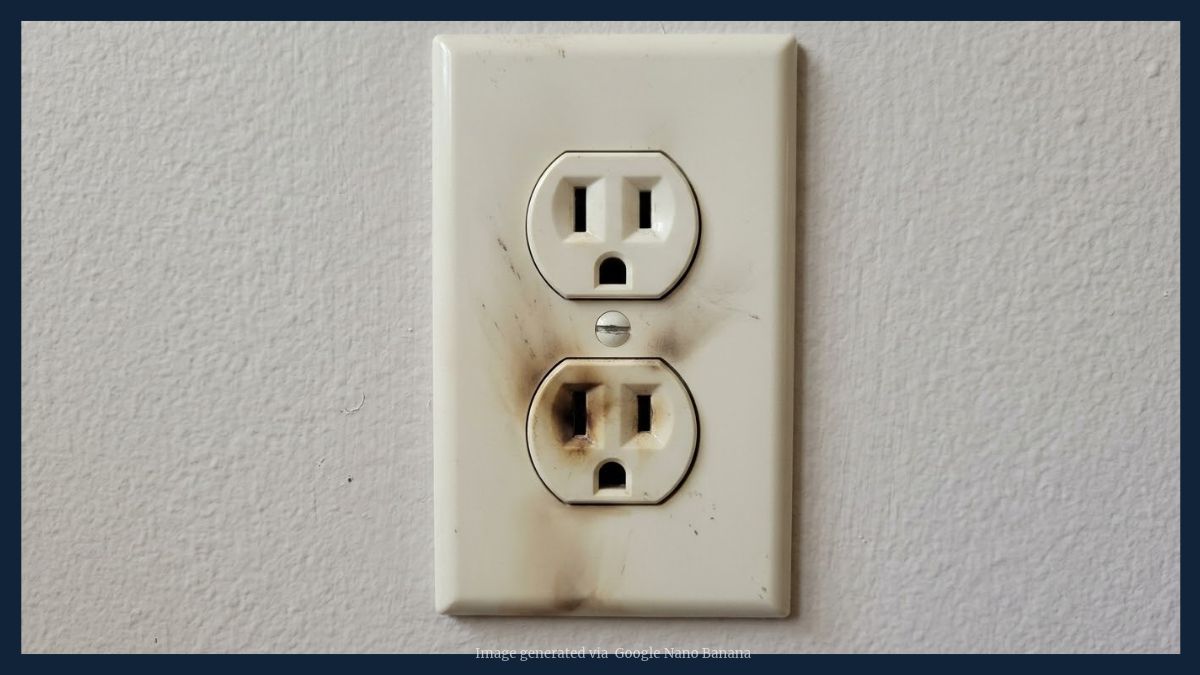
An electrical outlet that feels unusually warm or has brown, yellow, or black discoloration may be overheating. Common causes include loose electrical connections, worn receptacle contacts, excessive electrical load, damaged plugs, and deteriorating wiring.
- A standard electrical outlet should not become unusually hot during normal use.
- Slight warmth near a plug-in power adapter may come from the adapter itself, but discoloration is not normal.
- Brown, yellow, or black marks may indicate previous or ongoing overheating.
- Loose wiring and worn receptacle contacts can generate heat even when the circuit is not overloaded.
- An overloaded circuit can contribute to overheating, especially when high-demand appliances share a circuit.
- A breaker does not necessarily trip whenever a loose connection generates dangerous localized heat.
- Stop using a warm or discolored outlet and have it inspected by a qualified electrician.
- Smoke, flames, or active sparking require immediate emergency precautions.
Stop using an outlet that is unusually warm, hot, discolored, scorched, or smells like burning. Do not plug another device into it to test whether it works. If a plug or appliance is connected, disconnect it only if you can do so without touching a hot, melted, sparking, or damaged component. If the outlet is hot, visibly damaged, or producing a burning smell, switch off the affected circuit at the breaker only if you can reach the electrical panel safely. Do not touch the outlet or attempt to remove its cover. Arrange an inspection by a qualified electrician before using it again.
If you see smoke, flames, or active electrical arcing, move everyone away, leave the affected area, and contact emergency services. Do not use water on an electrical fire.
Brown or black marks around the slots or faceplate may indicate heat damage. The appearance alone cannot identify the exact failed component, so an electrician should inspect the outlet and associated circuit.
Loose electrical connections
A loose electrical connection is one of the important causes to investigate when an outlet feels warm or shows signs of overheating.
Inside an electrical outlet, wires connect to terminals that carry current to the receptacle. These connections must remain secure to maintain reliable electrical contact.
If a wire becomes loose, the contact between the wire and terminal may become poor. Electrical resistance at that connection can generate heat while current flows through it.
Over time, the heat can damage the terminal, wire insulation, and surrounding plastic components.
Why do electrical connections become loose?
Several conditions can contribute:
- Incorrect installation.
- Improperly tightened terminal connections.
- Worn or damaged outlet components.
- Deteriorating wiring or terminals.
- Repeated heating and cooling over time.
- Physical movement or stress on the outlet or connected wiring.
Some older outlets use push-in connections, sometimes called backstab connections, where wires are inserted into openings at the back of the receptacle. Depending on the device and installation, these connections may become unreliable.
However, the presence of a particular connection style does not automatically prove that it is faulty.
Signs of a loose electrical connection
Look for these warning signs without removing the outlet cover:
- Brown or dark marks around the outlet slots.
- A warm or hot faceplate.
- Crackling, sizzling, or buzzing sounds.
- A burning or hot-plastic smell.
- Power that cuts in and out.
- A plug that does not remain securely seated.
A loose electrical connection can produce heat and electrical arcing inside the outlet box. Do not remove the faceplate, tighten terminal screws, or pull the receptacle out of the wall to investigate. Electrical components may remain energized even when a connected appliance is switched off. Stop using the outlet and have a qualified electrician inspect it.
An overloaded electrical circuit
An overloaded circuit occurs when the electrical demand connected to a circuit exceeds what the circuit is designed to carry safely.
This can happen when several appliances operate on the same circuit, particularly when they require substantial electrical power.
For example, a household circuit may be supplying power to multiple kitchen appliances, portable heaters, or other high-demand equipment.
Excessive current can cause electrical conductors and connections to heat up. If an outlet or its connections are already damaged or improperly installed, the additional demand may make the problem worse.
Common situations that can contribute to overloading
- Running multiple high-power appliances on one circuit.
- Using extension cords or power strips to supply too many devices.
- Connecting equipment that requires more current than the circuit can safely provide.
- Operating appliances with damaged cords or plugs.
- Using an outlet or circuit that was not designed for the connected equipment.
Signs of a potentially overloaded circuit
You may notice:
- A breaker that trips repeatedly.
- Lights that dim when certain appliances start.
- An outlet or plug that becomes unusually warm.
- Multiple devices losing power at the same time.
- Warm electrical cords or power strips.
These symptoms can also have other causes. For example, flickering lights may indicate a wiring or supply problem rather than an overloaded circuit.
Do not repeatedly reset a circuit breaker that keeps tripping. A breaker that trips repeatedly may be responding to an overload, short circuit, or another electrical fault. Do not replace it with a higher-rated breaker or bypass its protection. Stop using the affected equipment and have an electrician determine the cause.
Worn or damaged outlet contacts
An electrical outlet contains internal metal contacts that grip the prongs of an electrical plug.
These contacts help maintain a stable electrical connection. With age and repeated use, they may become worn, loose, or damaged.
When the contacts no longer grip the plug properly, the electrical connection may become less reliable. Poor contact can generate heat, particularly when the connected appliance draws substantial current.
What causes outlet contacts to wear?
Possible contributors include:
- Frequent plugging and unplugging.
- Age-related deterioration.
- Repeated use with heavy or poorly fitting plugs.
- Physical damage to the receptacle.
- Excessive heat from an earlier electrical fault.
Signs of worn outlet contacts
- Plugs feel loose when inserted.
- A plug falls out more easily than it should.
- The outlet becomes warm during use.
- Discoloration appears around one or more slots.
- The outlet intermittently loses power.
A loose-fitting plug should not be treated as a minor inconvenience. Poor contact can contribute to overheating.
Do not bend plug prongs, insert objects into the outlet, or attempt to tighten the internal contacts. Do not continue using an outlet simply because a plug still fits into it. A qualified electrician should assess and replace a damaged receptacle as necessary.
A damaged plug, power cord, or appliance
Sometimes, the source of overheating is not the outlet itself. A damaged plug, electrical cord, or appliance may be responsible.
For example, a damaged plug can create poor contact with the outlet. Internal appliance faults may also cause excessive current draw or heat around the connection.
The outlet may show discoloration even though the underlying problem originates from the connected equipment.
Signs the connected device may be involved
- The plug is discolored or melted.
- The cord has cracked, frayed, or damaged insulation.
- The plug feels unusually hot.
- The outlet becomes warm only when a particular appliance is operating.
- The appliance operates intermittently.
- The device produces an unusual smell or sound.
How can you distinguish an outlet problem from an appliance problem?
You should not experiment by moving a suspect plug between outlets.
Instead, record which appliance was connected when the problem appeared. An electrician can inspect the outlet and determine whether the connected device may also need assessment.
Do not continue using an appliance with a melted plug, damaged cord, exposed wiring, or burning smell. Do not handle a plug that is hot, visibly damaged, or actively sparking. Keep children and pets away from the damaged equipment and arrange appropriate professional inspection.
Electrical arcing and overheating
Electrical arcing occurs when electricity jumps across a gap or travels through an unintended path between conductive components.
It can happen when electrical connections are loose, damaged, or deteriorating.
Arcing can generate intense localized heat and damage the outlet, wiring insulation, and nearby materials.
In some cases, the damage may develop inside the outlet box without obvious warning from the outside.
What are the warning signs of electrical arcing?
Possible signs include:
- Crackling, popping, or sizzling sounds.
- Visible sparks.
- Brown or black scorch marks.
- Melted or warped plastic.
- A burning or hot-plastic smell.
- Intermittent power.
Not every unusual sound or mark confirms arcing, but these symptoms should be treated seriously.
If you hear crackling or popping from an outlet, notice sparks, or see melted plastic, stop using the outlet immediately. Do not touch the receptacle or attempt to investigate inside the wall. If you can safely switch off the affected circuit at the breaker, do so. If there is smoke, active fire, or continuing sparks, leave the area and contact emergency services.
Aging or deteriorating electrical wiring
Electrical wiring and its connections can deteriorate over time.
Older homes may have wiring systems, connections, or electrical components that have experienced decades of use. Previous repairs or modifications may also have introduced problems.
Damaged insulation, corroded connections, and deteriorated terminals can contribute to overheating or unreliable electrical operation.
Signs that wiring problems may be involved
- Multiple outlets feel unusually warm.
- Several outlets show discoloration.
- Breakers trip repeatedly.
- Lights flicker or dim unexpectedly.
- You hear buzzing or crackling from electrical components.
- The same electrical problem returns after an outlet has been repaired.
A single discolored outlet does not automatically mean the entire house needs rewiring. However, recurring problems or symptoms affecting several locations deserve a broader electrical inspection.
A qualified electrician can assess the wiring, circuit connections, electrical panel, and condition of the affected receptacles.
Is it normal for an electrical outlet to feel warm?
A slight temperature difference does not automatically indicate a dangerous fault. Some plug-in power adapters, chargers, and electronic devices naturally generate heat during operation.
However, an ordinary outlet should not become noticeably hot, uncomfortable to touch, discolored, or produce a burning smell.
It is also important to distinguish between warmth from the connected adapter and heat coming from the receptacle or wall plate itself.
Warm outlet vs. potentially dangerous outlet
| What you notice | What it may indicate | Recommended response |
|---|---|---|
| Plug-in adapter feels slightly warm | Normal heat from the adapter may be involved | Check the device manufacturer’s guidance |
| Outlet feels noticeably warm | Possible connection, receptacle, or circuit issue | Stop using it and arrange an inspection |
| Outlet is hot to the touch | Possible overheating or electrical fault | Stop using it; switch off the circuit if safe and call an electrician |
| Brown or yellow discoloration | Possible heat damage | Stop using it and arrange an inspection |
| Black scorch marks or melted plastic | Potentially serious overheating or arcing | Keep away and seek urgent electrical assistance |
| Burning smell or crackling | Possible active electrical fault | Stop using it and take immediate safety precautions |
| Smoke, flames, or active sparking | Potential electrical fire | Leave the area and contact emergency services |
There is no need to measure the outlet’s temperature yourself. Visible damage, unusual heat, smell, and sound are more important warning signs for a homeowner to recognize.
What should you do if an outlet feels warm or looks discolored?
The safest response is to stop using the outlet and arrange an electrical inspection.
Do not attempt to identify the exact fault by opening the outlet or testing it with additional appliances.
1. Stop using the affected outlet
Do not plug in another device or continue operating the appliance connected to it.
If the plug and outlet are cool, intact, and safe to handle, disconnecting the device may be appropriate. If the plug is hot, melted, sparking, or difficult to remove, do not touch it.
2. Turn off the circuit if it is safe to do so
If the outlet is noticeably hot, discolored, or producing a burning smell, switch off the corresponding circuit breaker if you can safely identify and reach it.
Do not touch damaged electrical equipment or approach a panel that is hot, wet, sparking, or producing smoke.
If you cannot safely turn off the circuit, keep away and seek professional or emergency assistance as appropriate.
3. Keep children and pets away
An outlet with damaged plastic, exposed components, or signs of overheating may create shock and burn hazards.
Keep children and pets away from the affected outlet and any connected equipment until it has been inspected and made safe.
4. Record the visible symptoms
From a safe distance, note:
- Whether the outlet feels warm or was noticeably hot.
- Whether discoloration is brown, yellow, or black.
- Whether the plug or appliance also appears damaged.
- Whether you noticed a burning smell.
- Whether the breaker tripped.
- Whether the problem appeared during use of a particular appliance.
Photographs can help document visible damage, provided you do not touch the outlet or approach an active hazard.
5. Arrange an inspection by a qualified electrician
An electrician can inspect the receptacle, wiring connections, circuit loading, and associated electrical components.
The outlet should not be returned to service until the cause has been identified and the necessary repairs have been completed.
What will an electrician check?
Replacing a discolored outlet may be necessary, but replacing the receptacle alone does not always address the underlying problem.
An electrician may investigate several parts of the electrical system.
The receptacle itself
The electrician may check for:
- Heat damage.
- Worn or loose internal contacts.
- Melted plastic.
- Damaged terminals.
- Signs of electrical arcing.
If the receptacle has been damaged by overheating, replacement may be required.
Wiring and electrical connections
The electrician may inspect the wiring for:
- Loose or deteriorated connections.
- Damaged insulation.
- Corrosion.
- Signs of overheating.
- Incorrect or unsuitable connections.
Circuit loading
The electrician may assess whether the connected appliances are drawing more current than the circuit is designed to carry.
This may involve reviewing the circuit’s rating, connected loads, and how appliances are distributed throughout the home.
The electrical panel and protective devices
If there are repeated breaker trips or signs of wider electrical problems, the electrician may inspect the breaker, circuit connections, and relevant protective devices.
The purpose is to determine whether the outlet is the only affected component or whether the issue extends to other parts of the electrical system.
When should you hire a professional?
A warm or discolored outlet should be inspected by a qualified electrician rather than treated as an ordinary DIY repair.
- Brown, yellow, or black marks around the outlet.
- A faceplate that is unusually warm or hot.
- A plug that fits loosely.
- Crackling, buzzing, or sizzling sounds.
- A burning or hot-plastic smell.
- Repeated breaker trips.
- Intermittent power.
- Melted or warped outlet plastic.
If the outlet is smoking, actively sparking, or involved in a fire, treat the situation as an emergency rather than waiting for a routine appointment.
Should you hire a professional?
Yes. This is one home diagnostic problem where professional assessment is the appropriate course of action.
Electrical faults can exist behind the outlet cover, where they are not visible to the homeowner. A discolored receptacle may need replacement, but the electrician must also determine whether the wiring, connected appliance, or circuit contributed to the overheating.
Ask the electrician to identify the source of the heat, inspect the affected connections, and explain whether any other outlets or circuit components require attention.
Avoid hiring someone who proposes replacing the faceplate or receptacle without investigating why the damage occurred.
Homeowner checklist: Warm or discolored electrical outlet
Use this checklist to record warning signs without touching or opening the outlet.
- Identify which outlet appears warm or discolored.
- Note whether the outlet feels unusually warm or was hot to the touch.
- Look for brown, yellow, or black discoloration.
- Check visually for melted or warped plastic.
- Note whether the connected plug or cord appears damaged.
- Recall whether a high-demand appliance was operating.
- Note any burning or hot-plastic smell.
- Listen for buzzing, crackling, popping, or sizzling sounds from a safe distance.
- Record whether the circuit breaker has tripped.
- Photograph visible damage without touching the outlet.
- Stop using the affected outlet.
- Keep children and pets away from the area.
- Arrange an inspection by a qualified electrician.
- Do not use the outlet again until it has been assessed and made safe.
Important: This checklist is for observation and documentation only. It is not an instruction to test, open, repair, or handle a potentially damaged electrical outlet.
Frequently asked questions
Yes. An unusually warm or hot outlet may indicate a loose connection, damaged receptacle, overloaded circuit, or another electrical fault.
Brown discoloration may result from heat damage around the receptacle or faceplate. It can be associated with loose connections, worn outlet contacts, excessive electrical load, or a damaged plug.
A black mark may be a scorch mark caused by overheating or electrical arcing. It should be treated as a serious warning sign.
Yes. Excessive electrical demand can cause connected plugs, power strips, and electrical connections to overheat.
An outlet that remains unusually warm with no appliance connected may have a problem involving its internal connections or wiring.
Yes. If the outlet’s internal contacts no longer grip the plug securely, the electrical connection may become unreliable.
Not necessarily. A breaker responds to certain electrical fault and overcurrent conditions, but a loose or high-resistance connection can generate dangerous localized heat without drawing enough total current to trip the breaker.
It is safer to have a qualified electrician replace and inspect it. Discoloration may indicate damage to the wiring or electrical connections behind the receptacle.
A phone charger or power adapter may become warm during normal operation. However, the outlet itself should not become unusually hot or discolored.
Sources and references:
- U.S. Consumer Product Safety Commission (CPSC), Guide to Home Wiring Hazards
https://www.cpsc.gov/s3fs-public/518.pdf - U.S. Consumer Product Safety Commission (CPSC), Home Electrical Safety Checklist
https://www.cpsc.gov/s3fs-public/513.pdf - Electrical Safety Foundation International (ESFI), Electrical Safety Dos
https://www.esfi.org/wp-content/uploads/2023/06/Electrical-Safety-Dos.pdf - Bureau of Fire Protection, Philippines, Fire Safety for the General Public: Electrical Fire Safety in the Homes
https://bfp.gov.ph/wp-content/uploads/2024/08/Volume-4-Fire-Safety-for-General-Public.pdf - Leviton, Electrical Outlet Safety Guide: Warning Signs, When to Replace
https://leviton.com/support/literature/blogs/electrical-outlet-safety-guide–warning-signs–when-to-replace-faqs
