
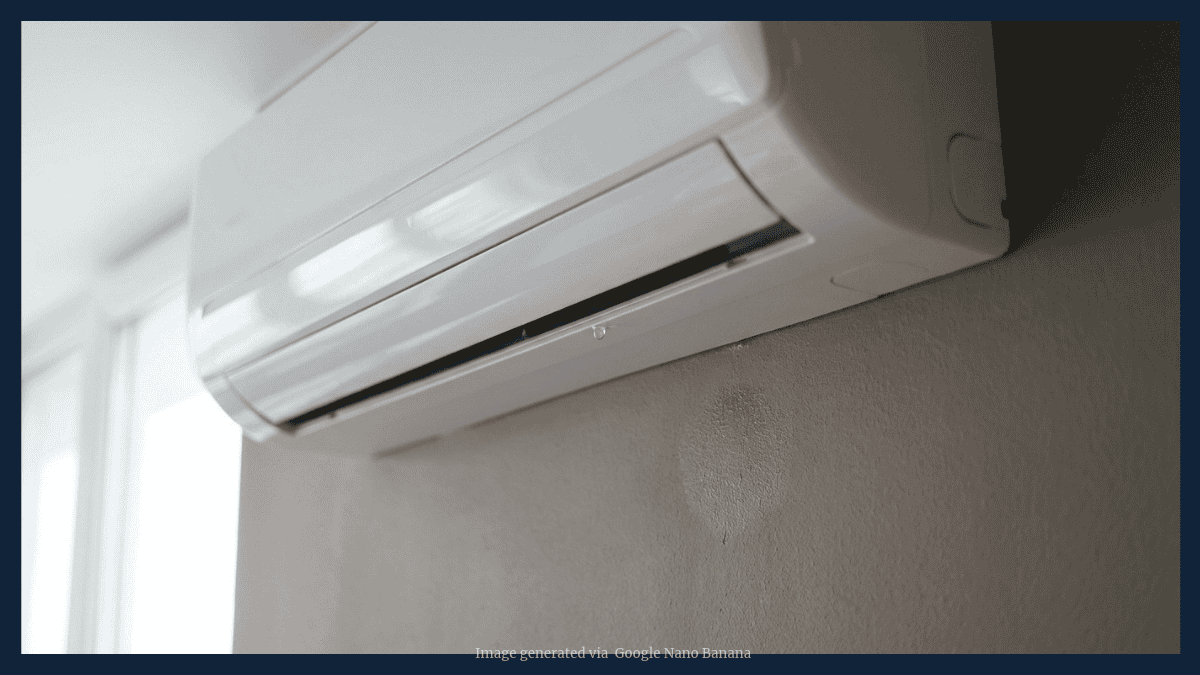
Water dripping from your air conditioner can be normal or a sign of a problem, depending on where the water is coming from. An AC naturally removes moisture from indoor air during cooling, but that water should usually drain through the system’s designated drainage path.
- Water dripping from the outdoor side of some AC units is normal.
- Water leaking from an indoor AC unit is generally not normal and should be investigated.
- A clogged condensate drain is a common cause of indoor AC water leaks.
- A dirty air filter can restrict airflow and contribute to evaporator coil freezing.
- Water dripping from a frozen coil may continue after the AC is switched off.
- Homeowners can perform basic visual checks and clean accessible filters, but electrical, refrigerant, and internal drainage repairs should be handled by qualified professionals.
- Addressing a leak early can help prevent damage to ceilings, walls, flooring, and nearby electrical components.
How does an air conditioner produce water?
An air conditioner does more than cool the air. It also removes moisture.
When warm indoor air passes over the cold evaporator coil, water vapor in the air condenses into liquid droplets. The water collects in a drain pan and flows through a condensate drain line, which typically carries it outside or to an approved drainage location.
This process is similar to the condensation that forms on a cold glass of water on a humid day.
The important distinction is that condensation itself is normal, but water escaping from the intended drainage system may indicate a problem.
Is it normal for an air conditioner to drip water?
It depends on where the water is dripping.
| Where the water appears | Is it normal? | What it may mean |
|---|---|---|
| Outside a window AC | Often normal | Condensation is draining from the unit’s outdoor side |
| At the designated condensate drain outlet | Usually normal | The AC is removing moisture from indoor air |
| Under the outdoor unit during cooling | Sometimes normal | Condensation may form on cold pipes or collect in the unit |
| From the indoor AC casing | Usually not normal | Drainage problem, excessive condensation, or installation issue |
| From a ceiling near a concealed AC | Not normal | Drainage, insulation, or concealed water damage may be involved |
| From the indoor air outlet | Not normal if persistent or substantial | Condensation, airflow, or drainage issue |
Window air conditioners are often designed to retain some water in their base pan and discharge excess moisture toward the outside. Do not drill drainage holes or remove plugs unless the manufacturer’s instructions specifically call for it.
7 Common reasons your air conditioner is dripping water
1. The condensate drain line is clogged
A clogged condensate drain line is one of the most common reasons an indoor AC leaks water.
As the air conditioner removes moisture, water travels from the drain pan through the condensate line. Over time, dirt, algae, biological buildup, or other debris can restrict the line.
When water cannot drain properly, it may accumulate in the pan and eventually overflow.
Signs of a clogged drain line:
- Water is dripping from the indoor unit.
- There is a puddle near the air handler or indoor AC.
- You notice a musty smell near the unit.
- The AC stops unexpectedly if a condensate safety switch is installed.
- Little or no water is coming from the expected drain outlet during humid weather.
What you can do:
- Turn off the air conditioner.
- Look for the visible condensate drain outlet, if safely accessible.
- Check whether the outlet appears obstructed.
- Look for water around the indoor unit or drain pan.
- Contact an HVAC technician if the line appears blocked or water continues to accumulate.
Some homeowners use a wet/dry vacuum to clear an accessible condensate drain line, but the procedure depends on the system’s layout. Do not attempt this if you cannot confidently identify the correct line or if the equipment is difficult to access.
Avoid forcing tools into the drain line or pouring chemicals into it unless the manufacturer or a qualified technician recommends the procedure.
2. The evaporator coil is frozen
An evaporator coil should become cold during normal operation, but it should not develop a layer of ice.
If the coil freezes, the ice may eventually melt and release more water than the drain pan can handle.
This can lead to dripping water around the indoor unit.
Common reasons an evaporator coil freezes include:
- A dirty or clogged air filter.
- Restricted airflow through the system.
- Dirty evaporator coils.
- A malfunctioning blower fan.
- Refrigerant-related problems.
A frozen coil may also cause the AC to cool poorly or produce unusually weak airflow.
What you can do:
- Turn off the cooling mode.
- If the system’s fan-only setting is available and the equipment is otherwise safe to operate, consult the manufacturer’s guidance before using it to help thaw the coil.
- Check the air filter and replace or clean it according to the manufacturer’s instructions.
- Look for visible ice without opening sealed equipment.
- Contact an HVAC professional if the coil freezes again or if you suspect a refrigerant or mechanical problem.
Do not chip ice off the coil with a sharp object. This can damage the coil and lead to a more expensive repair.
3. The drain pan is damaged or overflowing
The condensate drain pan collects water from the evaporator coil before it enters the drain line.
If the pan is cracked, corroded, improperly positioned, or overflowing, water may escape into the surrounding area.
Older systems may be more vulnerable to corrosion, while newer systems can still experience damage or installation problems.
Signs of a drain pan problem:
- Water appears beneath the indoor unit.
- The drain pan contains standing water.
- The leak continues even after the drain line is cleared.
- Water is dripping from a location below the pan.
A technician can inspect the pan, drainage connections, and any condensate safety switches.
4. The air conditioner is improperly installed or not level
An AC unit needs to be installed according to the manufacturer’s requirements so that condensate flows in the intended direction.
If the indoor unit, drain pan, or drainage hose is positioned incorrectly, water may collect in the wrong area or flow backward.
This is particularly relevant to wall-mounted mini-split systems, window AC units, and recently installed or relocated equipment.
Possible signs include:
- The leak began shortly after installation.
- Water consistently drips from one side of the unit.
- The drain hose has an upward section or visible kink.
- The indoor unit appears tilted.
- The leak occurs even though the drain line is not visibly blocked.
Do not attempt to reposition a heavy wall-mounted unit yourself. Contact the installer or an HVAC technician to verify the installation.
5. The air filter is dirty
A dirty air filter can restrict airflow across the evaporator coil.
When airflow becomes insufficient, the coil may become excessively cold and freeze. Once the ice melts, water can escape from the drainage system.
A dirty filter does not automatically mean the AC will leak, but it can contribute to the conditions that cause a leak.
What you can do:
- Turn off the AC before removing the filter.
- Check the filter for visible dust buildup.
- Clean or replace it according to the manufacturer’s instructions.
- Make sure the filter is installed in the correct direction.
- Check whether the AC’s airflow improves after servicing the filter.
Filter replacement intervals vary by filter type, household conditions, and equipment. Follow the manufacturer’s recommendations rather than relying on one universal schedule.
6. Condensation is forming on the ac’s surface or pipes
Sometimes, the water is not coming from the internal drainage system at all.
When a cold AC surface comes into contact with warm, humid air, moisture can condense on the surface.
This may occur around:
- The air outlet or louvers.
- The indoor unit’s casing.
- Refrigerant pipes.
- Poorly insulated pipe connections.
- Areas exposed to humid outdoor air.
This is especially common during periods of high humidity.
What you can do:
- Wipe away surface moisture.
- Keep windows and doors closed while the AC is cooling.
- Check whether the condensation returns.
- Have damaged or missing pipe insulation inspected.
- Follow the manufacturer’s recommendations for airflow and fan settings.
A few droplets around a cold surface may be condensation. Persistent dripping or water escaping from the indoor unit should still be investigated.
7. The condensate pump is malfunctioning
Some air conditioning systems use a condensate pump to move water away from the unit, especially when gravity drainage is not practical.
If the pump fails, its reservoir fills up and water may overflow.
Possible causes include:
- A failed pump motor.
- A blocked pump inlet.
- A stuck float switch.
- A blocked discharge hose.
- An electrical or control problem.
If you notice water leaking from a system that uses a condensate pump, turn off the AC and contact a qualified HVAC technician.
Do not open the pump housing or attempt electrical repairs unless you are qualified to do so.
What to do when your AC is dripping water
If your air conditioner is leaking water inside your home, follow these steps.
Step 1: Turn off the air conditioner
Turn off the cooling system to reduce additional condensation and prevent more water from accumulating.
If water is near electrical components, do not touch the unit, its wiring, or wet electrical equipment.
Step 2: Protect the surrounding area
Move furniture, electronics, and other belongings away from the leak.
Use towels or a suitable container to catch water if it is safe to do so.
If water is coming through a ceiling, avoid standing beneath a bulging or sagging area.
Step 3: Check the air filter
If the filter is easily accessible, inspect it for dust and debris.
Clean or replace it according to the manufacturer’s instructions.
Step 4: Look for visible drainage problems
If the condensate drain outlet is safely accessible, check whether it appears obstructed.
Do not climb onto an unsafe roof, dismantle the AC, or open electrical compartments to investigate a leak.
Step 5: Contact an HVAC professional if the leak persists
If the AC continues to leak, the evaporator coil is frozen, or the cause is unclear, arrange a professional inspection.
Water damage can spread beyond the immediate area and may affect insulation, ceilings, walls, and flooring.
When should you call an HVAC professional?
Some AC water leaks can be traced to a dirty filter or visible drainage issue. Others require professional diagnosis.
Contact an HVAC technician if:
- Water continues to leak after basic checks.
- The evaporator coil repeatedly freezes.
- The indoor unit is leaking heavily.
- Water is coming from a ceiling or concealed AC system.
- The condensate pump is not working.
- The AC is cooling poorly or shutting off unexpectedly.
- You suspect a damaged drain pan, refrigerant problem, or installation issue.
- Water is near electrical components.
If the leak is causing significant water damage, do not wait for the next routine maintenance visit.
Should you hire a professional to fix a leaking AC?
A professional HVAC technician can identify whether the leak comes from a blocked condensate line, damaged drain pan, frozen coil, condensate pump, or installation issue.
The right repair depends on the cause. Clearing a drain line is different from correcting a drainage slope, replacing a damaged pan, or diagnosing a refrigerant problem.
A technician can also check whether the system has a functioning condensate safety switch and whether the drainage setup follows the equipment manufacturer’s requirements.
For homeowners, the most useful first steps are to turn off the leaking AC, protect the surrounding area, and inspect the accessible air filter. Leave internal repairs and electrical or refrigerant work to qualified professionals.
How to prevent your air conditioner from dripping water
Preventive maintenance can reduce the risk of drainage problems and water damage.
- Inspect the air filter regularly and clean or replace it as recommended.
- Keep the AC’s air intake and supply vents unobstructed.
- Arrange periodic professional maintenance.
- Have the condensate drain line inspected and cleaned when needed.
- Check for visible water around the indoor unit.
- Address unusual smells, weak airflow, or repeated icing promptly.
- Verify that the condensate drain outlet is not obstructed.
- Keep windows and doors closed when cooling during humid weather.
- Have damaged pipe insulation repaired.
- Investigate leaks soon after installation or equipment relocation.
Regular maintenance is particularly important in humid climates, where air conditioners may remove substantial amounts of moisture.
Frequently asked questions
An indoor AC leak is commonly caused by a clogged condensate drain line, overflowing drain pan, frozen evaporator coil, or improper installation. Turn off the AC and investigate the accessible filter and drainage area. Contact a technician if the leak persists.
It can be normal. Some window AC units discharge excess condensation outdoors, and water may also form on cold outdoor refrigerant pipes during cooling. However, water in an unusual location or a leak that affects the equipment should be investigated.
Yes. A dirty filter can restrict airflow and contribute to evaporator coil freezing. When the ice melts, water may overwhelm the drainage system and leak indoors.
If water is leaking inside your home, turn off the AC to prevent additional water damage. If water is near electrical components, do not touch the equipment or wet electrical parts. Seek professional help if the area is unsafe.
If the evaporator coil has frozen, ice may continue melting after the AC is turned off. Water can also remain in the drain pan or overflow if the drainage system is blocked.
A mini-split may leak because of a blocked drain hose, improper installation, damaged drain pan, condensate pump problem, or condensation on cold surfaces. If the leak continues, contact the installer or an HVAC technician.
If water is leaking indoors, it is best to turn off the AC until the cause is identified. Continuing to operate it may increase water damage or allow an underlying problem to worsen.
Not necessarily. A water leak does not automatically indicate low refrigerant. A frozen evaporator coil can have several causes, including restricted airflow or a refrigerant-related problem. A qualified technician should diagnose the system rather than adding refrigerant based on the leak alone.
Sources and references:
- Trane — AC Leaking Water
- Carrier — Why Is My AC Leaking Water?
- Trane — AC Drain Line Clogged
- Daikin — Air Conditioning Troubleshooting
- Frigidaire — Water Dripping Outside a Room Air Conditioner
- GE Appliances — Air Conditioner Water Dripping Outside
- Samsung — What to Do When Water Drops Fall From an Air Conditioner
