
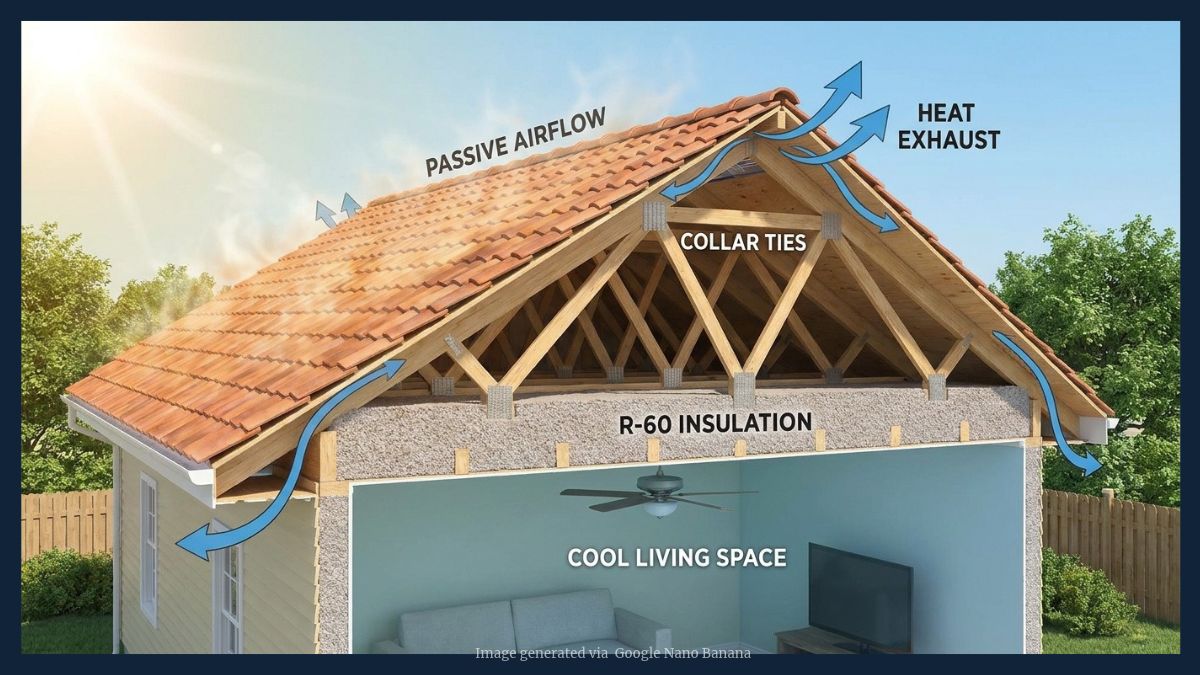
An attic can become much hotter than the outdoor air because the roof absorbs solar energy and transfers heat into the space beneath it. This is normal to some extent, particularly on sunny summer days. However, insufficient insulation, air leaks between the house and attic, blocked ventilation pathways, and poorly insulated ductwork can make the heat more disruptive to the rest of your home.
- A hot attic is not automatically evidence of a defect.
- Insulation and air sealing help reduce heat transfer into the living space.
- Ventilation can help in a properly designed vented attic, but more vents or a powered fan are not always the answer.
- Blocked soffit vents and poorly sealed ceilings can undermine attic performance.
- Wet insulation, mold, rotted framing, or roof leaks require attention beyond temperature control.
- Attic inspections can involve extreme heat, electrical hazards, and unsafe footing. Do not enter an unsafe attic to investigate.
Is it normal for an attic to be extremely hot?
Yes. An unconditioned attic beneath a sunlit roof can become significantly hotter than the outdoor air in summer. The roof absorbs solar energy, and the heat moves through the roof assembly into the attic.
The exact temperature depends on factors such as:
- Outdoor temperature and humidity.
- Direct sunlight and the roof’s orientation.
- Roofing material and color.
- Insulation levels.
- Air leakage between the home and attic.
- Ventilation design and whether airflow paths are unobstructed.
- The attic’s shape and construction.
There is no single attic temperature that proves your ventilation or insulation is defective. A high reading on a hot afternoon needs to be interpreted alongside the condition of the roof, insulation, ventilation, and rooms below.
When should you be concerned?
Investigate further if you notice:
- Upstairs rooms that become much hotter than the rest of the house.
- Air conditioning that struggles to maintain comfortable temperatures.
- Unusually high cooling bills.
- Large differences in temperature between rooms.
- Damp or compressed insulation.
- Musty odors, visible mold, or rotted roof framing.
- Roof leaks or water stains on the ceiling.
These signs can indicate an insulation, air-sealing, ventilation, HVAC, or moisture problem. They do not all point to the same cause.
What causes an attic to get so hot?
The roof absorbs heat from the sun
Roofing materials absorb solar energy and become hot. Some of that heat transfers through the roof deck into the attic.
The amount of heat depends on the roof’s material, color, orientation, shading, and exposure to direct sunlight. Darker roofs often absorb more solar energy than otherwise comparable lighter-colored roofs, although material properties and roof construction also matter.
What to do: If you are planning a roof replacement, discuss solar-reflective or cool-roof materials with a qualified roofing professional. The potential benefit depends on the climate, roof design, insulation, and local conditions.
You do not need to replace a functioning roof solely because the attic gets hot. Address the insulation and air leakage first when those are the more immediate problems.
The attic has too little insulation
Insulation slows heat transfer between the attic and the conditioned rooms below. If the attic floor has insufficient insulation, heat can move more easily into the living space.
Signs worth checking include:
- Insulation that is thin or uneven.
- Bare patches around the edges of the attic.
- Insulation that has been moved during previous work.
- Gaps around the attic hatch or access stairs.
- Upstairs rooms that are difficult to keep cool.
Insulation performance depends on the material, its installed thickness, its condition, and whether it has been properly installed.
What to do: From a safe viewing position, check whether insulation is evenly distributed and whether obvious gaps are present. If the insulation is below the level recommended for your climate, consider an energy assessment before adding more.
Do not cover recessed lights, hot flues, or other equipment unless the manufacturer’s clearance requirements and applicable building codes permit it.
Air leaks allow heat to move between the house and attic
Small openings around ceiling penetrations can allow air to pass between the living space and attic. Common locations include:
- Attic hatches and pull-down stairs.
- Recessed lights.
- Plumbing penetrations.
- Electrical wiring openings.
- Duct connections.
- Gaps around framing and ceiling edges.
Air movement can transfer heat and moisture. In some homes, warm air escaping through ceiling gaps can also contribute to moisture problems in the attic.
What to do: Look for obvious gaps around the attic access and ceiling penetrations from a safe location. Have air leaks sealed using methods appropriate to the materials and equipment involved.
Air sealing must be done carefully around chimneys, flues, combustion appliances, and heat-producing fixtures. Some openings require specific fire-rated materials or clearances.
Ventilation pathways are blocked or poorly designed
A vented attic commonly uses low intake vents, such as soffit vents, and higher exhaust vents, such as ridge or roof vents. This arrangement allows outdoor air to move through the attic.
Airflow may be reduced when:
- Insulation blocks soffit vents.
- Vent openings are covered by debris.
- Ventilation components are damaged.
- The roof design makes continuous airflow difficult.
- Intake and exhaust vents are poorly configured.
Ventilation helps remove heat and moisture in a properly designed system, but it cannot compensate for every insulation or air-leakage problem.
What to do: From a safe location, look for visible obstructions at accessible vents. A qualified contractor can assess whether the intake and exhaust arrangement is appropriate for the roof design and applicable code.
Do not simply cut new openings or add vents without considering the existing ventilation layout.
The attic fan is missing, ineffective, or incorrectly installed
A powered attic fan may appear to be an obvious solution to extreme heat, but it is not always the best first improvement.
If the fan cannot draw enough outdoor air through appropriate intake vents, it may pull conditioned air from the house through ceiling leaks. That can increase cooling demand and energy costs.
An attic fan may also be ineffective if the underlying issue is inadequate insulation or air leakage.
What to do: Before installing a powered fan, assess insulation, air sealing, and passive ventilation. If a fan is already installed, have a professional check its airflow path and controls rather than assuming it needs to run longer.
The attic contains inadequately insulated HVAC ducts
Some homes have air-conditioning ducts or equipment located in the attic. In a very hot attic, inadequately insulated or leaky ducts can gain heat or lose conditioned air before it reaches the rooms.
Possible clues include:
- Air conditioning that struggles on hot afternoons.
- Rooms that remain warm despite long cooling cycles.
- Noticeable differences between rooms.
- Duct insulation that appears damaged or incomplete.
- Visible gaps at duct joints.
What to do: Ask an HVAC professional to inspect duct sealing, insulation, and airflow. Avoid disturbing ductwork or electrical connections yourself if you are not trained to work on them.
Moisture is affecting the attic
Moisture problems can coexist with excessive heat. Roof leaks, plumbing leaks, or bathroom and dryer exhaust ducts that discharge into the attic can wet insulation and framing.
Look for:
- Damp or compressed insulation.
- Water stains on roof sheathing.
- Mold-like growth.
- Rotted wood.
- Condensation on cold surfaces or ducts.
- Exhaust ducts that terminate inside the attic.
Wet insulation may perform less effectively depending on the material and extent of moisture. More importantly, persistent moisture can damage building materials and encourage mold growth.
What to do: Correct the source of moisture before adding insulation or making cosmetic repairs. Have a professional assess wet insulation, visible mold, rotted framing, or exhaust ducts that do not terminate outdoors.
How to identify the cause of your hot attic
| What you notice | Possible cause | What to check next |
|---|---|---|
| Upstairs rooms become hot in the afternoon | Heat transfer through the ceiling or roof | Insulation, air leaks, roof exposure |
| Cooling bills are high and rooms feel uneven | Insulation gaps, air leakage, or HVAC problems | Attic insulation, ceiling penetrations, ducts |
| Insulation is thin or uneven | Inadequate or disturbed insulation | Coverage and recommended insulation levels |
| Soffit vents appear covered | Restricted intake airflow | Safe visual inspection and ventilation assessment |
| Attic fan runs but rooms remain hot | Fan may not address the main problem | Air sealing, insulation, and fan airflow path |
| Ducts are hot, damaged, or poorly insulated | Heat gain or leakage in attic ductwork | HVAC inspection |
| Damp insulation or roof stains are visible | Roof leak, condensation, or exhaust moisture | Roof condition and moisture source |
| Musty odor or rotted framing | Persistent moisture problem | Professional moisture and roof inspection |
Use these clues to prioritize an inspection. They are not substitutes for a full assessment when damage, unsafe conditions, or complex ventilation issues are present.
How to check your attic safely
Attics can be dangerous, particularly during hot weather. Temperatures may rise well above outdoor temperatures, and the space may contain exposed wiring, nails, unstable surfaces, and inadequate flooring.
If the attic is extremely hot, difficult to access, or poorly lit, inspect only from a safe position or hire a professional.
Step 1: Check the rooms below the attic
Notice whether the problem affects one room or the entire upper floor. Record when the rooms become hottest and whether the AC struggles to maintain the set temperature.
This helps distinguish attic heat transfer from other issues, such as uneven HVAC airflow or direct sunlight through windows.
Step 2: Review your energy bills
Compare cooling costs across similar periods when possible. Higher bills alone do not prove an attic problem because weather, electricity rates, occupancy, and AC usage also affect costs.
However, a sustained increase combined with hot rooms may justify checking insulation, air leakage, and HVAC performance.
Step 3: Inspect the attic access and visible insulation
If the attic can be viewed safely from the access point, look for:
- Obvious gaps around the hatch.
- Bare or uneven insulation coverage.
- Signs of water damage.
- Damaged or displaced insulation.
Do not step onto drywall or ceiling panels. Walk only on proper structural framing or a suitable permanent platform, and do not enter if you cannot clearly identify safe footing.
Step 4: Look for visible ventilation openings
From a safe location, check whether soffit vents, ridge vents, or other existing openings appear blocked or damaged.
Do not remove roof components or climb onto the roof to inspect vents during extreme heat or unsafe weather.
Step 5: Check for moisture warning signs
Look for visible stains, damp insulation, mold-like growth, or damaged wood. If you see these signs, investigate the moisture source before adding insulation or sealing openings.
If you find extensive damage, suspected mold, or unsafe wiring, leave the area and arrange professional assistance.
Step 6: Consider a professional energy assessment
An energy auditor or qualified building professional can evaluate insulation, air leakage, and the home’s thermal performance. An HVAC professional can assess ductwork and cooling performance, while a roofer can investigate roof defects.
The best specialist depends on the evidence. A hot attic does not automatically mean the roof, AC, or ventilation system is defective.
How to reduce attic heat
Improve attic insulation
If insulation is insufficient or uneven, adding the appropriate type and amount can reduce heat transfer between the attic and the rooms below.
The correct insulation level depends on climate, construction, and applicable recommendations. Avoid simply piling insulation over existing materials without checking for moisture, wiring hazards, and ventilation clearances.
Seal air leaks at the ceiling
Sealing appropriate gaps around the attic hatch, wiring penetrations, and other ceiling openings can reduce unwanted air movement.
Use suitable materials and follow fire-safety clearances. Openings around chimneys, flues, and certain fixtures require special treatment.
Make sure existing ventilation works as designed
Clear obstructions from accessible vents and have the overall ventilation arrangement assessed if the attic appears poorly ventilated.
Do not assume that more vents are always better. Vent location, intake and exhaust balance, roof design, and local building requirements all matter.
Inspect and insulate attic ductwork
If HVAC ducts are in the attic, have them checked for leaks, damaged insulation, and poor connections. Improving duct sealing and insulation may help cooling performance and reduce energy waste.
Consider a radiant barrier where appropriate
A radiant barrier installed in a suitable roof assembly can reduce radiant heat transfer from a hot roof. Its benefits depend on climate, installation, roof construction, and other factors.
Discuss the option with a qualified contractor rather than treating it as a universal fix.
Consider reflective roofing when replacing the roof
Some roofing products reflect more sunlight and absorb less solar energy than conventional alternatives. If roof replacement is already planned, ask about products suitable for your climate and roof design.
Replacing a roof solely to lower attic temperature may not be cost-effective if insulation and air leakage are the primary issues.
Should you install an attic fan?
Not necessarily. A powered attic fan can move air, but it does not replace proper insulation and air sealing.
Before installing one, consider:
- Is the attic properly insulated from the rooms below?
- Are ceiling air leaks sealed?
- Are existing intake and exhaust vents unobstructed?
- Is the attic a vented design intended to use outdoor airflow?
- Could the fan pull conditioned air from the house?
- Is the fan suitable for the roof and ventilation design?
The U.S. Department of Energy’s Building America Solution Center recommends prioritizing insulation, air sealing, and appropriate passive ventilation when addressing a hot attic. A powered fan may offer limited benefit if the ceiling is already well-insulated, and a poorly supplied fan can increase energy use.
Assess insulation and air leakage before spending money on a powered attic fan.
When should you hire a professional?
- The attic has wet insulation, visible mold, or rotted framing.
- You suspect a roof leak.
- Bathroom or dryer exhaust appears to terminate in the attic.
- Ventilation is absent, blocked, or difficult to assess.
- You find damaged electrical wiring or older wiring that may be unsafe near insulation.
- The attic is inaccessible or dangerously hot.
- Your home remains uncomfortable despite apparently adequate insulation.
- You are considering major ventilation, insulation, or roof modifications.
Which professional should you contact?
| Problem | Professional to consider |
|---|---|
| Insufficient insulation or ceiling air leaks | Qualified insulation contractor or home energy auditor |
| Damaged shingles, flashing, or roof leaks | Qualified roofer |
| Hot or leaky attic ductwork | HVAC contractor |
| Mold, wet insulation, or moisture-damaged framing | Qualified moisture or restoration professional |
| Structural damage to rafters or framing | Qualified structural or building professional |
| Electrical hazards | Licensed electrician |
Ask the contractor to identify the cause and explain the recommended repair. Be cautious of proposals that recommend a fan or additional vents without assessing insulation, air leakage, and existing ventilation.
Frequently asked questions
There is no single temperature that proves an attic is defective. Attics can become much hotter than outdoor air under direct sunlight. Focus on whether heat is affecting rooms below, whether insulation and ventilation are functioning properly, and whether there are signs of moisture or roof damage.
Proper ventilation can help remove heat from a vented attic, provided intake and exhaust pathways are correctly designed and unobstructed. However, ventilation alone cannot compensate for insufficient insulation or air leaks between the attic and living space.
It may reduce attic heat under some conditions, but it is not a guaranteed solution. If the fan draws conditioned air through ceiling leaks or lacks adequate outdoor-air intake, it can increase cooling costs. Check insulation, air sealing, and passive ventilation first.
Yes. Insufficient or uneven insulation allows more heat to transfer from the attic into the rooms below. Air leaks can make the problem worse by allowing unwanted air movement between the attic and living space.
The roof absorbs solar energy and transfers heat into the attic. Under direct sunlight, the roof and attic can become much hotter than shaded outdoor air. The difference depends on roof materials, sunlight, ventilation, insulation, and construction.
It can contribute to higher cooling demand when heat transfers into the living space or when HVAC ducts and equipment in the attic are inadequately insulated or sealed. However, electricity costs also depend on outdoor weather, equipment efficiency, thermostat settings, and household usage.
Heat alone does not establish that mold will grow. Moisture is the critical factor. Roof leaks, damp insulation, condensation, and exhaust ducts that release moist air into the attic can create conditions that support mold growth.
Not without assessing the existing conditions. Wet insulation, blocked vents, roof leaks, and unsafe wiring should be addressed first. In a vented attic, insulation must be installed without blocking required airflow paths.
Only if the attic was designed with suitable openings and the method is consistent with the roof’s ventilation design. Randomly opening or modifying roof openings can introduce rain, pests, or moisture and may disrupt intended airflow.
Sources and references:
- ENERGY STAR — About Attic Ventilation
https://www.energystar.gov/saveathome/seal_insulate/do-it-yourself-guide/about-attic-ventilation - ENERGY STAR — Well-Insulated and Sealed Attic
https://www.energystar.gov/products/energy_star_home_upgrade/attic_insulation - ENERGY STAR — Attic Air Sealing Project
https://www.energystar.gov/saveathome/seal_insulate/attic-air-sealing-project - U.S. Department of Energy, Building America Solution Center — Attic Ventilation Fans
https://basc.pnnl.gov/information/attic-ventilation-fans - U.S. Department of Energy, Building Science Education — Air Sealing Existing Attics
https://bsesc.energy.gov/energy-basics/air-sealing-existing-attics - U.S. Environmental Protection Agency — Remodeling Your Home and Indoor Air Quality
https://www.epa.gov/indoor-air-quality-iaq/remodeling-your-home-and-indoor-air-quality
