
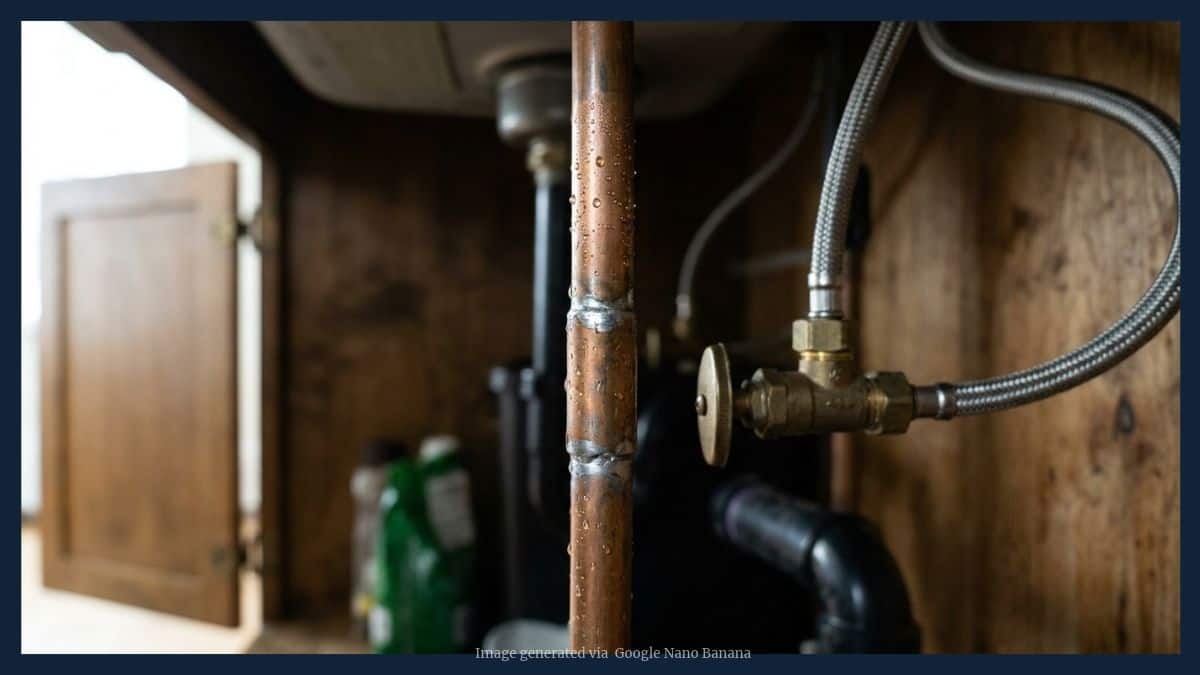
Condensation on pipes usually forms when warm, humid air contacts a pipe surface that is colder than the air’s dew point. Moisture in the air turns into water droplets on the outside of the pipe, making it look as though the pipe is leaking. This commonly happens on cold-water pipes in humid homes, basements, bathrooms, and under kitchen sinks.
Pipes sweat when moisture in humid air condenses on a cold surface. High indoor humidity, cold water flowing through the pipe, and missing or damaged insulation can make the problem worse. Dry the area, monitor when the droplets return, and inspect visible pipe surfaces and joints without dismantling anything. Properly fitted pipe insulation and moisture control can reduce condensation. If water continues dripping, pools around a joint, or causes damage, have a plumber investigate a possible leak.
Why are my pipes sweating?
Do not touch exposed electrical components or wet electrical equipment near dripping pipes. If water is reaching outlets, wiring, or electrical appliances, keep away from the affected area and arrange appropriate professional help. If a pipe is actively leaking, shut off the relevant water supply if you can safely identify and operate the correct valve. Do not open walls or ceilings without considering hidden wiring, mold, and other hazards.
1. High indoor humidity
High indoor humidity is one of the most common reasons pipes develop condensation.
Air contains water vapor. When humid air touches a cold pipe, the air near the surface cools. If it reaches its dew point, water vapor condenses into droplets on the outside of the pipe.
This is similar to the water that forms on the outside of a cold drinking glass on a warm day. The glass is not leaking, and neither is the pipe necessarily leaking. The water comes from moisture in the surrounding air.
Signs that humidity Is contributing:
- Several cold-water pipes develop droplets at the same time.
- Pipes are wetter during humid weather.
- Moisture appears in bathrooms, laundry rooms, kitchens, or poorly ventilated utility spaces.
- The droplets lessen when the surrounding air becomes drier.
- The pipe surface is cold to the touch, while nearby surfaces remain dry.
These clues suggest condensation, but they do not rule out a plumbing leak.
What to do:
Use a hygrometer to measure indoor relative humidity. The U.S. Environmental Protection Agency recommends keeping indoor relative humidity below 60%, ideally between 30% and 50% when possible, to help discourage mold growth.
If humidity is high, identify the source. Showering, cooking, indoor laundry drying, and poorly vented appliances can add moisture to the air.
Use bathroom and kitchen exhaust fans when generating moisture, and make sure they vent outdoors. A dehumidifier may help in a persistently damp basement or utility room.
Avoid assuming that opening a window will always reduce humidity. In humid weather, outdoor air may introduce additional moisture.
2. Cold water running through the pipes
Cold-water pipes are especially susceptible to condensation because the water inside can keep the pipe surface cold enough for moisture to form.
The effect may become more noticeable when the water supply is particularly cold relative to the surrounding air. In a humid room, even a properly functioning pipe can collect droplets.
Signs to look for:
- Moisture develops after using a faucet or shower.
- The pipe feels cold while droplets form on its exterior.
- Several exposed cold-water pipes show similar moisture.
- The droplets appear on the pipe surface rather than emerging from a joint.
A pipe does not have to be damaged to sweat. The temperature difference between the pipe and the surrounding air can be enough.
What to do:
Dry the outside of the pipe and observe what happens during normal household use. Note whether moisture appears across a broad section of the pipe or repeatedly emerges from one particular point.
If the entire cold pipe becomes damp in humid conditions, condensation is plausible. If water continues to emerge from a fitting or a specific spot, a leak needs to be considered.
Do not deliberately run water or recreate a suspected leak to test it. Observe the problem during ordinary use and arrange an inspection if the source remains unclear.
3. Missing or damaged pipe insulation
Insulation helps keep a pipe’s exterior surface closer to the temperature of the surrounding air. On cold-water pipes, appropriate insulation can reduce the likelihood of condensation forming on the surface.
When a pipe is uninsulated, condensation may form directly on the pipe. When existing insulation is damaged, incomplete, or poorly fitted, moisture may still develop around exposed sections, joints, and fittings.
Signs of an insulation problem:
- Condensation forms on exposed pipe sections while nearby insulated sections remain dry.
- Foam sleeves are torn, loose, or missing.
- Moisture collects around bends, valves, or joints where insulation is incomplete.
- The pipe repeatedly becomes wet in humid conditions.
Insulation is particularly useful on cold-water supply pipes in damp spaces, including some basements, crawl spaces, and areas under sinks.
What to do:
For accessible, ordinary cold-water supply pipes, consider installing pipe insulation designed for the pipe size and application.
Measure the pipe and select a suitable sleeve. Fit it closely around the pipe, and pay attention to joints, bends, and fittings that would otherwise remain exposed. Follow the insulation manufacturer’s instructions, including any requirements for moisture-resistant seams or vapor barriers.
Do not cover an active leak with insulation. First establish whether the pipe is sound and dry the area.
If the pipework is concealed, severely corroded, or difficult to access safely, ask a plumber to inspect it before making changes.
The U.S. Department of Energy’s Building America Solution Center recommends insulating cold-water supply pipes where condensation may be an issue.
4. Poor ventilation in bathrooms, basements, and utility rooms
Moisture can build up in rooms where humid air is not removed effectively. This can make pipe condensation worse, especially when cold pipes run through enclosed or poorly ventilated spaces.
Bathrooms and laundry rooms generate moisture during ordinary activities. Basements may also experience dampness from the ground, foundation, or other sources.
Clues to look for:
- Pipes are wet in a room that feels damp or stuffy.
- Condensation appears alongside moisture on other cold surfaces.
- The room has a persistent musty smell.
- Moisture is worse after showers, laundry, or other moisture-producing activities.
A musty smell can indicate a moisture problem, but it does not establish that condensation on the pipes is the source.
What to do:
Improve moisture removal where appropriate. Use bathroom exhaust fans, make sure laundry appliances are vented correctly, and address any water entering through walls or floors.
In a basement, investigate persistent dampness rather than relying only on ventilation. Outdoor air can sometimes be more humid than basement air, so opening basement windows may make condensation worse under certain conditions.
If a pipe is wet alongside damp walls, standing water, or visible mold, assess the broader moisture problem rather than treating the pipe alone.
5. A plumbing leak that looks like condensation
One of the most important steps is determining whether the water is forming on the pipe surface or escaping from the plumbing system.
A small leak can resemble condensation, particularly when water spreads along the pipe before dripping onto the floor. Water may also travel along a pipe from a source located above or nearby.
Signs that may indicate a leak:
- Water repeatedly emerges from one fitting, joint, or damaged section.
- A localized area stays wet even when surrounding pipe surfaces are dry.
- Water continues dripping or pooling without an obvious relationship to humidity.
- You notice corrosion, mineral deposits, staining, or deterioration near a joint.
- Nearby cabinets, walls, or floors develop unexplained water damage.
- Your water meter or water pressure behavior suggests a possible plumbing problem.
No single clue confirms a leak. Condensation can also accumulate at low points and drip from a pipe, so the location of the final drip may not reveal the source.
What to do:
Dry the accessible pipe surface and surrounding area. Observe whether moisture returns as a general film of droplets across the cold pipe or appears to emerge from a particular point.
Check for visible corrosion and damage without loosening fittings or dismantling the plumbing.
If water continues to appear at one spot, a joint looks damaged, or the cause remains uncertain, contact a plumber. A professional can determine whether the pipe is leaking and whether repair or replacement is needed.
Do not assume that adding insulation will solve a leak. Insulation can hide ongoing moisture and make a developing problem harder to notice.
6. Condensation on air-conditioning refrigerant lines
Not every cold pipe in a home is a domestic water pipe. Air-conditioning systems also use refrigerant lines, and some of these lines become cold during normal operation.
In many split-system air conditioners, the larger insulated refrigerant line can become cold enough for moisture in humid air to condense on its surface. If the insulation is missing, damaged, or poorly sealed, droplets may form and drip onto nearby walls, ceilings, or floors.
Signs to look for:
- The wet pipe runs between the indoor and outdoor AC units.
- Moisture appears when the air conditioner is operating.
- Insulation around the line is torn, missing, or wet.
- Water appears near the wall penetration where the refrigerant lines enter the building.
These signs may point to condensation on a refrigerant line, but water near an air conditioner can also come from a blocked condensate drain, a drain-pan problem, or another source.
What to do:
Inspect the visible insulation from a safe position. Do not open the refrigerant circuit, disconnect the line, or attempt to recharge the system.
If insulation is damaged or water is dripping onto building materials, arrange an HVAC inspection. The technician can check the insulation and determine whether the moisture is coming from the refrigerant line or another part of the system.
If the pipe is associated with an air conditioner, avoid treating it automatically as ordinary plumbing. The appropriate repair depends on the type of line and the source of the water.
7. Condensation on drain pipes or other cold plumbing
Drain pipes and other plumbing components can also develop condensation under certain conditions, particularly when cold water passes through them or the surrounding air is humid.
For example, a drain pipe may become cold when a fixture releases cold water. Moisture can then collect on its exterior. However, drain connections and traps can also leak, so the presence of droplets does not establish the cause.
Signs to look for:
- Moisture appears after normal use of a sink or other fixture.
- Droplets form on a broad section of cold pipe.
- A joint or connection remains wet after the surrounding pipe dries.
- Moisture is accompanied by a musty odor or damage to the cabinet or wall below.
What to do:
Dry the visible pipe and check the surrounding area for signs of damage. Observe whether the moisture is distributed across the cold surface or concentrated at a connection.
Do not disassemble a drain trap or plumbing joint unless you know how to restore it correctly and can safely manage the water involved.
If a drain connection repeatedly becomes wet, water appears after fixture use, or the cabinet or wall is deteriorating, arrange a plumbing inspection.
How to tell pipe condensation from a plumbing leak
Use the following table to organize what you observe. These patterns can guide troubleshooting, but they cannot confirm the cause on their own.
| What You Notice | Possible Explanation | What to Check Next |
|---|---|---|
| Droplets across a cold pipe during humid weather | Surface condensation | Indoor humidity and pipe temperature |
| Condensation is worse after cold water use | Pipe surface cooling | Whether droplets form across the pipe or at one point |
| Moisture appears around one fitting | Possible leak or localized condensation | Joint condition and whether water continues emerging |
| Water drips from insulation around an AC line | Condensation within or around insulation, or another AC moisture issue | Visible insulation and the source of the water |
| A pipe remains wet after the surface is dried | Persistent condensation or a leak | Moisture pattern and surrounding conditions |
| Damp cabinet, wall, or floor beneath a pipe | Possible leak or ongoing condensation damage | Nearby joints, pipe surfaces, and signs of water damage |
| Water appears alongside corrosion or staining | Possible plumbing leak or prolonged moisture exposure | Professional inspection if the cause is unclear |
The most reliable diagnosis comes from identifying where the water originates, not simply where it eventually drips.
How to stop condensation on pipes
The right solution depends on whether the problem comes from humid air, a cold pipe surface, damaged insulation, or a leak.
1. Reduce excess indoor humidity
Measure relative humidity with a hygrometer. If it is consistently high, identify moisture sources and improve ventilation where appropriate.
Run exhaust fans when showering and cooking, and make sure moisture-producing appliances are properly vented.
A dehumidifier may help in damp spaces. However, humidity control will not repair a leaking pipe or an AC condensate drain problem.
2. Insulate accessible cold-water pipes
Use pipe insulation intended for the pipe and environment. Fit it closely and cover accessible sections consistently, including suitable bends and fittings.
Avoid leaving gaps that allow humid air to reach the cold pipe. Follow the product instructions for joints and moisture-resistant sealing.
If the pipe is already wet, first establish whether the water is condensation or a leak. Dry the surface and inspect for damage before covering it.
3. Improve moisture removal
Address the sources of excess moisture in bathrooms, laundry rooms, kitchens, and utility spaces.
In basements, check for water intrusion and damp building materials. Do not rely on ventilation alone if the room is affected by groundwater, foundation seepage, or plumbing leaks.
4. Repair damaged insulation
Replace damaged or incomplete insulation where appropriate. If moisture has penetrated the insulation, inspect the pipe and surrounding materials before installing a replacement.
Wet insulation may no longer perform effectively and can conceal corrosion or a leak.
5. Repair plumbing leaks promptly
If water is escaping from a pipe or joint, the leak must be repaired. Drying the area, reducing humidity, or wrapping the pipe will not resolve the underlying plumbing defect.
A plumber can assess the damaged section and determine the appropriate repair.
6. Address AC line insulation separately
If the wet pipe belongs to an air-conditioning system, have an HVAC professional inspect the insulation and nearby condensate drainage components.
Do not apply ordinary plumbing repair methods to refrigerant lines or open the sealed refrigeration system.
7. Dry wet surfaces and monitor for damage
Remove standing water from accessible surfaces and dry nearby cabinets, floors, and walls. Monitor the area for recurring moisture, staining, swelling, or mold.
If water has soaked into porous materials or the area remains damp, the moisture source needs to be addressed before the damage worsens.
The EPA recommends controlling moisture, drying wet materials promptly, and repairing water problems to help prevent mold growth.
Can condensation on pipes cause mold or water damage?
Yes. Persistent condensation can keep nearby materials damp and contribute to mold growth, staining, corrosion, or deterioration.
The risk depends on how much moisture accumulates, how often the pipe becomes wet, and whether surrounding materials dry between episodes. A few temporary droplets on an exposed pipe are different from recurring dripping that keeps a cabinet or wall wet.
Pay particular attention to:
- Swollen or discolored cabinet panels.
- Soft or deteriorating wood.
- Peeling paint or damaged drywall.
- Persistent musty odors.
- Visible mold around the pipe or inside an enclosure.
- Corrosion or deterioration on metal plumbing components.
Do not assume that every dark stain is mold or that every damp area comes from condensation. If water damage continues, investigate the source. Extensive suspected mold or moisture inside a wall may require professional assessment.
DIY vs. Professional help: When should you call a plumber?
DIY checks may be reasonable when:
- The pipe is visible and easily accessible.
- Droplets appear across a cold-water pipe in humid conditions.
- You can safely measure indoor humidity.
- You can improve ventilation without creating another moisture problem.
- You can install suitable insulation on an accessible, undamaged pipe.
- Water repeatedly emerges from a fitting or damaged pipe.
- Moisture persists despite reasonable humidity control and insulation.
- Corrosion, staining, or water damage is visible.
- A pipe is concealed inside a wall or ceiling and the source is unclear.
- You cannot distinguish condensation from a leak.
- The pipe or fitting appears damaged or unstable.
If the wet pipe belongs to an AC system, contact an HVAC technician instead. If water is reaching electrical equipment, prioritize electrical safety and keep away from the affected area.
Next steps: A pipe condensation checklist
Use this checklist to investigate safely:
- Identify whether the wet pipe carries domestic water, drains wastewater, or belongs to an AC system.
- Dry the accessible exterior surface.
- Observe whether droplets form across the pipe or appear at a particular joint.
- Note whether moisture occurs during humid weather or after normal water use.
- Check indoor humidity with a hygrometer.
- Inspect visible insulation for gaps, damage, or missing sections.
- Look for nearby staining, corrosion, swelling, or musty odors.
- Improve moisture removal if indoor humidity is high.
- Install suitable insulation only after checking for leaks and damage.
- Contact a plumber or HVAC technician if water continues to appear or the source remains uncertain.
Frequently asked questions
Condensation can be normal when cold pipes are exposed to warm, humid air. It becomes a concern when moisture accumulates repeatedly, damages nearby materials, or creates conditions that support mold growth. Persistent dripping should not automatically be dismissed as normal condensation.
Occasional droplets may be harmless if the surface dries quickly. However, repeated condensation can damage cabinets, floors, and nearby building materials. If the pipe remains wet or water pools underneath it, investigate the cause.
Properly installed insulation can reduce condensation by limiting contact between humid air and the cold pipe surface. It works best when the material is suitable for the application and covers the pipe consistently. Insulation will not fix a plumbing leak.
Warm, humid summer air can contain substantial moisture. When that air contacts a cold-water pipe, condensation may form. Improving moisture control and insulating suitable cold-water pipes can help reduce the problem.
Yes. Persistent moisture around pipes can support mold growth on nearby wood, drywall, insulation, and other materials. Dry wet areas, reduce excess humidity, and address the source of recurring moisture.
Condensation often appears as droplets across a cold surface, while a leak may produce water at a damaged section or joint. However, water can travel along a pipe, and the patterns can overlap. Dry the accessible surface, observe the moisture pattern, and contact a plumber if the source remains uncertain.
Hot-water pipes are generally insulated for different reasons, including reducing heat loss. Pipe insulation should be selected for the pipe’s purpose and installation conditions. If the issue is condensation, focus on the cold surfaces where moisture is forming and follow appropriate insulation guidance.
Sources and references:
- U.S. Environmental Protection Agency (EPA). “What Are the Main Ways to Control Moisture in Your Home?” Guidance on condensation, indoor humidity, and moisture control.
https://www.epa.gov/mold/what-are-main-ways-control-moisture-your-home - U.S. Department of Energy, Pacific Northwest National Laboratory. “Insulating Plumbing Pipes.” Guidance on insulating cold-water pipes where condensation may occur.
https://basc.pnnl.gov/resource-guides/insulating-plumbing-pipes - International Association of Certified Home Inspectors (InterNACHI). “Condensation Inspection.” Discussion of condensation on cold-water pipes, humidity, insulation, and the need to distinguish condensation from leaks.
https://www.nachi.org/condensation-inspection.htm - U.S. Environmental Protection Agency (EPA). “A Brief Guide to Mold, Moisture, and Your Home.” Guidance on moisture control and mold prevention.
https://www.epa.gov/mold/brief-guide-mold-moisture-and-your-home - U.S. Department of Energy. “Pipes in Exterior Walls.” Guidance on pipe insulation and wall-cavity considerations.
https://bsesc.energy.gov/energy-basics/pipes-exterior-walls
