
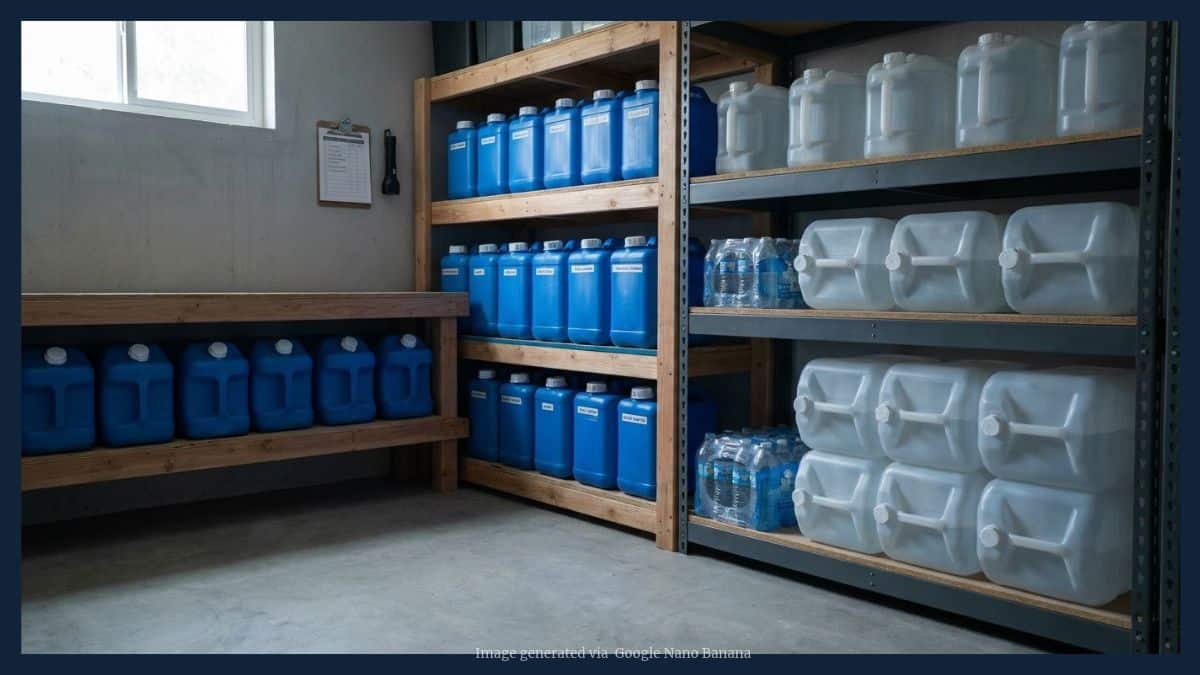
A water outage, severe storm, or other emergency can interrupt your household’s access to safe drinking water. Having water stored in advance can help you get through the disruption, but storing it improperly may expose your supply to contamination.
- Use food-grade containers specifically designed for drinking water.
- Clean and sanitize containers before filling them.
- Store safe drinking water in tightly sealed containers.
- Keep water in a cool, dark location away from chemicals and direct sunlight.
- Label containers with the contents and storage date.
- Replace water you fill yourself every six months, following CDC guidance.
- Never use containers that previously held gasoline, pesticides, or other toxic chemicals.
- If an emergency water advisory is issued, follow local public health instructions before using stored or tap water.
The CDC recommends storing at least 1 gallon of water per person per day for three days, and trying to maintain a two-week supply when possible. This article focuses on how to store that water safely.
Choose the right emergency water storage containers
The container you choose plays an important role in keeping stored water safe. A container that is not designed for drinking water may allow chemicals to transfer into the water or make it easier for contaminants to enter.
The CDC recommends using food-grade water storage containers. These are designed to hold water or food without transferring harmful substances under their intended conditions of use.
What makes a water storage container safe?
Look for a container that:
- Is labeled food-grade or specifically intended for drinking water.
- Has a tight-fitting lid that prevents contamination.
- Is made from durable, unbreakable material.
- Has an opening that allows water to be poured without placing hands or objects inside.
- Is easy to clean and sanitize before use.
Food-grade plastic containers designed for water storage are often practical for households. Purpose-built water storage containers may also include handles or spigots that make dispensing easier.
Common water storage container options
| Container Type | Suitable for Emergency Storage? | Important Considerations |
|---|---|---|
| Food-grade water storage containers | Yes | Designed for drinking water and often available in larger sizes |
| Unopened commercially bottled water | Yes | Convenient and reliable; follow the manufacturer’s date and storage instructions |
| Food-grade plastic jugs | Yes, if intended for drinking water | Check that they are durable, clean, and tightly sealed |
| Glass containers | Generally not preferred | Can break and create a safety hazard |
| Ordinary household buckets | Only if food-grade and suitable for water | Many are not designed for drinking water storage |
| Containers previously used for chemicals | No | May transfer harmful substances into the water |
Never reuse a container that previously held gasoline, pesticides, cleaning chemicals, or other toxic substances. Washing the container does not necessarily remove chemical residues.
The CDC also advises choosing durable containers with tight closures and, where possible, a narrow opening that helps prevent contamination during pouring.
Clean and sanitize water storage containers before filling
Even a food-grade container can contaminate water if it has not been cleaned properly.
Before filling a container with water for emergency storage, wash and sanitize it. Follow the manufacturer’s instructions when available.
Step-by-step container preparation
Step 1: Wash the container
Wash the container and its lid with soap and water. Rinse thoroughly so no soap residue remains.
Step 2: Prepare a sanitizing solution
The CDC recommends using unscented household chlorine bleach containing 5%–9% sodium hypochlorite.
For container sanitization, mix:
- 1 teaspoon of unscented liquid household chlorine bleach
- 1 quart (4 cups) of water
Do not use scented bleach, bleach with added cleaners, or products with an unknown concentration.
Step 3: Sanitize the container
Pour the solution into the container. Close the lid and shake it so the solution touches all interior surfaces.
Step 4: Wait
Allow the solution to remain in contact with the container for at least 30 seconds.
Step 5: Empty and air-dry
Pour out the sanitizing solution and allow the container to air-dry.
Step 6: Fill with safe water
Fill the sanitized container with safe drinking water and close it tightly.
This sanitizing process is for preparing the container. It is not a substitute for treating water that may already be contaminated.
Use safe water when filling your containers
A clean container does not make unsafe water safe to drink. The water you put inside must already be safe or must be treated using an appropriate method.
Can you store tap water?
If your tap water is safe to drink and no local advisory says otherwise, it may be suitable for emergency storage in properly cleaned and sanitized containers.
However, water quality can vary by location. If your water comes from a private well, rainwater system, or another source that is not routinely monitored, make sure it has been properly treated before storing it for drinking.
If you are uncertain about the safety of your water, use unopened commercially bottled water or follow current public health guidance for making water safe.
Is bottled water better for emergencies?
Unopened commercially bottled water is the CDC’s safest and most reliable option during a water-related emergency.
It is convenient because it is already packaged for drinking. Keep bottles sealed until needed and follow the manufacturer’s storage instructions.
If you fill your own containers, use safe water and follow the cleaning, labeling, and replacement recommendations described in this article.
What if the water may be contaminated?
If an emergency occurs and your water supply may be unsafe, do not assume that clear water is safe to drink.
Follow instructions from your local water utility or public health department. Depending on the contamination, water may need to be boiled or treated. Some chemical contaminants cannot be removed by boiling or ordinary household disinfection.
For additional guidance, see the CDC’s instructions for making water safe in an emergency.
Store emergency water in the right location
Where you keep your emergency water can affect its condition and how easy it is to access during an outage.
The CDC recommends storing water in a cool place, away from direct sunlight and toxic substances.
Ideal storage conditions
Choose a location that is:
- Cool and relatively stable in temperature.
- Away from direct sunlight.
- Away from gasoline, pesticides, solvents, and other chemicals.
- Clean and protected from pests.
- Accessible during an emergency.
A suitable indoor storage closet, pantry, or dedicated storage area may work well if it meets these conditions.
Avoid placing water containers next to fuel, paint thinner, pesticides, or other chemicals. Do not store water where containers may be damaged or exposed to extreme temperatures.
Can you store emergency water in a garage?
A garage may be convenient, but it is not always the best location.
Garages can become very hot, and they may contain gasoline, pesticides, automotive fluids, or other chemicals. If you use a garage, choose a clean, shaded area away from chemicals and heat sources.
For long-term household preparedness, a cool indoor storage location is generally preferable when available.
Consider the weight of stored water
Water is heavy. One U.S. gallon weighs approximately 8.34 pounds, so a 55-gallon container weighs more than 450 pounds when full, before accounting for the container itself.
Large water storage tanks should be placed on a suitable, stable surface. Check the manufacturer’s installation instructions and make sure the floor or support structure can handle the load.
For many households, several smaller containers are easier to move and manage than one very large tank.
Label and rotate your emergency water supply
A water storage system is only useful if you know what is in each container and when it was stored.
Label each container with:
- The words “Drinking Water”
- The date it was filled
- The date it should be replaced, if applicable
Keep the labels visible so you can check your supply without opening the containers.
How often should you replace stored water?
The CDC recommends replacing water that you fill yourself every six months.
This guidance applies to water placed in containers for storage. Unopened commercially bottled water should be managed according to the manufacturer’s instructions and its printed date.
A simple rotation system can help:
- Place newly filled containers behind older ones.
- Use the oldest water first.
- Refill and relabel containers after use.
- Check your stored supply every six months.
Do not rely only on appearance, smell, or taste to determine whether water is safe. Contaminated water may not have an obvious change in appearance or odor.
Prevent contamination when using stored water
Water can become contaminated after storage if the container is opened or handled improperly.
When you need to use your emergency water supply, take steps to keep the water and container clean.
Safe water dispensing practices
- Wash your hands before handling the container or dispensing water.
- Avoid touching the water or the inside of the container.
- Do not dip your hands, cups, or used utensils into the water.
- Use a clean dispensing spigot or a clean utensil when needed.
- Close the lid promptly after dispensing.
- Avoid transferring water into unclean bottles or pitchers.
Containers with a spigot can make dispensing easier, provided the spigot is kept clean and protected.
If a container becomes dirty, damaged, or contaminated, do not assume that the water remains safe. Follow appropriate public health guidance before using it.
What should you do if stored water looks or smells unusual?
If stored water develops an unusual appearance, odor, or taste, do not assume it is safe.
Possible warning signs include:
- Cloudiness or visible particles
- An unusual odor
- A damaged or leaking container
- A loose or broken lid
- Evidence that chemicals or contaminants may have entered the container
These signs do not identify the specific contaminant, and water can be unsafe even when it looks normal.
If you suspect contamination, do not drink the water or use it to prepare food or brush your teeth. Use another safe water source and follow local public health instructions.
Boiling or disinfecting water can kill many disease-causing germs, but it does not make water contaminated with fuel, toxic chemicals, or certain other pollutants safe to drink. In those situations, you need a different water source.
How much emergency water should you store?
Safe storage is only one part of emergency water preparedness. You also need enough water to meet your household’s needs.
The CDC recommends storing at least 1 gallon of water per person per day for three days. It also recommends trying to store a two-week supply when possible.
You may need more water if:
- You live in a hot climate.
- Someone in your household is pregnant or sick.
- You have pets.
- Your household has additional water needs.
The recommended baseline is not a precise estimate for every household. Needs can vary based on health, activity, weather, and the duration of the emergency.
Use the Dwellnostics Emergency Water Storage Calculator
Use our Emergency Water Storage Calculator to estimate how much water your household should prepare based on the number of people and the number of days you want to cover.

Dwellnostics Home Tool
Emergency Water Storage Calculator
Plan ahead. Estimate your household’s basic water needs before a water shortage or emergency.
Based on at least 1 gallon per person per day for drinking and basic needs. Actual requirements can be higher.
Frequently asked questions
Unopened commercially bottled water is a reliable emergency option. For water you fill yourself, use containers specifically designed for drinking water or food-grade storage. Avoid ordinary containers that may not be suitable for contact with drinking water.
The recommended replacement schedule depends on the water source and container. The CDC advises replacing water you fill yourself every six months. For commercially bottled water, follow the manufacturer’s storage instructions and printed date.
Refrigeration is not necessary for properly stored emergency water. A cool location away from direct sunlight is generally suitable. Keep water sealed and protected from contamination.
A basement may be suitable if it is clean, cool, and protected from chemicals, flooding, pests, and other sources of contamination. Keep containers off the floor if flooding is a concern.
Only use containers that are suitable for drinking water storage and can be thoroughly cleaned and sanitized. Purpose-built food-grade water containers are generally a better choice for emergency storage. Do not use containers that previously held toxic chemicals.
The CDC recommends replacing water you fill yourself every six months. If your stored water is overdue for replacement, do not assume that it is safe based only on its appearance or smell. Follow current public health guidance and use a reliable source of safe water.
Boiling can kill many disease-causing germs, but it does not remove all chemical contaminants. After water has been made safe using an appropriate method, it must still be placed in a clean, sanitized container and protected from recontamination.
Sources and References:
