
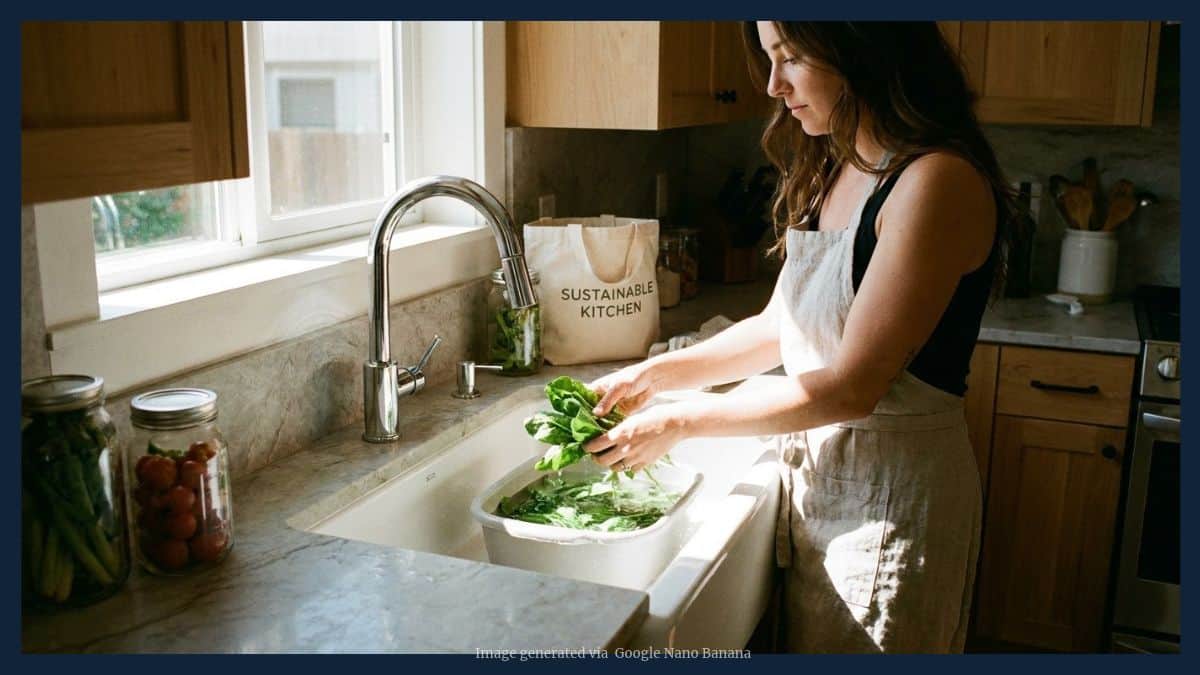
Reducing household water use does not require replacing your plumbing or undertaking expensive renovations. Everyday changes, such as taking shorter showers, fixing leaking fixtures, running full laundry loads, and using less water when washing dishes, can reduce waste without making your home less comfortable.
- Fix leaks first: A running toilet or dripping faucet can waste water even when nobody is using it.
- Change daily habits: Shorter showers and turning off the tap while brushing your teeth are easy places to start.
- Use appliances efficiently: Run full loads of laundry and dishes, and choose an appropriate cycle for the load.
- Reduce outdoor waste: Water plants when conditions are suitable and avoid watering pavement or areas that do not need it.
- Try low-cost improvements: Compatible faucet aerators and efficient showerheads can reduce flow without a plumbing renovation.
- Measure the results: Water bills and meter readings can help you identify leaks and evaluate changes.
Find and fix water leaks
A leak can waste water continuously, even when your household is trying to conserve it. That makes leak detection one of the most useful first steps.
Common places to check include:
- Faucets that drip after being turned off
- Showerheads that continue dripping
- Toilets that keep refilling or make intermittent running sounds
- Damp areas beneath sinks
- Connections around washing machines and dishwashers
- Exposed pipes with visible moisture
- Outdoor faucets and irrigation hoses
1. Check your toilet for a hidden leak
A toilet can leak from its tank into the bowl without leaving water on the floor.
To perform a simple dye test:
- Remove the toilet tank lid.
- Add a few drops of food coloring to the tank water.
- Wait about 10 minutes without flushing.
- Check whether colored water appears in the bowl.
- If it does, the toilet may have a leaking flapper or another faulty component.
Flush the toilet afterward to clear the dye. If the test indicates a leak and you are comfortable with basic repairs, inspect the flapper and related parts. Otherwise, contact a plumber.
2. Check your water meter
If you have access to a water meter, it can help you identify possible leaks.
- Turn off faucets and appliances that use water.
- Make sure nobody uses water during the test.
- Record the meter reading.
- Wait for a period during which no water should be used.
- Check the reading again.
If the reading changes, there may be an unnoticed leak or another source of water use. Some meters have indicators that make small flows easier to spot. If you cannot explain the change, investigate further or contact your water provider.
Why this matters: Fixing a leak often saves water without requiring any change to your daily routine.
Take shorter showers
Showers are a practical place to reduce water use because the amount consumed depends partly on the shower’s flow rate and how long it runs.
You do not need to eliminate comfortable showers. Start by reducing the time spent under running water.
Try these habits:
- Set a reasonable shower-time goal.
- Turn off the water while shampooing or soaping up if your setup makes this practical.
- Avoid leaving the shower running while gathering toiletries.
- Repair a dripping showerhead.
- Consider a water-efficient showerhead if your existing one uses a lot of water.
For example, cutting two minutes from a shower that uses 2 gallons per minute saves about 4 gallons per shower. For one person showering daily, that would be about 120 gallons over 30 days.
Actual savings depend on the showerhead’s flow rate and how often the change is made.
When should you replace your showerhead?
You may not need to replace it at all. If it works properly and already has a low flow rate, changing your shower routine may be sufficient.
If you do replace it, choose a model that provides a comfortable spray while using less water. In the United States, WaterSense-labeled showerheads are independently certified for water efficiency and performance.
Turn off taps when you do not need running water
Leaving a faucet running during routine tasks can waste water without providing any real benefit.
Build these habits into your daily routine:
- Turn off the tap while brushing your teeth.
- Turn off the water while shaving.
- Wet your hands, turn off the tap while lathering, then turn it back on to rinse.
- Avoid letting the kitchen faucet run while you decide what to wash.
- Collect water in a basin when a task does not require a continuous stream.
If you usually leave the tap running while brushing your teeth, this is an easy habit to change without buying anything.
What about waiting for water to get cold?
If tap water takes a while to become cool, keep a covered jug of drinking water in the refrigerator instead of running the faucet until the water feels cold. This is especially useful in warm weather.
Do not store drinking water in containers that have previously held cleaning chemicals or other unsuitable substances.
Wash dishes with less water
Dishwashing can consume more water than necessary when the tap runs continuously throughout the task.
If you wash dishes by hand
- Scrape leftover food into the trash or compost where appropriate.
- Fill one basin with soapy water.
- Use a separate basin for rinsing if practical.
- Soak stubborn food instead of repeatedly rinsing it under running water.
- Avoid washing one item at a time with the faucet running.
You can also collect water used to rinse produce in a clean bowl and reuse it for a suitable non-food purpose, such as watering plants, provided the water contains no soap, detergent, or harmful food residue.
If you use a dishwasher
A dishwasher can use less water than handwashing, particularly when it is an efficient model and you run it with a full load.
To reduce waste:
- Run the dishwasher when it is full, without overloading it.
- Scrape food scraps off plates rather than pre-rinsing them under running water.
- Use the appropriate cycle for the load.
- Follow the manufacturer’s instructions for maintenance and cleaning.
Do not assume that every dishwasher uses less water than every handwashing method. Appliance efficiency, load size, and washing habits all matter.
Use your washing machine more efficiently
Laundry habits can make a noticeable difference, especially in larger households.
Try these changes:
- Wash full loads when practical.
- Use the correct load-size setting if your washer offers one.
- Avoid unnecessary extra rinse cycles.
- Use an appropriate cycle for the fabric and soil level.
- Wash clothes when they genuinely need cleaning rather than automatically after every brief use.
Do not overload the machine. Clothes still need enough room to move and rinse properly, and an overloaded washer may clean less effectively.
If you are replacing an old machine anyway, compare the water-use information on newer models. You do not need to replace a functioning appliance solely to begin conserving water.
Reuse suitable household water
Some water that would otherwise go down the drain can be reused for appropriate non-drinking purposes.
Examples include:
- Water collected while rinsing fruits and vegetables, provided it is suitable for the intended use
- Water from rinsing clean containers
- Certain types of lightly used household water, where local guidance and safe handling permit it
This is often called water reuse. However, not every source is suitable for every task.
What is greywater?
Greywater generally refers to wastewater from certain household activities, such as showers, bathroom sinks, or laundry, excluding toilet waste. Its safe uses depend on local regulations, the source, and how it is collected and applied.
For a simple household approach, collect relatively clean water directly in a basin rather than making plumbing modifications.
Do not reuse water containing bleach, strong cleaners, solvents, or other hazardous substances. Avoid storing untreated greywater for long periods, and keep it away from children and pets.
Water that may contain fecal contamination should never be used on edible crops in ways that could contaminate the food. Follow local public health and plumbing guidance before setting up a more extensive reuse system.
Can you reuse shower water to flush a toilet?
In some circumstances, water collected in a clean container can be used for toilet flushing, provided the toilet and local conditions allow it. Take care when handling and carrying water, and do not create a slip hazard.
This is a practical option during some water restrictions, but it is not necessary for every household. Check local guidance if you are unsure which reuse practices are permitted.
Reduce unnecessary toilet water use
Toilets are an important part of indoor household water use, and a leaking toilet can waste substantial amounts of water.
Without replacing the toilet, you can:
- Repair a leaking flapper or other faulty component.
- Avoid flushing tissues or other items that do not belong in the toilet.
- Use the reduced-flush option on a dual-flush toilet when appropriate.
- Check that the toilet stops refilling after a flush.
- Investigate a toilet that runs intermittently.
Avoid placing bricks, improvised weights, or random objects in the toilet tank to displace water. They can interfere with flushing, damage components, or create other problems.
If you eventually need a replacement toilet, consider an efficient model that meets recognized water-efficiency standards. Until then, correcting leaks and using the existing toilet properly are sensible first steps.
Water plants and gardens more carefully
Outdoor water use can be significant in homes with lawns, gardens, or irrigation systems. You can often reduce waste without changing the landscaping.
Water only when plants need it
A fixed daily watering schedule may provide more water than plants require, particularly after rain or during cooler periods.
Instead:
- Check the soil before watering.
- Adjust watering to local weather and plant needs.
- Water during cooler parts of the day when practical to reduce evaporation.
- Avoid watering paved areas, driveways, and sidewalks.
- Check hoses and irrigation connections for leaks.
- Adjust sprinklers so they reach plants rather than surrounding surfaces.
The best watering schedule depends on climate, soil, plant type, and rainfall. Do not assume that every garden needs the same amount of water.
Use mulch where appropriate
A layer of suitable mulch around garden plants can help reduce moisture loss from the soil and suppress weeds. Keep mulch away from direct contact with plant stems and follow advice appropriate to your plant species and climate.
You do not need to redesign your garden to start conserving water. Better watering habits can help reduce waste while keeping plants healthy.
Install inexpensive water-saving accessories
If you are willing to spend a little money, a few small accessories may reduce water use without requiring major renovations.
| Accessory | What it does | What to check before buying |
|---|---|---|
| Faucet aerator | Mixes air with the water stream or restricts flow, depending on design | Confirm the thread size and that the reduced flow suits the task |
| Water-efficient showerhead | Reduces shower flow while aiming to maintain useful spray performance | Check flow rate, fit, and compatibility with your plumbing |
| Leak-detection dye tablets | Help identify certain toilet tank leaks | Follow the product instructions |
| Hose nozzle with shutoff | Makes it easier to stop outdoor water flow between tasks | Check for a secure fit and a reliable shutoff |
| Water-usage monitor | Helps track water use or detect unusual flow, depending on the product | Check compatibility with your meter or plumbing system |
Start with the item that addresses a real problem in your home. Buying several accessories before checking for leaks or changing habits may not provide the best return.
Are faucet aerators worth it?
They can be useful when a faucet has a relatively high flow rate and the aerator is compatible. However, some faucets already have efficient flow controls, and reducing flow too much may make tasks inconvenient.
Choose an accessory that suits the fixture rather than assuming every faucet needs the same product.
Track your household water use
You cannot easily tell whether your changes are working if you never check your water use.
Compare your water bills
Compare bills from similar periods and account for changes in household size, weather, visitors, irrigation, or other water-consuming activities.
A sudden increase may indicate a leak or a change in use. It does not necessarily mean your household has become less efficient.
Record your water meter
If you have a meter, take readings at consistent times and record the results. For a useful comparison, try to keep household activities reasonably similar during the periods you compare.
If the meter records unexpected use when all known water-consuming activities are off, investigate further.
Set a realistic target
Rather than attempting to cut water use dramatically in a few days, choose two or three changes you can maintain.
For example:
- Reduce shower time.
- Repair one leaking fixture.
- Run full loads in the dishwasher and washing machine.
- Avoid unnecessary outdoor watering.
Review your bill or meter readings after a suitable period. Keep the changes that work without compromising hygiene, health, or the needs of your household.
A simple seven-day water-saving plan
You do not need to change every habit at once. Use this plan to get started.
| Day | Action |
|---|---|
| Day 1 | Inspect faucets, showerheads, toilets, and visible pipes for leaks. |
| Day 2 | Begin taking shorter showers and turn off taps when not needed. |
| Day 3 | Change dishwashing habits to avoid running water continuously. |
| Day 4 | Review laundry loads and eliminate unnecessary cycles. |
| Day 5 | Check outdoor faucets, hoses, and watering habits. |
| Day 6 | Consider whether a compatible aerator or efficient showerhead would help. |
| Day 7 | Record your meter reading or review your bill, then decide what to improve next. |
This plan is a starting point, not a promise of a particular percentage reduction. Results depend on your starting water use, fixtures, household size, and how consistently you follow the changes.
Common mistakes to avoid
- Focusing only on habits while ignoring leaks: A running toilet can waste water continuously.
- Buying accessories before checking compatibility: Some faucets and shower systems need specific fittings.
- Running appliances half-full unnecessarily: This may use more water per item cleaned.
- Reusing unsafe water: Water containing chemicals, sewage, or unsuitable contaminants can create health risks.
- Over-restricting essential hygiene: Water conservation should not compromise handwashing, safe food preparation, or hydration.
- Watering plants on a rigid schedule: Weather and soil conditions can make a fixed schedule wasteful.
- Expecting immediate bill reductions: Billing cycles, meter timing, and other household changes can affect when savings become visible.
When should you call a professional?
Most water-saving habits require no professional assistance.
- Your water meter indicates use when all known water-consuming activities are off.
- Your toilet continues running after basic troubleshooting.
- You find damp walls, unexplained puddles, or signs of a hidden pipe leak.
- Water pressure changes unexpectedly or a valve appears damaged.
- Your water bill rises sharply without an obvious explanation.
- You want to change plumbing, install a water reuse system, or modify a water heater.
A plumber can investigate hidden leaks and faulty fixtures. For larger water-efficiency improvements, your water provider may offer guidance, audits, or rebates depending on your location.
Frequently asked questions
Start by fixing leaks, shortening showers, turning off taps when they are not needed, and running full loads in your dishwasher and washing machine. These changes are inexpensive and do not require major renovations.
Yes. Changing daily habits and correcting existing leaks can reduce water waste without purchasing new fixtures. You can also collect suitable water in a clean basin for appropriate reuse rather than letting it run straight down the drain.
Often, yes, but it depends on the shower’s flow rate and duration and how much water is used to fill the bathtub. A long shower with a high-flow showerhead may use more water than a shallow bath.
They can reduce the amount of water flowing through a compatible faucet. The actual savings depend on the original flow rate, the aerator, and how the faucet is used. Some fixtures already have efficient flow controls.
Check for leaks, reduce shower time, use appliances efficiently, avoid running taps unnecessarily, and adjust outdoor watering. Monitor your bill or meter readings to see which changes have the greatest effect.
Some relatively clean water, such as water used to rinse produce, may be suitable for certain plants. Water containing detergents, bleach, chemicals, or other contaminants may harm plants or contaminate soil. Greywater requires additional care, particularly around edible crops, and local rules may apply.
Not necessarily. Start by using your current machine efficiently and avoiding unnecessary loads. If you are already planning to replace it, compare water-efficiency information and the expected long-term operating costs of available models.
Compare meter readings or water bills over comparable periods. Account for changes in the number of people at home, weather, irrigation, and other water-consuming activities. If your water use rises unexpectedly, investigate possible leaks before assuming your conservation habits have stopped working.
Sources and references:
- U.S. Environmental Protection Agency (EPA), WaterSense. Start saving. Practical water-saving advice for bathrooms, kitchens, laundry, and other household uses.
- EPA WaterSense. Home maintenance. Guidance on finding leaks, checking toilets, maintaining faucets, and improving household water efficiency.
- EPA. What you can do about climate change: Water. Recommendations for reducing water use and conserving energy associated with water heating and pumping.
- U.S. Geological Survey (USGS). How much water do you use at home?. Provides estimates of household water use and explains how everyday activities contribute to consumption.
- U.S. Department of Energy. Consumer guide to home water efficiency. Discusses leak prevention and water-efficient fixtures.
