
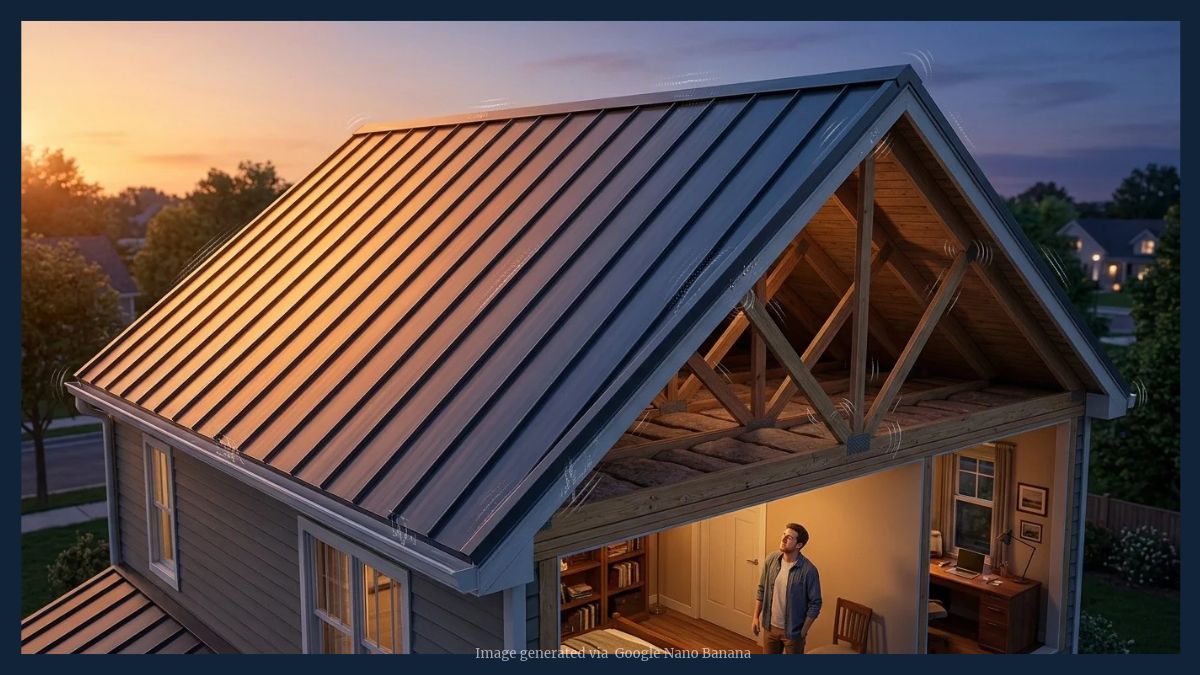
Popping, cracking, or creaking sounds coming from your roof can have several explanations. Temperature changes can cause roofing materials and wooden framing to expand or contract, while loose components, wind movement, and changes in the roof structure can also produce noticeable noises.
- Temperature changes are a common cause of roof popping and creaking sounds.
- Metal roofs can make clicking or popping noises as panels expand and contract.
- Wooden rafters, trusses, and roof sheathing can shift slightly as conditions change.
- Loose flashing, fasteners, and roofing components can produce noises during windy weather.
- Scratching or scurrying sounds may indicate animals rather than roof movement.
- Sagging ceilings, visible structural deformation, and severe leaks are warning signs that need prompt attention.
- Do not climb onto the roof to investigate unfamiliar noises.
What causes a roof to make popping or creaking sounds?
The sound may come from the roofing material itself or from components underneath it. Identifying when the noise occurs can help narrow down the possible cause.
1. Temperature changes cause materials to expand and contract
Roofing materials respond to changes in temperature.
During the day, sunlight heats the roof. Materials expand as their temperature increases. When the sun goes down and temperatures fall, they cool and contract.
Different roofing materials do not expand and contract at exactly the same rate. This can create small movements where components meet, overlap, or attach to one another.
You may hear:
- Occasional popping sounds during the afternoon
- Clicking noises as the roof cools in the evening
- Creaking shortly after sunset
- Several small cracking sounds during rapid temperature changes
These noises may occur even when the roof is functioning properly.
2. Metal roof panels are expanding and contracting
Metal panels expand as they heat up and contract as they cool. Depending on the roof design, this movement can create friction around seams, clips, fasteners, flashing, and supporting components.
Some metal roofing systems are specifically designed with connections that allow panels to move as temperatures change.
If those connections are incorrectly installed, overly restricted, or unable to accommodate the intended movement, noise may become more noticeable.
Possible signs include:
- Sharp popping sounds during sunny afternoons
- Clicking as temperatures drop at night
- Repeated noises from the same roof section
- Visible waviness or distortion in metal panels
An occasional pop does not automatically mean a metal roof is defective. However, unusually loud or increasing noises should be checked, particularly if you also notice loose panels, damaged seams, or water intrusion.
3. Wooden roof framing is shifting slightly
The roof structure may contain wooden rafters, trusses, joists, and roof sheathing.
Wood responds to changes in moisture and temperature. As its moisture content changes, it can expand or shrink slightly. Small movements can occur where wooden components meet or where framing connects to metal plates, nails, screws, and other materials.
This may produce:
- Creaking from the attic
- Occasional pops during temperature changes
- Cracking sounds after a period of hot weather
- Noises during changes in indoor or outdoor humidity
Some seasonal movement is normal. However, cracked or split framing members, visible sagging, and other signs of structural damage should not be dismissed as ordinary wood movement.
4. Loose roofing materials or fasteners
Roofing materials need to remain properly secured to withstand wind, rain, and other weather conditions.
Over time, fasteners can loosen, materials can deteriorate, and previous repairs may become damaged.
Possible sources include:
- Loose metal panels
- Lifted or damaged shingles
- Loose ridge caps
- Deteriorating flashing
- Loose roof vents
- Damaged fascia or soffit components
When wind moves these components, they may create clicking, tapping, rattling, or banging sounds.
If the noises occur mainly during windy weather, loose roofing materials or exterior components are worth investigating.
5. Roof flashing is moving
Flashing is installed around vulnerable roof areas, including chimneys, skylights, vents, and places where roof surfaces meet walls.
These metal components may expand and contract at different rates from the surrounding roofing materials.
When flashing moves against nearby surfaces, it can produce clicking, popping, or creaking noises.
Damaged or poorly secured flashing may also allow water to enter.
Look for:
- Loose metal edges
- Gaps around roof penetrations
- Missing or deteriorated sealant
- Water stains near chimneys or skylights
- Repeated noises coming from the same roof junction
Because flashing protects areas where leaks commonly develop, have visibly damaged or loose sections inspected.
6. Wind is moving parts of the roof
Not every roof noise is caused by temperature changes.
Wind can create pressure differences around the roof and move components that are not properly secured.
Possible sounds include:
- Repeated creaking
- Rattling or banging
- Popping from roof edges
- Flapping sounds near the eaves
- Vibrations around vents or flashing
Check whether the noise occurs only during strong winds or gusts.
If it does, a roofing professional can inspect the roof covering, flashing, vents, and other exposed components for loose or damaged connections.
7. Moisture is affecting the roof structure
Water entering through damaged shingles, flashing, roof penetrations, or other openings can affect the roof deck and supporting materials.
Wood exposed to repeated moisture may swell, deteriorate, or lose strength. Changes in the condition of the materials can contribute to movement and unusual sounds.
Look for:
- Water stains on ceilings
- Damp attic insulation
- Discolored roof sheathing
- Musty odors
- Soft or deteriorated wood
- Visible signs of water intrusion
A roof leak should be investigated even if the popping or creaking sounds are occasional. Moisture damage can progress without producing obvious symptoms immediately.
8. Animals or pests are moving in the roof space
Some sounds that appear to come from the roof actually originate inside the attic, soffits, or roof cavities.
Birds, rodents, and other animals can enter through gaps in roof edges, vents, or damaged exterior components.
Listen for differences between structural noises and animal activity.
Animal-related sounds may include:
- Scratching
- Scurrying
- Repeated light tapping
- Chewing or gnawing
- Movement concentrated around dawn or dusk
If you suspect an animal is inside the roof space, contact an appropriate pest or wildlife professional. Avoid reaching into enclosed roof cavities or disturbing an animal you cannot identify.
Why does my roof make popping noises at night?
Roof popping noises at night are often associated with cooling after a warm day.
As the sun sets, roof panels and other materials gradually lose heat. They contract at different rates, creating small movements where components meet or connect.
For example, a metal panel may move against a clip, flashing, or another part of the roofing system. A wooden framing component may also shift slightly as conditions change.
You may notice:
- Popping sounds shortly after sunset
- Occasional clicks during the night
- Creaking as outdoor temperatures fall
- Noises that become less noticeable once temperatures stabilize
If the sounds follow this pattern and there are no signs of damage, they may be related to normal thermal movement.
However, do not assume every nighttime noise is harmless. New or unusually loud cracking sounds, particularly when accompanied by sagging or visible damage, should be investigated.
Why does my roof make noises during the day?
Daytime roof noises can occur as sunlight heats the roofing materials.
The roof surface may warm faster than the framing or roof deck underneath it. This difference in temperature can create movement between connected materials.
Other daytime causes include:
- Wind moving loose roof components
- Metal flashing expanding in direct sunlight
- Wooden framing responding to changes in temperature
- Rain or debris striking the roof
- Animals moving inside the attic
If the noise appears during particularly sunny periods and fades when the roof cools, thermal movement may be responsible.
If it occurs mainly during windy weather, inspect for loose exterior components through a professional roof inspection.
How to identify where the roof noise is coming from
You do not need to climb onto the roof to begin investigating. A few observations from inside your home can help narrow down the source.
1. Record when the noise occurs
Pay attention to the timing.
| When the sound occurs | Possible explanation |
|---|---|
| During hot afternoons | Roofing materials expanding |
| Shortly after sunset | Materials cooling and contracting |
| During strong winds | Loose panels, flashing, or exterior components |
| During heavy rain | Rain impact, drainage, or loose components |
| During sudden temperature changes | Thermal movement |
| Around dawn or dusk with scratching sounds | Possible animal activity |
| After a storm | Possible damage or displaced roofing materials |
Timing provides clues, but it cannot confirm the exact source.
2. Listen for the type of sound
Different sounds may suggest different causes.
| Sound | Possible source |
|---|---|
| Single sharp pop | Thermal movement or friction between components |
| Repeated clicking | Metal panels, fasteners, or flashing moving |
| Deep creaking | Movement within the roof framing or connections |
| Rattling or banging | Loose roofing materials or exterior components |
| Scratching or scurrying | Animals inside the roof space |
| Flapping | Loose underlay or another material moving in the wind |
These are general clues rather than definitive diagnoses.
3. Identify the general location
Try to determine whether the sound comes from:
- The roof above a bedroom
- The attic or ceiling cavity
- The roof edge near the gutters
- An area around a chimney or skylight
- A section with exposed metal roofing
If the noise repeatedly comes from one location, record it. This may help a roofing professional focus the inspection.
4. Check for visible signs inside the house
Look at the ceilings and upper walls for:
- New water stains
- Cracks or gaps
- Bulging or sagging ceiling sections
- Peeling paint
- Damp patches
- Changes around ceiling fixtures
Do not press against a bulging or water-damaged ceiling. If it appears unstable, keep people away from the area and seek professional assistance.
5. Observe the roof from the ground
If conditions are safe, look at the roof from the ground.
You may be able to spot:
- Missing or damaged shingles
- Loose-looking metal panels
- Bent gutters
- Damaged fascia
- Missing flashing
- Debris or fallen branches
Do not use a ladder or walk on the roof to investigate unfamiliar sounds. Leave close-up inspection and repairs to a qualified roofing professional.
When should you be concerned about roof popping or creaking sounds?
Occasional noises related to temperature changes are not necessarily evidence of roof damage.
However, certain combinations of symptoms can indicate a more serious problem.
- New or unusually loud cracking sounds
- Repeated creaking that is becoming more frequent
- Visible roof sagging or a change in the roofline
- Cracked, split, or visibly damaged structural members
- Water stains or recurring roof leaks
- Loose or displaced roofing materials
- New ceiling cracks or visible deformation
- Several structural symptoms appearing around the same time
If you hear sudden loud cracking or popping accompanied by visible roof sagging, a bowing ceiling, or other signs that the roof may be structurally overloaded, leave the affected area. If the building appears unstable, evacuate and contact emergency services or the appropriate building-safety authority. Do not enter the attic to investigate.
How are roof popping and creaking problems fixed?
The appropriate repair depends on what is producing the sound.
Adjusting metal roofing connections
If a metal roof is making excessive noise because its panels cannot move as intended, a roofing professional may need to inspect the clips, fasteners, seams, and flashing details.
The goal is to make sure the roofing system can accommodate its designed thermal movement while remaining securely attached and weather-resistant.
Do not loosen or remove roofing fasteners yourself. Incorrect adjustments can compromise the roof’s ability to resist wind and keep water out.
Securing loose roofing components
Loose flashing, vents, ridge caps, or other roofing materials may need to be refastened or replaced.
The professional should also check the surrounding materials for damage and signs of water intrusion.
Repairing damaged roof decking or framing
If the noise comes from damaged roof sheathing, rafters, or trusses, the affected structural components may need repair or replacement.
The extent of the work depends on the condition of the framing and whether moisture, excessive loading, or another issue caused the damage.
Structural repairs should follow an appropriate professional assessment.
Addressing water intrusion
If a leak is responsible for the noise or has damaged the roof structure, the source of the water must be corrected.
Repairs may involve replacing damaged shingles, fixing flashing, repairing roof penetrations, or replacing deteriorated materials.
Simply painting over a ceiling stain does not resolve a roof leak.
Removing animals from the roof space
If animals are responsible, an appropriate pest or wildlife professional can identify the entry point and recommend safe removal.
Afterward, damaged vents, soffits, or roof openings should be repaired to help prevent the animals from returning.
Should you hire a professional to inspect your roof?
You should arrange a professional inspection if the noises are new, persistent, unusually loud, or accompanied by visible damage.
The appropriate professional depends on the suspected problem.
| Professional | When to contact them |
|---|---|
| Qualified roofing contractor | For loose roofing materials, damaged flashing, leaks, or metal roof noise |
| Licensed structural engineer | For suspected roof framing problems, sagging, or structural movement |
| Licensed general contractor | For broader building repairs involving roofing and related components |
| Pest or wildlife professional | For suspected animals inside the attic or roof cavities |
If you suspect a structural problem, a licensed structural engineer can assess the roof framing and determine whether repairs or additional support are needed.
Ask for an explanation of the suspected cause, the condition of the affected materials, and the recommended repair.
Be cautious of anyone who recommends extensive structural work based only on hearing a noise without inspecting the roof and supporting structure.
Common mistakes to avoid
Assuming every popping sound means roof damage
Roofing materials naturally respond to temperature changes. Occasional popping does not automatically mean the roof is failing.
Look for a pattern and check for accompanying signs of damage.
Ignoring new or increasingly loud noises
A sound that becomes more frequent or changes noticeably may indicate that something has changed.
Do not dismiss new noises when they occur alongside leaks, loose components, or visible structural changes.
Climbing onto the roof to investigate
Walking on a roof can cause falls and may damage roofing materials. It can be particularly dangerous when the roof is wet, steep, or structurally compromised.
Use observations from inside and from the ground, and leave close inspection to qualified professionals.
Applying sealant to every noisy area
Sealant may be appropriate for certain roofing details, but it does not correct every source of noise.
A metal panel that cannot move properly or a damaged roof support requires a different solution.
Covering ceiling stains without repairing the leak
A ceiling stain may be evidence of water entering through the roof.
Identify and repair the source before carrying out cosmetic ceiling work.
Frequently asked questions
Yes, occasional popping can be normal, particularly when roofing materials expand or contract as temperatures change. Metal roofs may produce noticeable clicks or pops as panels move against clips, seams, and other components. However, noises accompanied by leaks, sagging, or visible damage should be investigated.
The roof cools after sunset, and different materials may contract at different rates. This can create friction or movement between connected components, producing cracking or popping sounds. If the noises are unusually loud or accompanied by structural changes, arrange an inspection.
Yes. Metal panels expand when heated and contract as they cool. Movement around seams, clips, fasteners, and flashing can produce popping or clicking noises. Proper installation should accommodate the movement expected in the roofing system.
Yes. Wooden roof framing can respond to changes in moisture and temperature. Small movements around connections may produce creaking or popping. However, cracked or split members, visible sagging, and other structural warning signs need professional evaluation.
Wind can move loose roofing materials, flashing, vents, underlay, and other components. Repeated rattling, banging, or flapping sounds during windy weather may indicate something is not properly secured.
Not necessarily. Cooling can cause roofing materials and framing components to contract, producing occasional noises. Monitor whether the sounds follow a predictable temperature pattern and check for other signs of damage.
Sources and references:
