
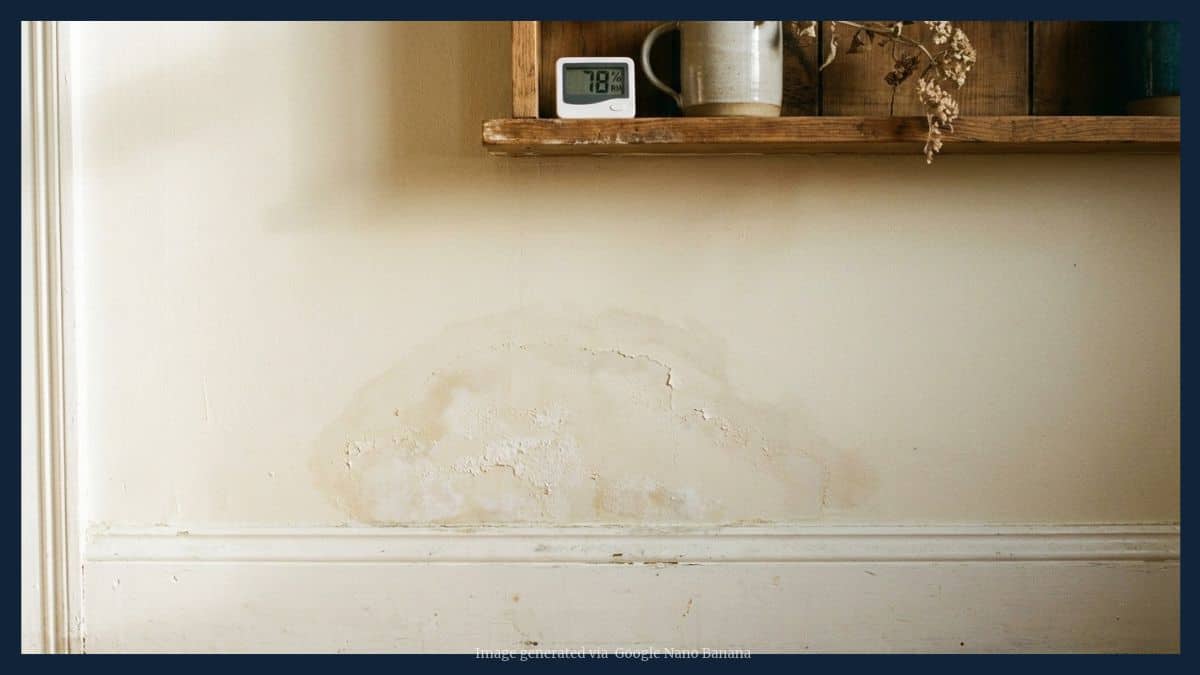
A wet spot on wall most often traces back to one of three sources: a plumbing leak, water getting in from the roof or exterior, or condensation. Problems with an air conditioning drain can also be behind a damp wall. The spot alone cannot tell you which one you have, so the goal is to gather clues safely and know when to hand it off.
- A wet spot is a symptom. Plumbing, roof or exterior water, condensation, and HVAC drainage are all possible sources.
- Notice when it appears: after showers, after rain, or regardless of weather.
- Wet drywall can support mold if it stays damp. EPA guidance says to dry water-damaged materials within 24 to 48 hours.
- Wet walls near electrical outlets, switches, or light fixtures are a shock and fire concern. Treat them as urgent.
- If the spot keeps coming back or keeps growing, the source needs to be found, not just dried.
Stop and read this before touching the wall.
- If water is near an outlet, switch, light fixture, or appliance, do not touch it. Safe Electricity advises never stepping into water, and never turning off the breaker if you would have to stand in water to reach the panel. In that situation, ask your electric utility to cut power at the meter instead.
- If you can reach the panel while dry, switching off the breaker for that area is the safer move, then call a licensed electrician. Ceiling or wall drywall that looks saggy, bulging, or soft may be weakened, so stay out from under it.
- If the water might be sewage or floodwater, do not clean it yourself. EPA says to call a professional experienced with contaminated water.
Common causes of a wet spot on a wall
1. A plumbing leak inside the wall
Supply and drain lines often run through wall cavities. A wall that stays damp for long stretches may be hiding a leaking pipe, and a small leak can worsen without warning. A small, steady leak often keeps the dampness along the pipe’s route, while a burst can ruin the wall fast. A plumber can use a moisture meter to read what is happening behind the surface and narrow down the location.
Supply leaks tend to keep going whether or not anyone is using water. Drain leaks may only show up when a fixture above or beside the wall is used. Those are general patterns, not proof.
2. Condensation
Moist indoor air turns to droplets when it touches a surface colder than the air around it. Exterior walls are the usual place to see this in cold weather, because heated room air meets a wall surface that stays chilly. When no leak is involved, steam from showers and cooking is a common reason for damp walls. Thin or missing insulation can make a wall colder on the inside, which gives moisture an easier place to collect.
The EPA-referenced target for indoor humidity is between 30 and 50 percent, which you can check with an inexpensive hygrometer.
3. Water entering from the roof or exterior
Rain or snowmelt can work its way into the wall cavity and show up inside. Common entry points include damaged roofing, gutters that overflow, and gaps around penetrations. Damaged plumbing vent boots and flashing are known culprits, too.
One catch: the damp patch may show up some distance from where the water actually gets in.
4. HVAC drainage or sweating lines
Cooling equipment naturally collects moisture, and a blocked or badly installed drain line or pan can let that water escape into the building. If the wet spot is near an air handler, a closet that houses HVAC equipment, or a ceiling with ductwork above it, this is worth mentioning to a technician.
5. Moisture from a wet basement or foundation
Dampness from a chronically wet basement can migrate upward into living areas. If the wet spot is on a lower level or an exterior wall near the ground, groundwater seepage or drainage problems may be involved.
- Wet after showers, cooking, or on cold days, mostly on exterior walls > condensation may be involved
- Wet during or after rain > roof, gutter, or exterior wall water may be involved
- Keeps growing in dry weather > a hidden plumbing leak may be involved
- Spot only appears when a nearby sink, tub, or washer is used > a drain or supply connection near that fixture may be involved
- Wet spot near an air handler, drain line, or vent > HVAC condensation or a clogged drain may be involved
- Peeling paint, discoloration, or speckled dark growth on the wall > moisture has likely been present for a while
- Wall feels cool and damp to the palm > moisture is present in or on the wall, source still unknown
These clues point toward possibilities. They do not confirm a cause, and more than one source can be at work at once.
Safe steps to narrow it down
Do these in order, and stop and call a professional at any step if something looks unsafe.
- Handle electrical safety first. If the wall has an outlet, switch, or fixture nearby, or the ceiling above it is wet, follow the safety box above before anything else.
- Shut off water if the leak seems active. If you can tell which fixture is involved, turn off its supply valve. If you cannot, shutting off the main water supply is the safer choice.
- Note the pattern. Write down when the spot appeared, whether it follows rain, showers, or appliance use, and whether it is growing. Take dated photos. A wet spot during or after rain suggests a roof leak, while a stain that grows regardless of weather points toward hidden plumbing. Treat that as a rough guide only.
- Run a water meter check. Note the meter reading, make sure nothing in the house uses water for two hours, then read it again. Any change suggests a leak somewhere. A moving meter tells you a leak exists somewhere, but not that it is in this wall.
- Check humidity. Place a hygrometer in the room. Readings above the 30 to 50 percent range make condensation more plausible.
- Look at the obvious exterior and fixture points from the ground. Check for overflowing gutters, downspouts dumping water against the house, and drips at nearby sink or tub connections. Do not climb onto the roof or work from a ladder in wet conditions.
- Do not cut into the wall yourself. You risk hitting wiring or pipes and spreading mold. Opening a wall to find the source is best left to a plumber or contractor.
- Run the bathroom exhaust fan during and after showers to reduce condensation.
- Keep a simple hygrometer in problem rooms and aim for 30 to 50 percent humidity.
- Take photos with the date visible each day. They help a plumber, roofer, or insurer understand the timeline.
- Keep furniture and belongings away from the wall while it dries.
- Clear gutters and make sure downspouts carry water away from the foundation.
How Long can the wall stay wet?
Time matters. EPA guidance suggests that drying wet materials within a day or two usually keeps mold from taking hold. Treat 48 hours as a rule of thumb, not a promise: mold does not always appear after that long, and it can still develop even when drying finishes sooner.
Another point surprises many homeowners. A material can hold enough water to support mold without looking wet at all, so a wall that seems dry on the surface may still be damp inside.
Fixes and prevention
The right fix depends entirely on the source, which is why finding it comes first.
- Plumbing leak: A licensed plumber repairs the pipe or connection. Drywall and insulation that stayed wet are usually repaired afterward.
- Roof or exterior water: A roofer or exterior contractor addresses damaged shingles, flashing, vent boots, gutters, or sealing gaps.
- Condensation: Improve ventilation, run exhaust fans, and consider a dehumidifier if indoor humidity stays high. Insulation upgrades may help on cold exterior walls.
- HVAC drainage: An HVAC technician clears or repairs the condensate drain and checks the pan.
- Mold afterward: If you clean mold without fixing the moisture problem, it will most likely come back. Painting over a damp wall will not solve the moisture source either.
DIY or professional?
Reasonable to handle yourself: checking humidity, running exhaust fans, clearing gutters from the ground, taking photos, running the meter test, and moving belongings away from the wall.
- The spot is near outlets, switches, or light fixtures (electrician, and possibly the utility).
- You suspect a pipe leak, or the meter test shows movement (plumber).
- The spot returns after drying, or keeps growing (plumber or leak detection specialist).
- You see sagging drywall, active dripping, or soaked insulation.
- Mold appears. EPA says homeowners can often handle mold on less than about 10 square feet themselves, but a large water damage event or larger mold area calls for more caution. EPA also says to call a professional experienced with contaminated water if sewage or other contaminated water is involved, and to consult a health professional before cleanup if you have health concerns.
- You cannot tell where the water is coming from.
- Check for water near outlets, switches, or light fixtures. If present, stay back, shut off power only if you can do so safely, and call an electrician.
- If you suspect an active leak, shut off the fixture supply valve or the main water shutoff.
- Photograph the spot and note when it appears (after rain, showers, or anytime).
- Run the two-hour water meter check with all water off.
- Check indoor humidity and run exhaust fans if it is above 50 percent.
- If the spot is still wet after a day or two, or keeps returning, call a plumber or other qualified pro to find the source.
FAQs
No. Condensation from indoor humidity can make walls damp without any leak, especially on cold exterior walls. Because leaks and condensation can look alike, it helps to track timing and run the meter check before assuming either.
EPA guidance uses 24 to 48 hours as a drying target to prevent mold in most cases. It is a guideline, not a hard rule. If the wall has stayed wet longer, have it evaluated.
Paint will not fix the moisture source, and trapped moisture can keep damaging the wall. Find and fix the source, let the area dry fully, then repair and repaint.
Yes. Massachusetts public health guidance points out that a material can hold enough moisture to support mold while looking dry. A plumber or contractor can use a moisture meter to check.
It depends on the clues. A spot that follows rain may point toward the roof or exterior, while one that grows in dry weather or tracks with fixture use may point toward plumbing. If you are unsure, a plumber with leak-detection experience is a common starting point. Electrical hazards come first either way.
Sources and references:
- EPA, Mold Course Chapter 4, Dry Quickly: https://www.epa.gov/node/58595
- EPA, Mold Remediation in Schools and Commercial Buildings Guide, Chapter 4 (Table 1): https://epa.gov/mold/mold-remediation-schools-and-commercial-buildings-guide-chapter-4
- EPA, Mold Cleanup in Your Home: https://www.epa.gov/node/59549
- EPA WaterSense, Fix a Leak Week (two-hour meter check): https://www.epa.gov/node/288682
- Massachusetts Department of Public Health, Use of Moisture Measuring Devices for Evaluating Water Damage in Buildings: https://www.mass.gov/doc/use-of-moisture-measuring-devices-for-evaluating-water-damage-in-buildings/download
- Safe Electricity, flooded-area electrical safety (reprinted by the City of Farmer City): https://cityoffarmercity.org/?p=777
