
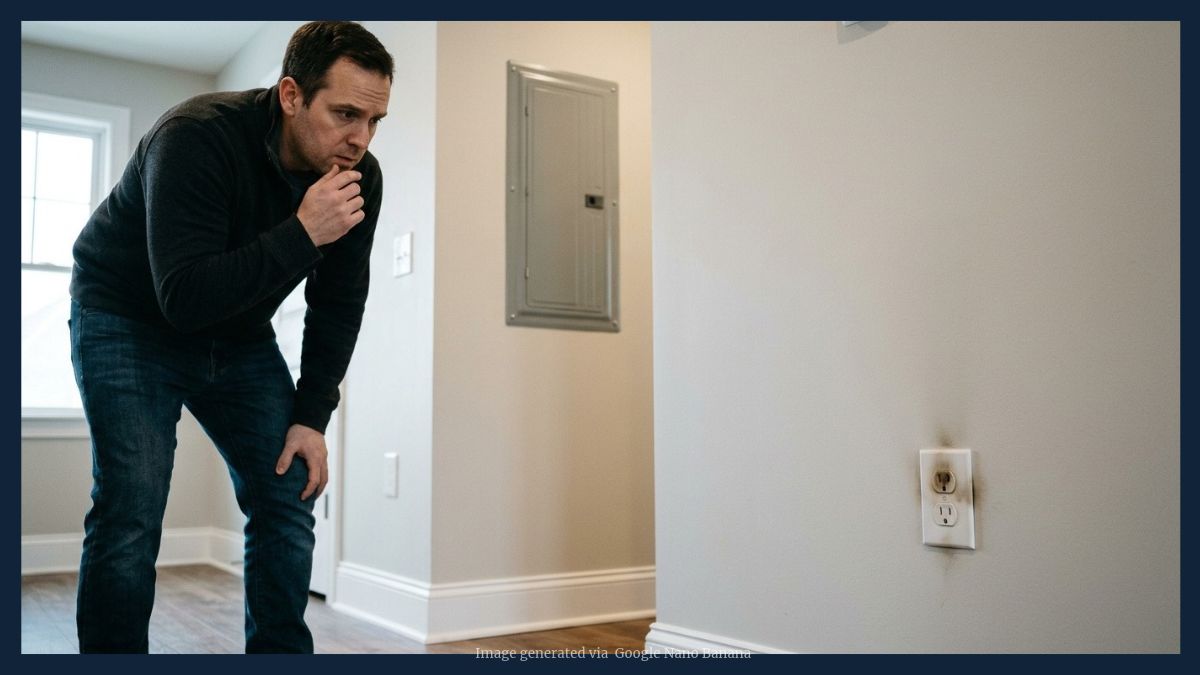
A burning-plastic smell near an electrical outlet, switch, or breaker panel can indicate that wiring insulation, an electrical connection, or another component is overheating. Possible causes include loose connections, overloaded circuits, damaged outlets, failing breakers, and electrical arcing.
Treat this as a potential fire hazard, even if you cannot see smoke or flames. Stop using the affected outlet or circuit, keep people and pets away, and arrange an urgent inspection by a licensed electrician. If you see smoke, flames, or active sparking, evacuate and contact emergency services.
- A burning-plastic smell near an outlet or electrical panel is a serious warning sign.
- Loose connections can create resistance and heat, potentially damaging insulation and nearby components.
- Overloaded circuits may cause electrical components to overheat.
- A damaged outlet, switch, or breaker may produce an unusual odor before visible damage appears.
- Do not open electrical outlets, remove panel covers, or attempt wiring repairs.
- Switch off the affected circuit only if it is safe to do so.
- Smoke, flames, and active sparking require evacuation and emergency assistance.
- Even if the smell disappears, do not assume the electrical problem has resolved.
- Do not touch the outlet, plug, switch, or panel if it is hot, damaged, smoking, or sparking.
- Do not unplug equipment from a suspicious outlet if the plug or socket is hot, melted, or visibly damaged.
- If you can safely reach the appropriate circuit breaker without approaching smoke, heat, water, or damaged equipment, switch it off. Do not open the panel cover.
- If the smell is coming from the breaker panel itself, do not open or handle the panel. Keep away and contact an emergency electrician.
- If there is smoke, visible fire, or active sparking, leave the building and call emergency services. Do not attempt to investigate or extinguish an electrical fire yourself.
Loose electrical connections
Loose electrical connections are an important possible cause of overheating near outlets, switches, and breaker panels.
Electrical connections need secure contact to allow current to flow properly. When a connection becomes loose, corroded, or damaged, electrical resistance can increase at that point.
The increased resistance can produce localized heat. Over time, this heat may damage insulation, plastic outlet components, wire connections, and surrounding materials.
In some cases, a poor connection can also produce electrical arcing, creating an additional fire hazard.
Why electrical connections become loose
Several conditions can contribute to poor electrical connections:
- Improper installation.
- Worn or deteriorating electrical components.
- Corrosion or oxidation.
- Mechanical damage.
- Connections that have loosened over time.
- Poor-quality or unsuitable electrical components.
Warning signs of a loose connection
You may notice:
- A burning-plastic or hot-insulation odor.
- Flickering lights.
- Buzzing, crackling, or sizzling sounds.
- An unusually warm outlet or switch plate.
- Discoloration around an outlet or electrical fitting.
- Intermittent power from an outlet.
Not every loose connection produces all these symptoms. Some problems may develop inside an electrical box without obvious external signs.
Do not remove the outlet cover, pull the receptacle out of the wall, or attempt to tighten electrical terminals. Even when a light or appliance stops working, electrical components may still contain energized parts. Stop using the affected outlet and have a licensed electrician inspect it.
An overloaded electrical circuit
An overloaded circuit occurs when the electrical demand exceeds what the circuit is designed to carry safely.
For example, plugging several high-power appliances into one circuit may place excessive demand on the wiring, connections, and protective devices.
The additional current can produce heat in electrical components. If a connection is already loose or damaged, the risk of localized overheating may become greater.
Common situations that can contribute to overload
- Running several high-power appliances on one circuit.
- Using multiple extension cords and power strips together.
- Connecting heating appliances to an unsuitable outlet or extension cord.
- Using an extension cord with a rating below the connected equipment’s requirements.
- Adding electrical loads without considering the circuit’s capacity.
Signs of a potentially overloaded circuit
- Circuit breakers trip repeatedly.
- Several appliances lose power at the same time.
- Lights dim when high-power equipment starts.
- An outlet, plug, or power strip becomes unusually warm.
- A burning odor develops near an electrical connection.
A burning smell does not automatically mean the entire circuit is overloaded. A defective appliance, loose connection, or damaged outlet can produce similar symptoms.
What homeowners should do
Stop using the affected circuit and arrange an electrical inspection.
Do not repeatedly reset a tripping breaker or move appliances between outlets simply to keep them operating. If an electrical component is overheating, redistributing the load without identifying the underlying fault may leave the hazard unresolved.
Never replace a circuit breaker with one that has a higher current rating simply because the existing breaker trips. The wiring may not be designed to carry the additional current. Never bypass a breaker or other protective device. These protections are essential to reducing the risk of electrical fires.
A damaged or deteriorating electrical outlet
An electrical outlet can become damaged through normal wear, physical impact, improper installation, or prolonged use.
Inside a receptacle, metal contacts hold the plug blades in position and maintain an electrical connection. If these contacts become worn or lose their gripping strength, the connection may become unreliable.
A poor connection can produce heat, particularly when an appliance draws significant current.
Common signs of outlet damage
- Plugs no longer fit securely.
- The outlet feels unusually warm or hot.
- The wall plate has brown or black discoloration.
- The outlet makes crackling or buzzing sounds.
- The plug or receptacle shows signs of melting.
- A burning or unusual odor comes from the outlet area.
An outlet can also be damaged internally even when its exterior looks relatively normal.
What homeowners should do
Stop using the affected outlet. Do not continue plugging and unplugging appliances to test whether it works.
A licensed electrician can inspect the receptacle, wiring connections, electrical box, and surrounding components to determine whether replacement or additional repairs are necessary.
A failing circuit breaker or electrical panel component
If the burning smell comes from the breaker panel rather than a wall outlet, the problem may involve a component inside the electrical distribution equipment.
Circuit breakers and panel connections carry electrical current throughout the home. If a breaker, terminal, or internal connection deteriorates or becomes damaged, it may overheat.
Possible problems include:
- A failing circuit breaker.
- A loose or damaged electrical termination.
- Corrosion or deterioration at a connection.
- Damage to a panel bus connection.
- Heat damage from an earlier electrical fault.
Signs of a possible panel problem
- Burning odor concentrated around the breaker panel.
- Buzzing, crackling, or sizzling from the panel.
- Visible discoloration or scorching on the outside of the enclosure.
- Breakers that trip repeatedly without an obvious explanation.
- Unusual heat around the panel enclosure.
A breaker that trips is not necessarily defective. It may be responding correctly to an overload or electrical fault. The underlying reason needs to be identified before anyone replaces it.
Do not remove the electrical panel cover to inspect the breakers or wiring. Internal panel components may remain energized even when individual breakers are switched off. Do not touch exposed conductors, tighten terminals, or attempt to replace a breaker. Keep people and pets away from the panel and arrange an urgent inspection by a licensed electrician.
If the panel itself is smoking, sparking, or producing an active burning odor, do not approach it to operate a switch. Evacuate if there is an immediate fire danger and contact emergency services.
Electrical arcing
Electrical arcing happens when electricity jumps across a gap between conductive materials instead of following its intended path.
It can occur when connections are loose, wires are damaged, insulation deteriorates, or electrical components fail.
An electrical arc can produce intense localized heat. That heat may ignite nearby materials or damage the insulation surrounding electrical conductors.
What does electrical arcing sound or look like?
Depending on the location and severity, arcing may produce:
- Crackling or popping noises.
- Visible sparks or flashes.
- Intermittent electrical operation.
- Scorch marks.
- A burning-plastic or hot-insulation odor.
However, arcing does not always produce visible sparks or noticeable sounds from outside the electrical enclosure.
Why arcing is particularly dangerous
Ordinary circuit breakers protect against certain overcurrent conditions, but not every hazardous electrical arc is detected by a conventional breaker.
Arc-fault circuit interrupters (AFCIs) are designed to detect certain dangerous arcing conditions and interrupt the circuit.
Their presence does not eliminate every electrical fire risk. Damaged components and suspicious odors still require professional assessment.
What homeowners should do
Do not attempt to reproduce the sound, inspect wiring, or open an electrical enclosure to look for sparks.
Stop using the affected circuit and arrange a professional inspection. If there is active sparking or smoke, move away and contact emergency services.
A damaged appliance cord, plug, or internal component
Sometimes the odor appears to come from the wall outlet when the actual source is an appliance or its power cord.
A damaged cord, worn plug, internal electrical fault, or overheated appliance component can produce a burning odor that travels around the surrounding area.
This is particularly worth considering when the smell appears only while a specific appliance is operating.
Possible warning signs
- The odor becomes stronger when a particular appliance is switched on.
- The appliance operates intermittently.
- The plug or cord becomes unusually warm.
- The cord has cracks, cuts, exposed wiring, or melted insulation.
- The appliance makes unusual electrical noises.
- The smell persists after the appliance has been switched off.
What homeowners should do
Stop using the appliance.
If the plug and outlet are cool, undamaged, and safe to approach, disconnecting the appliance may be appropriate. If the plug, cord, or outlet is hot, melted, smoking, or sparking, do not touch it.
Have the appliance assessed by a qualified repair technician or the manufacturer, and have the outlet inspected if there is any indication that it may also have been damaged.
How to tell where the burning smell is coming from
The location of the odor can help narrow down the possible source, but it cannot confirm a diagnosis.
| Where you notice the smell | Possible problem | Appropriate response |
|---|---|---|
| Around one wall outlet | Damaged receptacle or loose connection | Stop using it and arrange an electrician’s inspection |
| Around an outlet with a plugged-in appliance | Damaged plug, cord, appliance, or receptacle | Stop using the equipment and have the source assessed |
| Near a light switch | Damaged switch or poor electrical connection | Stop operating the switch and call an electrician |
| Around the breaker panel | Failing breaker, damaged connection, or panel component | Keep away and arrange urgent professional inspection |
| Near an extension cord or power strip | Overload, damaged cord, or poor connection | Stop using it and replace or inspect the equipment as appropriate |
| Inside a wall near an outlet | Possible overheating wiring or concealed electrical fault | Stop using the affected circuit and seek urgent professional help |
If the smell seems to come from inside a wall, do not remove wall coverings or make holes to search for the source.
What should you do if you smell burning plastic near an outlet or panel?
The priority is to reduce the risk of electrical fire and avoid contact with potentially damaged components.
Step 1: Stop using the affected outlet or equipment
Do not continue operating appliances connected to the suspicious outlet.
If the smell is near a switch, do not repeatedly turn it on and off to see whether the odor returns.
Step 2: Keep people and pets away
Prevent children, pets, and other household members from approaching the affected area.
Do not touch the outlet, plug, panel, or surrounding components if they appear hot, damaged, or unsafe.
Step 3: Switch off the affected circuit only if safe
- If you can safely identify and access the correct breaker without approaching smoke, heat, water, or damaged electrical equipment, switch it off.
- If the odor is coming from the panel itself, do not open the panel or approach it to operate internal components.
- If reaching the breaker would put you at risk, leave the area and contact emergency services or an electrician as appropriate.
Step 4: Watch for signs of an electrical fire
Smoke, flames, active sparking, or a rapidly worsening burning odor indicate a potentially serious situation.
If water is near electrical equipment, keep away from wet components. Do not touch affected switches, outlets, or equipment. Seek qualified assistance.
If smoke or fire is present, evacuate everyone from the building and contact emergency services. Do not use water on an electrical fire. Do not return inside to retrieve belongings or attempt to investigate the electrical system.
Step 5: Arrange a professional inspection
Even if the smell disappears after power is switched off, the cause may remain.
Keep the affected circuit off until a licensed electrician has inspected the equipment and confirmed it is safe to use again.
How serious are the warning signs?
| Warning sign | What it may indicate | Recommended action |
|---|---|---|
| Burning-plastic odor without visible smoke | Overheating electrical materials or components | Stop using the affected area and arrange urgent inspection |
| Warm or hot outlet plate | Possible poor connection or overheating | Stop using the outlet and call an electrician |
| Crackling or buzzing from an outlet | Possible loose connection or electrical arcing | Stop using the outlet and arrange urgent inspection |
| Black or melted plastic | Heat damage or electrical failure | Keep away and do not use the equipment |
| Smoke or visible sparks | Active electrical fault or fire risk | Evacuate if necessary and contact emergency services |
| Repeated breaker trips with a burning odor | Possible persistent electrical fault | Do not reset repeatedly; arrange urgent professional help |
| Burning smell from the panel | Possible overheating or damaged panel component | Keep away, do not open it, and seek urgent professional help |
When should you call a licensed electrician?
A burning-plastic smell near an outlet, switch, or electrical panel warrants prompt professional attention. Do not wait for the smell to become stronger or for visible damage to appear.
- The smell comes from an outlet or switch.
- The odor appears to originate from the electrical panel.
- An outlet or wall plate feels unusually hot.
- You notice scorch marks or melted plastic.
- A breaker trips repeatedly.
- Lights flicker or electrical equipment behaves unpredictably.
- The smell continues after the connected appliance has been switched off.
- You cannot identify the source of the odor.
Should you hire a professional?
Yes. This is one of the electrical symptoms where professional inspection is strongly recommended.
A licensed electrician can inspect the affected outlet, switch, wiring connections, breaker, and panel components. Depending on the findings, the electrician may need to check circuit loading, supply conditions, connection integrity, and evidence of heat damage.
If the odor originates from an appliance rather than the building wiring, a qualified appliance technician may also be needed. However, an electrician should assess any potentially damaged outlet or circuit before it is used again.
The objective is not simply to replace a burned outlet or breaker. The underlying cause must be identified so that the same problem does not recur.
Homeowner checklist: What to do when you smell burning plastic
Use this checklist to remember the important safety steps. It is not a substitute for a professional inspection.
- Stop using the affected outlet, switch, or electrical equipment.
- Keep children, pets, and other household members away.
- Do not touch hot, damaged, melted, or smoking electrical components.
- Do not unplug a hot, damaged, or sparking plug.
- Do not open the outlet, switch, or electrical panel.
- Switch off the affected circuit only if it is safe to access the breaker.
- Do not approach a smoking or sparking panel to operate its switches.
- Evacuate and contact emergency services if smoke or fire is present.
- Keep the affected circuit switched off until it has been inspected.
- Arrange an urgent inspection by a licensed electrician.
- Do not restore power or reuse the outlet until the electrician confirms it is safe.
Frequently asked questions
Yes. It can indicate overheating electrical components, damaged insulation, or a poor electrical connection. These conditions can increase the risk of an electrical fire.
Yes. A loose or deteriorating electrical connection can increase resistance and generate localized heat. The heat may damage wire insulation or nearby plastic components, producing a burning odor.
The odor may come from an overheating breaker, loose electrical termination, damaged connection, or another failing panel component.
Yes. Excessive electrical demand can contribute to overheating, especially when combined with loose connections, damaged receptacles, or unsuitable extension cords.
A disappearing odor does not prove that the electrical problem has been fixed.
Yes. Damaged wiring, loose connections, or electrical arcing can generate heat inside concealed wall cavities. Nearby building materials may ignite even when the problem is not immediately visible.
No. Do not reset a breaker simply to restore power when there is a burning odor. A breaker may have tripped because of an underlying electrical fault. Repeatedly restoring power without identifying the problem can expose damaged components to further heating or arcing.
A fishy or unusual plastic-like odor can sometimes be associated with overheating electrical components and deteriorating insulation. However, smell alone cannot establish the source.
Sources and references:
- U.S. Consumer Product Safety Commission (CPSC), Guide to Home Wiring Hazards
https://www.cpsc.gov/s3fs-public/518.pdf - Electrical Safety Foundation International (ESFI), Electrical Fire Safety Checklist
https://www.esfi.org/wp-content/uploads/2021/06/Electrical-Fire-Safety-Checklist.pdf - Electrical Safety Foundation International (ESFI), Switch to Safety
https://www.esfi.org/wp-content/uploads/2021/06/Switch-to-Safety.pdf - U.S. Fire Administration (USFA), Appliance and Electrical Fire Safety
https://www.usfa.fema.gov/prevention/home-fires/prevent-fires/appliance-and-electrical/ - Bureau of Fire Protection (Philippines), Fire Safety for the General Public, Volume 4
https://www.bfp.gov.ph/wp-content/uploads/2024/08/Volume-4-Fire-Safety-for-General-Public.pdf
