
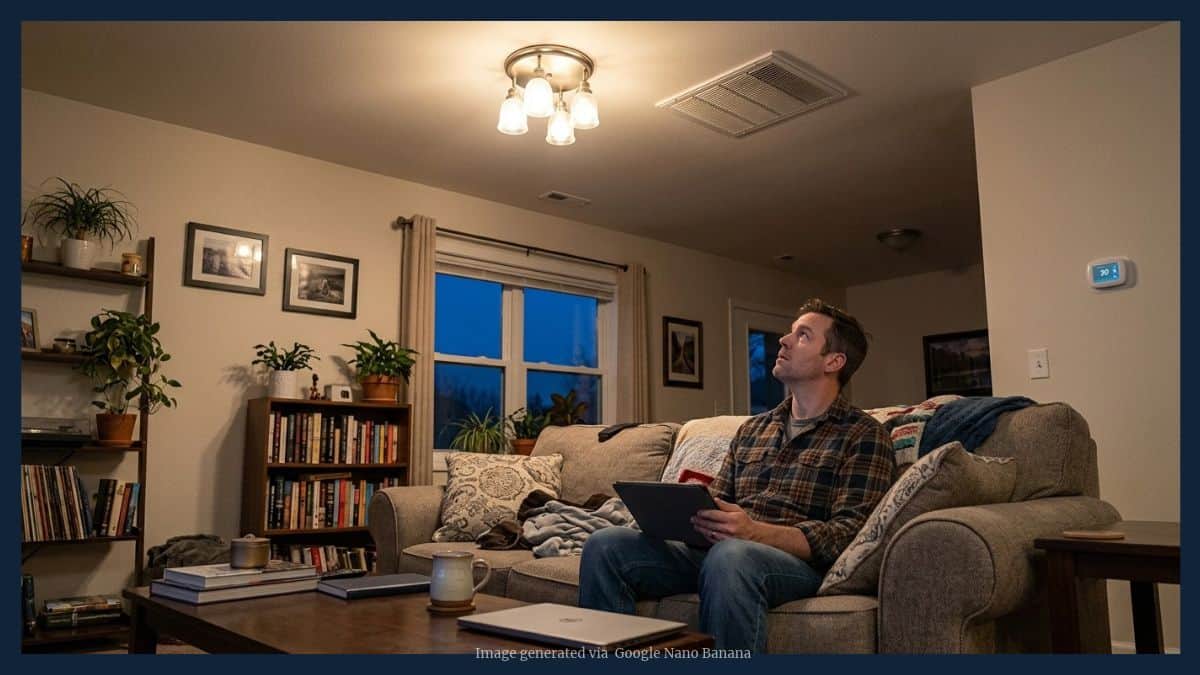
If your lights flicker when the air conditioner turns on, the cause may be a brief voltage drop as the AC compressor starts. The compressor can draw substantially more current during startup than it uses while running, temporarily affecting the voltage available to other electrical devices. A slight, momentary dimming may be normal, but pronounced, persistent, or worsening flickering can indicate an electrical connection problem, an issue with the AC equipment, or a problem with the home’s power supply. The key is to notice how severe the flicker is, how long it lasts, and whether other warning signs appear.
TL;DR: A brief dimming of your lights when the AC starts can result from the compressor’s high startup current. If the lights flicker severely, remain dim, become unusually bright, or the problem is getting worse, the cause may involve faulty wiring, an electrical supply problem, or malfunctioning AC equipment. Do not open the electrical panel or attempt wiring repairs. Contact a licensed electrician or HVAC technician based on the symptoms, and treat burning smells, smoke, sparks, or shocks as urgent safety concerns.
- A slight, momentary dimming when the AC compressor starts can result from a normal startup-related voltage drop.
- Strong, persistent, or worsening flickering deserves investigation.
- Loose electrical connections, supply problems, and AC starting faults are possible causes that require professional diagnosis.
- Burning odors, buzzing from electrical equipment, hot outlets, or breakers that repeatedly trip are warning signs that should not be ignored.
- Homeowners can safely observe the pattern of the flickering, but electrical panel inspections and repairs should be left to qualified professionals.
Flickering lights can sometimes indicate a potentially dangerous electrical problem.
- A burning plastic or electrical smell.
- Smoke, sparks, or visible scorching near outlets, switches, or electrical equipment.
- Warm or unusually hot outlets, switches, or electrical panel surfaces.
- Buzzing, crackling, or popping sounds from the electrical panel or wiring.
- A tingling sensation or electric shock when touching an appliance or switch.
- Lights that suddenly become unusually bright in some rooms while dimming in others.
If you see smoke or sparks, suspect a fire, or experience another immediate electrical emergency, move away from the hazard and contact emergency services. Do not touch damaged equipment or attempt to open an electrical panel.
If you suspect a dangerous electrical fault, stop using the affected equipment. Turn off power only if it is safe to do so without approaching the hazard, and obtain professional assistance. Never repeatedly reset a breaker that keeps tripping.
What Causes Lights to Flicker When the AC Turns On?
Several conditions can cause this symptom. The first distinction is whether the lights dim briefly and recover immediately or whether the flickering continues, becomes more pronounced, or occurs alongside other electrical problems.
1. Normal Voltage Drop When the AC Compressor Starts
A common explanation is the temporary increase in electrical current required to start the AC compressor.
The compressor is the component that pressurizes and circulates refrigerant through the cooling system. When a conventional compressor motor starts, it can draw substantially more current for a short time than it needs once it is running.
This temporary demand can cause a voltage drop in the electrical supply. If the change is noticeable at your lights, they may briefly dim or flicker.
Possible clues include:
- The lights dim slightly at the exact moment the compressor starts.
- Brightness returns to normal almost immediately.
- The flickering does not continue throughout the cooling cycle.
- There are no burning smells, unusual electrical noises, or recurring breaker trips.
- The behavior has been mild and consistent over time.
A brief startup-related dip is not automatically evidence of faulty wiring or an undersized electrical panel.
However, the severity and duration matter. A noticeable change that is getting worse, lasts beyond startup, or affects the home’s electrical system in unusual ways deserves professional evaluation.
Lighting technology can also influence how noticeable the change is. Some LED lamps react visibly to voltage fluctuations that might be less apparent with other types of lighting.
What to do: Observe whether the lights return to their normal brightness immediately after the compressor starts. If the flicker is mild and momentary, with no other symptoms, you can document the behavior and mention it during routine maintenance. If it is pronounced, persistent, or worsening, arrange an inspection.
2. A Loose or Faulty Electrical Connection
A loose, damaged, or deteriorating electrical connection can cause voltage fluctuations when a large appliance starts.
Connections may be located in wiring, outlets, switches, the electrical panel, the AC disconnect, or other parts of the electrical supply. A homeowner cannot reliably identify the location of a fault from the appearance of the lights alone.
Possible clues include:
- The flickering has recently become more pronounced.
- Lights flicker at other times, even when the AC is not starting.
- Different rooms experience unusual or inconsistent changes in brightness.
- You hear buzzing or crackling near electrical equipment.
- You notice a burning smell, discoloration, or unusual heat near an outlet or switch.
These symptoms do not prove that a connection is loose, but they warrant attention because a faulty connection can overheat and create a fire hazard.
The Electrical Safety Foundation International identifies flickering or dimming lights, burning odors, discolored switches, and warm outlets as potential electrical warning signs.
Source: Electrical Safety Foundation International: Electrical Warning Signs
What to do: Contact a licensed electrician if you suspect a connection problem. Do not remove outlet covers, open the electrical panel, tighten terminals, or handle wiring to investigate the flickering.
If you notice smoke, sparks, a burning odor, or another immediate hazard, stop using the affected equipment and follow the safety guidance above.
3. An Electrical Supply or Circuit Capacity Problem
Your air conditioner needs an electrical supply that is appropriate for its specific power requirements.
If the wiring, circuit arrangement, electrical service, or supply connections are not suitable for the load, starting the AC may make voltage fluctuations more noticeable.
This does not mean every home with flickering lights needs a larger electrical panel. The actual cause depends on the equipment, wiring, service capacity, and measured electrical conditions.
Possible clues include:
- The lights dim noticeably whenever the AC starts.
- Other large appliances appear to make the flickering worse.
- The problem affects several areas of the home.
- The flickering has become more noticeable after installing a larger AC unit or adding major electrical equipment.
- The AC repeatedly trips its breaker or struggles to start.
These clues can help an electrician determine what needs to be investigated, but they do not establish that the electrical panel is undersized.
An appropriately sized AC circuit does not necessarily prevent every voltage dip. The condition of the electrical supply and connections can also affect the result.
What to do: Ask a licensed electrician to assess the electrical supply, circuit arrangement, and voltage behavior under load. If the problem began after AC installation or replacement, provide the installation details and ask whether the equipment’s electrical requirements have been checked.
Do not install a larger breaker or modify the circuit to stop the flickering. Circuit protection must match the wiring and equipment requirements.
4. A Problem With the AC Compressor or Starting Components
Sometimes the flickering is related to the air conditioner itself.
A compressor that struggles to start may draw abnormal current or remain in its starting phase longer than expected. A faulty capacitor, contactor, motor, or other starting component may be involved, depending on the equipment design.
Not all air conditioners use the same starting arrangement. Variable-speed and inverter-driven systems may behave differently from conventional single-stage compressor systems.
Possible clues include:
- The lights dim more deeply than they used to when the AC starts.
- The outdoor unit hums but does not start normally.
- The AC clicks repeatedly or cycles on and off unusually.
- Cooling performance has deteriorated.
- The AC repeatedly trips its breaker.
- The flickering began around the same time as unusual noises or other equipment symptoms.
These signs do not identify a specific failed component. For example, a humming outdoor unit may have several possible explanations and should not automatically be diagnosed as a bad capacitor.
What to do: Arrange HVAC service if the flickering occurs alongside unusual compressor behavior, repeated failed starts, or reduced cooling. The technician can inspect the equipment and determine whether a starting component or another mechanical or electrical fault is involved.
Do not open the outdoor unit, touch capacitors, or attempt electrical testing. Capacitors can retain a dangerous electrical charge even after power has been disconnected.
5. A Problem With the Utility Supply or Service Connection
The cause may lie outside the AC unit or the home’s internal branch circuits.
Electrical service connections and the utility supply can contribute to voltage fluctuations. A problem affecting the incoming supply may become more noticeable when a large motor starts.
Possible clues include:
- Lights in many parts of the house flicker at the same time.
- Some lights become brighter while others dim.
- Flickering occurs when other large loads operate, not just the AC.
- Neighbors report similar power-quality problems.
- The problem continues despite the AC appearing to start and run normally.
These clues are not conclusive. A house-wide symptom can arise from several locations, including the service connection, internal electrical equipment, or the utility network.
What to do: If the flickering affects much of the house, particularly if lights become unusually bright in some areas while dimming in others, contact a licensed electrician promptly. The electrician can help determine whether the issue is within the home or requires utility involvement.
If the power company confirms or suspects a supply-side problem, contact the utility provider through its official service or outage channel.
Do not attempt to inspect the electric meter, service entrance, utility wiring, or other electrical equipment that is not intended for homeowner access.
How to Tell Whether AC-Related Light Flickering Is Normal
The pattern of the flickering is more useful than the mere fact that it happens when the AC starts.
|
What You Notice
|
Possible Explanation
|
Recommended Next Step
|
|---|---|---|
|
A slight, momentary dimming exactly when the compressor starts, followed by an immediate return to normal
|
Normal startup-related voltage drop may be responsible
|
Monitor the pattern if there are no other warning signs
|
|
Deep dimming that lasts beyond startup
|
Significant voltage fluctuation, a supply problem, or an AC starting issue may be involved
|
Arrange professional inspection
|
|
Flickering that is becoming more pronounced over time
|
A developing electrical or equipment problem may be present
|
Contact a licensed electrician or HVAC technician
|
|
Flickering accompanied by a humming or repeatedly clicking AC unit
|
A compressor starting problem or another equipment fault may be involved
|
Arrange HVAC service
|
|
Flickering accompanied by buzzing, burning smells, or hot outlets
|
A potentially hazardous electrical fault may be present
|
Stop ordinary troubleshooting and obtain urgent professional assistance
|
|
Lights in different areas become unusually bright and dim
|
A supply or wiring fault may be involved
|
Contact a licensed electrician promptly
|
|
Flickering occurs even when the AC is off
|
Another electrical or lighting problem may be responsible
|
Arrange an electrical assessment if the symptom persists
|
This comparison is intended to help you decide what to do next, not to confirm a diagnosis.
Does the Flickering Affect One Room or the Entire House?
The location of the flickering can help narrow the investigation.
If only one light or one room flickers, the problem could involve a local lamp, fixture, switch, or circuit. However, the AC starting may still be exposing a voltage-sensitivity issue that needs assessment.
If lights throughout the house dim at the same time, the effect may involve the broader electrical supply, service connections, or the AC’s starting load.
If some lights brighten while others dim, do not assume that the problem is normal startup behavior. This pattern can be associated with a serious supply or neutral-connection problem and warrants prompt professional attention.
The location and pattern of the flickering are useful clues, but neither can establish the cause without appropriate testing.
What Should You Do When Your Lights Flicker Every Time the AC Starts?
Follow these steps to determine the appropriate next action without exposing yourself to electrical hazards.
Step 1: Observe the Timing and Severity
Notice whether the lights dim only at startup or continue to flicker while the AC is running.
Record whether the change is slight or pronounced, whether it affects one room or several, and whether the behavior has changed over time.
Do not repeatedly switch the AC on and off to reproduce a pronounced flicker.
Step 2: Look for Other Warning Signs
Without opening electrical equipment, observe whether the AC starts normally and whether any unusual noises, smells, or cooling problems are present.
Check for visible signs of scorching or damage only from a safe distance. Do not touch warm outlets, electrical equipment, exposed wiring, or damaged components.
If you notice burning odors, smoke, sparks, shocks, or unusual bright-and-dim lighting patterns, stop ordinary troubleshooting and obtain appropriate professional help.
Step 3: Determine Whether the Problem Is Limited to the AC Startup
If it is safe to observe normal household operation, note whether the lights also flicker when other appliances start or when the AC is not running.
Do not deliberately operate additional high-power appliances to test the electrical supply.
A pattern affecting several appliances may indicate a broader electrical issue rather than an isolated AC problem.
Step 4: Contact the Appropriate Professional
Choose the professional based on the symptoms.
If the AC hums, clicks, struggles to start, or has reduced cooling performance, contact an HVAC technician.
If the flickering is pronounced, occurs in several rooms, happens independently of the AC, or comes with electrical warning signs, contact a licensed electrician.
If a qualified professional determines that the problem originates in the utility supply, contact the electric utility as directed.
In some cases, both HVAC and electrical inspections may be necessary.
Step 5: Avoid Temporary Fixes That Could Create More Risk
Do not install a larger breaker, bypass a protective device, add unapproved wiring, or purchase a starting device based solely on the flickering symptom.
A soft starter or another manufacturer-approved starting solution may be appropriate for certain systems, but it should only be considered after a qualified professional confirms that it is suitable and that no underlying fault needs correction.
The goal is to identify and correct the actual cause rather than simply suppressing the visible symptom.
How to Prevent AC-Related Electrical Problems
Routine maintenance and appropriate electrical planning can help reduce the likelihood of certain problems.
- Schedule regular AC maintenance. Ask the technician to check the equipment’s starting behavior and investigate any unusual humming, clicking, or repeated failed starts.
- Report changes promptly. A flicker that has recently become stronger or more frequent deserves attention, even if the system previously operated without problems.
- Keep electrical equipment accessible for professional inspection. Do not store items in ways that block access to the AC disconnect or other designated service areas.
- Have electrical changes assessed professionally. If you install a new AC unit or add major electrical loads, make sure the electrical requirements and existing supply are evaluated by qualified professionals.
- Do not ignore repeated breaker trips. A breaker that trips repeatedly may be responding to an overload or fault. Do not keep resetting it without finding the cause.
Maintenance cannot eliminate every voltage fluctuation, but it can help identify developing equipment problems and reduce the risk of unsafe DIY repairs.
DIY vs. Professional Guidance
What Homeowners Can Safely Check
Homeowners can generally:
- Observe whether the lights dim briefly or flicker continuously.
- Note which rooms or lights are affected.
- Record whether the AC starts normally and cools as expected.
- Listen for unusual equipment noises from a safe location.
- Document when the symptom began and whether it has changed.
- Check the AC manual for recommended maintenance and service guidance.
These observations can help a technician investigate the problem more efficiently.
When to Call an HVAC Technician
Contact an HVAC professional when:
- The compressor hums but does not start normally.
- The AC repeatedly clicks, cycles, or struggles to start.
- Cooling performance has changed.
- The flickering began alongside unusual equipment behavior.
- A technician needs to evaluate the compressor or its starting components.
The technician can determine whether the equipment has a fault that is contributing to the voltage fluctuation.
When to Call a Licensed Electrician
Contact an electrician when:
- Flickering is severe, persistent, or worsening.
- Several rooms are affected.
- Lights flicker even when the AC is not running.
- Some lights become unusually bright while others dim.
- You notice buzzing, scorching, warm outlets, or other electrical warning signs.
- The electrical supply, circuit capacity, or wiring may need assessment.
A licensed electrician can inspect the relevant electrical system and perform appropriate measurements.
When to Treat the Situation as Urgent
Do not wait for routine maintenance if there are signs of an immediate electrical hazard.
Smoke, sparks, burning smells, shocks, or severe and unusual changes in brightness warrant prompt action. Move away from the hazard and seek emergency assistance when necessary.
Do not attempt to diagnose a potentially dangerous electrical fault by opening the panel or touching wiring.
- Observe whether the flickering is slight and momentary or severe and persistent.
- Note whether one room, several rooms, or the entire house is affected.
- Watch for unusual AC noises, reduced cooling, burning smells, buzzing, or other warning signs.
- Stop ordinary troubleshooting if you notice smoke, sparks, shocks, or other immediate hazards.
- Contact an HVAC technician for abnormal AC starting behavior or a licensed electrician for suspected wiring or supply problems.
- Ask the professional to identify the cause before recommending repairs, electrical upgrades, or starting devices.
Frequently Asked Questions
A slight, momentary dimming can occur when the compressor starts because the motor briefly draws more current than it needs while running. However, pronounced, persistent, or worsening flickering should not be dismissed as normal. The severity, timing, and presence of other warning signs determine whether further inspection is needed.
A failing capacitor can affect the starting behavior of certain AC systems and may contribute to abnormal startup current or delayed starting. However, flickering lights alone cannot confirm a capacitor problem. An HVAC technician must inspect the equipment and determine whether a capacitor or another component is responsible.
Yes. Loose or deteriorating electrical connections are among the possible causes of flickering, especially when the change is pronounced, persistent, or accompanied by buzzing, burning smells, or unusual heat. Because faulty connections can overheat, a licensed electrician should investigate these warning signs.
Not necessarily. A brief voltage dip does not automatically mean that your electrical panel is too small. The cause could involve normal motor startup, equipment condition, wiring, service connections, or other factors. An electrician should evaluate the actual electrical conditions before recommending a panel upgrade.
If the flickering is pronounced, persistent, or worsening, stop using the equipment if you can do so safely and arrange a professional assessment. If you notice burning smells, smoke, sparks, shocks, or other serious warning signs, stop ordinary troubleshooting and follow appropriate safety guidance. Do not continue running the AC simply to see whether the symptom improves.
Call an HVAC technician when the flickering accompanies abnormal compressor starting, unusual AC noises, or reduced cooling performance. Call a licensed electrician when the flickering is widespread, occurs independently of the AC, or is accompanied by electrical warning signs. If the source is unclear, describe all the symptoms when scheduling service. Both professionals may need to assess the problem.
The technical explanations in this article describe possible mechanisms, not a diagnosis of an individual home’s electrical system. The precise cause of flickering requires appropriate assessment, and some symptoms warrant urgent professional attention.
SOURCES AND REFERENCES:
- Electrical Safety Foundation International (ESFI). “Electrical Warning Signs.”
https://www.esfi.org/electrical-warning-signs-video-short - Electric Power Research Institute (EPRI). “Power Quality Encyclopedia: Voltage Flicker.”
https://restservice.epri.com/publicdownload/000000000001017106/0/Product - U.S. Department of Energy. Motor and electrical efficiency resources.
Starting point: https://www.energy.gov/
