
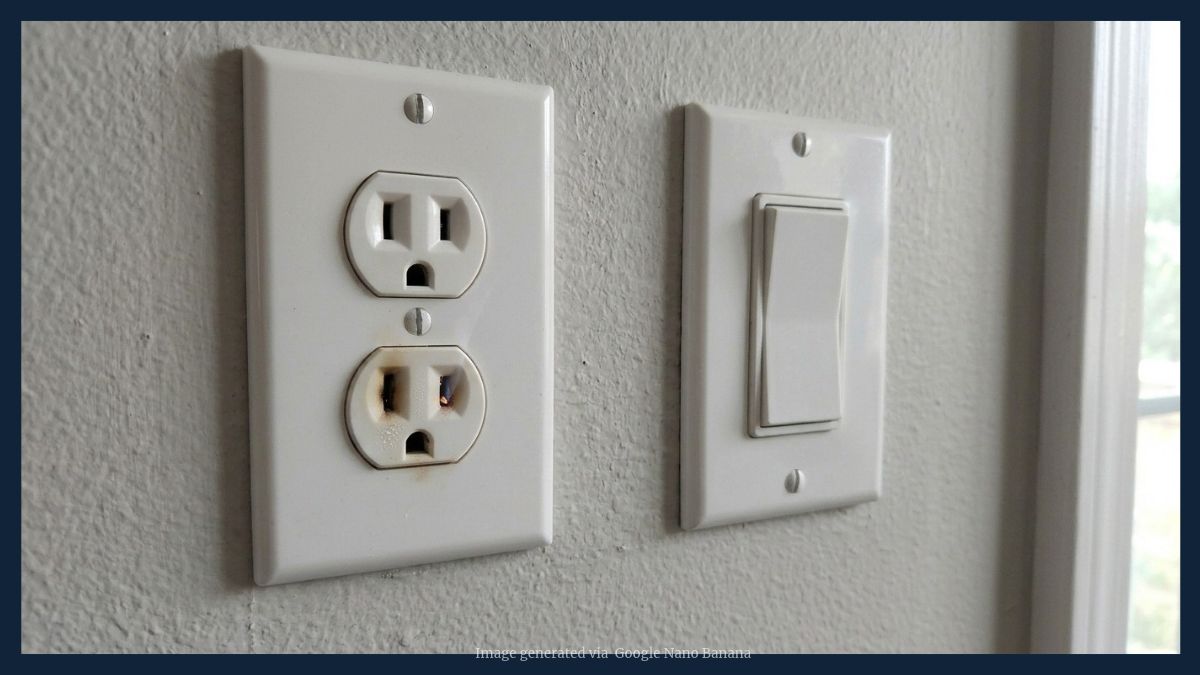
A buzzing sound coming from an electrical outlet or switch may indicate a loose connection, worn electrical contacts, a faulty switch, or electrical arcing. In some cases, the sound may come from a dimmer switch or connected device rather than the outlet itself. However, buzzing directly from a standard outlet or switch should not be ignored.
- Buzzing directly from an ordinary outlet or wall switch is a warning sign that deserves attention.
- Loose electrical connections can produce heat and electrical arcing.
- Worn receptacle contacts or damaged switches may create unstable electrical connections.
- Some dimmer switches and incompatible LED bulbs can produce a hum, but this should not be confused with crackling or sizzling from the wall.
- Buzzing combined with warmth, discoloration, a burning smell, or flickering lights is particularly concerning.
- A circuit breaker does not necessarily trip when a loose connection produces localized heat.
- Stop using the affected outlet or switch and arrange an inspection by a qualified electrician.
- Never open an outlet or switch to investigate the source of the sound yourself.
Treat buzzing, crackling, or sizzling from an outlet or ordinary wall switch as a potential electrical fault. Do not remove the cover plate, touch exposed components, or attempt to tighten wiring. Stop using the affected outlet or switch. If you can safely identify and reach the correct circuit breaker, switch it off. Do not approach an electrical panel that is wet, damaged, hot, or producing smoke or sparks. If you see smoke, flames, or active electrical arcing, move everyone away, leave the area, and contact emergency services. Never use water on an electrical fire.
The sound alone cannot confirm the exact cause. Its location, when it occurs, and whether other warning signs are present can help an electrician investigate.
Loose electrical connections
A loose electrical connection is one of the important causes to investigate when an outlet or switch makes an unusual buzzing sound.
Electrical wires connect to terminals inside outlets, switches, and junction boxes. These connections must remain secure so electricity can flow through a reliable contact point.
When a connection becomes loose, electricity may encounter an unstable contact. Depending on the fault, this can produce vibration, intermittent electrical contact, heat, or arcing.
What causes electrical connections to become loose?
Possible contributors include:
- Incorrect installation.
- Poorly secured wire terminals.
- Deteriorating electrical components.
- Physical movement or stress on wiring.
- Aging connections.
- Previous electrical work that was not completed correctly.
A connection can become unreliable even when the outlet or switch still appears to function normally.
Signs of a loose electrical connection
Look for these warning signs without removing the cover plate:
- Buzzing, crackling, or sizzling from the wall.
- Lights that flicker when a switch is operated.
- An outlet or switch plate that feels unusually warm.
- Brown or black discoloration.
- A burning or hot-plastic smell.
- Power that cuts in and out.
- A switch that feels loose or operates inconsistently.
A loose electrical connection can generate heat and may cause electrical arcing inside the outlet or switch box. Do not remove the faceplate, pull the device out of the wall, or attempt to tighten its terminals. Stop using the affected device and have a qualified electrician inspect it.
A faulty or worn electrical outlet
An electrical outlet contains internal metal contacts that grip the prongs of an inserted plug.
These contacts can deteriorate through age, repeated use, physical damage, or overheating. When they no longer maintain a reliable connection, the outlet may produce unusual sounds or behave inconsistently.
A worn receptacle may also allow a plug to move more easily than it should.
Signs of a faulty outlet
Possible warning signs include:
- Buzzing when a device is plugged in.
- A plug that feels loose in the receptacle.
- Intermittent power.
- Crackling or popping sounds.
- Warmth around the outlet.
- Discoloration around the slots.
- A burning smell.
The outlet may still supply electricity despite having a damaged internal component. Continued operation does not mean it is safe.
Why can a worn outlet make noise?
An unstable electrical connection can cause intermittent contact between conductive parts. Depending on the condition, this may create vibration or electrical arcing.
The sound may become more noticeable when an appliance draws power, but the outlet should not be tested by repeatedly plugging in or moving devices.
Do not bend plug prongs, insert objects into the receptacle, or try to tighten the internal contacts. If an outlet buzzes, crackles, or has visible damage, stop using it and arrange an electrical inspection.
A faulty light switch
A wall switch controls the flow of electricity to a light or another connected electrical load.
Inside the switch, conductive contacts open and close as the switch is operated. If these components become worn, damaged, or improperly connected, the switch may produce buzzing or other unusual sounds.
A faulty switch may also fail to operate the connected light consistently.
What causes a switch to buzz?
Possible causes include:
- Worn internal switching contacts.
- Loose wiring connections.
- A damaged switch mechanism.
- Electrical arcing.
- An unsuitable switch for the connected load.
- A defective electronic control component.
Some electronic switches contain components that can produce a faint operating hum. However, a new or persistent buzzing sound from a standard switch should be investigated rather than assumed to be normal.
Warning signs of a failing switch
- Buzzing when the switch is turned on.
- Crackling or popping during operation.
- Lights that flicker or fail to turn on consistently.
- A switch plate that becomes unusually warm.
- Discoloration around the switch.
- A burning smell.
- A switch that feels loose or does not operate normally.
If the sound is coming directly from the wall switch rather than the light fixture, the switch and its wiring should be inspected.
A dimmer switch or incompatible LED bulb
Not every buzzing sound associated with a lighting control indicates the same type of electrical fault.
Dimmer switches regulate the power supplied to a light. Some use electronic components that can vibrate and produce a faint hum during operation.
LED bulbs can also produce audible noise when paired with an incompatible or poorly matched dimmer.
Why do dimmer switches buzz?
A dimmer may produce a hum because of vibration within its electronic components or because of how it controls the connected lighting load.
The likelihood of buzzing can depend on:
- The dimmer’s design.
- The type of bulb being used.
- Whether the bulb is marked as dimmable.
- Compatibility between the bulb and dimmer.
- The total connected lighting load.
- The condition of the dimmer itself.
Why can LED bulbs make a dimmer buzz?
LED bulbs use electronic drivers to regulate the power supplied to their light-emitting components.
If the bulb and dimmer are not compatible, the interaction between their electronics may produce flickering, buzzing, or inconsistent dimming.
A bulb that is not designed for dimming may also behave unpredictably when connected to a dimmer switch.
What should homeowners look for?
From a safe distance, note:
- Whether the sound occurs only when the dimmer is operating.
- Whether it changes as the light level changes.
- Whether the light flickers.
- Whether the bulb is labeled as dimmable.
- Whether the noise appears to come from the bulb or fixture rather than the wall switch.
A faint, consistent hum from a compatible electronic dimmer may be an operating characteristic. However, a loud or newly developed buzz, crackling, heat, discoloration, or burning smell should not be treated as normal dimmer behavior.
Do not remove the dimmer switch or open the light fixture to investigate the wiring. If the wall control itself is hot, crackling, discolored, or producing a burning smell, stop using it and arrange an electrician’s inspection. A bulb’s compatibility does not rule out a separate wiring or switch fault.
An overloaded circuit or electrical supply problem
A circuit supplies electricity to one or more outlets, lights, and appliances.
If the electrical demand becomes excessive or a circuit develops a fault, the system may show warning signs such as repeated breaker trips, flickering lights, or unusual sounds.
However, buzzing does not automatically mean the circuit is overloaded. A loose connection or defective device may produce a similar symptom.
What can contribute to an overloaded circuit?
- Several high-demand appliances operating on the same circuit.
- Too many devices connected through extension cords or power strips.
- Equipment drawing more current than the circuit is designed to carry.
- New appliances added without assessing the existing electrical capacity.
- A circuit with an underlying wiring or connection problem.
Signs that a broader circuit problem may be involved
- Buzzing occurs at more than one electrical location.
- Lights dim when appliances start.
- Circuit breakers trip repeatedly.
- Several outlets or switches behave inconsistently.
- Appliances appear to lose power unexpectedly.
A qualified electrician can determine whether the issue involves circuit loading, a defective device, wiring, or another part of the electrical installation.
Do not repeatedly reset a breaker that trips, replace it with a higher-rated breaker, or bypass its protective function. These actions can leave wiring inadequately protected. If buzzing occurs alongside repeated breaker trips or flickering lights, stop using the affected equipment and arrange an electrical inspection.
Damaged wiring or electrical components
Wiring and electrical components can deteriorate through age, overheating, physical damage, moisture exposure, or poor installation.
Damaged insulation, corroded terminals, and deteriorated connections can make electrical contact unreliable.
In some cases, the problem may be located inside the wall or a junction box rather than inside the outlet or switch that appears to be making the sound.
Signs that wiring damage may be involved
- Buzzing or crackling from more than one location.
- Repeated electrical interruptions.
- Flickering or dimming lights.
- A burning or hot-insulation smell.
- Discoloration around switches or outlets.
- Repeated breaker trips.
- Electrical problems that return after previous repairs.
A single buzzing switch does not automatically mean the entire house needs rewiring. However, repeated problems or symptoms affecting multiple locations deserve a broader inspection.
An electrician can assess the affected devices, wiring connections, circuit, and electrical panel to determine how far the problem extends.
How to tell where the buzzing is coming from
The location and timing of the sound can help narrow down what needs inspection. These observations are clues, not confirmed diagnoses.
| What you notice | Possible explanation | Recommended response |
|---|---|---|
| Buzzing directly from an ordinary outlet | Loose connection, worn receptacle, or electrical arcing | Stop using it and arrange an electrician’s inspection |
| Buzzing when a plug is inserted | Worn contacts, poor connection, or a faulty plug | Stop using the outlet; do not repeat the test |
| Buzzing from a wall switch | Faulty switch, loose wiring, or arcing | Stop operating it and arrange an inspection |
| Faint hum from a dimmer | Internal vibration or dimmer characteristics | Check compatibility information; seek inspection if new, loud, or accompanied by other warning signs |
| Buzzing that changes with dimmer level | Possible dimmer and bulb incompatibility | Have the control and lighting compatibility assessed |
| Buzzing with flickering lights | Possible faulty connection, switch, or circuit issue | Arrange prompt electrical inspection |
| Buzzing with heat or burning smell | Possible overheating or electrical fault | Stop using the device and take immediate precautions |
| Buzzing from several locations | Possible wider wiring or circuit problem | Have an electrician inspect the electrical system |
If you cannot identify whether the sound comes from the outlet, switch, light fixture, or connected appliance, do not open anything to locate it. Tell the electrician what you have observed.
What should you do if an outlet or switch is buzzing?
The safest response is to stop using the affected device and arrange a professional inspection.
Do not attempt to identify the source by opening the wall plate, moving wires, or repeatedly switching the device on and off.
1. Stop using the affected outlet or switch
- If an outlet is buzzing, do not plug in another appliance to test it.
- If a wall switch is buzzing, avoid operating it again until it has been assessed.
- If the sound is coming from a dimmer, note its position and the lighting conditions when the noise occurs.
Do not continue experimenting with different settings if there are other warning signs.
2. Turn off the circuit if it is safe
If buzzing is accompanied by unusual warmth, discoloration, crackling, or a burning smell, switch off the affected circuit at the breaker if you can safely identify and reach it.
Do not touch the outlet or switch to check whether it is hot. Do not approach a damaged, wet, hot, or sparking electrical panel.
If you cannot safely turn off the circuit, keep away and seek professional assistance.
3. Keep children and pets away
An electrical device with a suspected internal fault may present shock, burn, and fire hazards.
Keep children and pets away from the affected outlet, switch, and connected equipment. Do not allow anyone to touch the cover plate or insert objects into the outlet.
4. Record when the buzzing happens
From a safe distance, note:
- Whether the sound comes from an outlet, switch, light fixture, or appliance.
- Whether it happens continuously or only during operation.
- Whether it changes when a light is dimmed.
- Whether lights flicker at the same time.
- Whether the outlet or switch appears discolored.
- Whether there is an unusual smell.
- Whether a circuit breaker has tripped.
Photograph visible damage if you can do so without approaching or touching an active hazard.
5. Arrange an inspection by a qualified electrician
An electrician can inspect the outlet or switch, its wiring connections, the connected load, and the relevant circuit.
The goal is to identify the source of the buzzing and determine whether a component needs repair or replacement.
Do not return the affected device to use until it has been assessed and made safe.
What will an electrician check?
Replacing a noisy outlet or switch may be necessary, but it is important to identify why it was making noise.
Depending on the symptoms, an electrician may inspect several parts of the electrical system.
The outlet or switch
The electrician may check for:
- Worn or damaged internal contacts.
- Loose or deteriorated terminals.
- Signs of overheating.
- Scorch marks or melted components.
- Mechanical damage.
- Evidence of electrical arcing.
A damaged receptacle or switch may need replacement.
Wiring and connections
The electrician may inspect the wiring for:
- Loose connections.
- Damaged insulation.
- Corrosion.
- Signs of overheating.
- Incorrect connections.
- Damage inside the electrical box.
The connected device or lighting load
If the sound occurs only when a particular appliance or light is operating, the electrician may assess whether the connected equipment is contributing to the problem.
For dimmer-controlled lighting, compatibility between the dimmer and bulbs may also need to be checked.
The circuit and electrical panel
If multiple outlets or switches are affected, or the breaker trips repeatedly, the electrician may inspect the circuit and associated protective devices.
This helps determine whether the issue is isolated to one device or involves a broader electrical problem.
When should you hire a professional?
A buzzing outlet or ordinary wall switch should be inspected by a qualified electrician, particularly when the sound is new, persistent, or getting louder.
- Buzzing or crackling directly from an outlet.
- Buzzing from a standard wall switch.
- A warm or hot faceplate.
- Brown or black discoloration.
- A burning or hot-plastic smell.
- Flickering lights.
- Intermittent electrical power.
- Repeated breaker trips.
- A switch that feels loose or operates inconsistently.
If there is smoke, flame, or active electrical arcing, leave the area and contact emergency services.
Should you hire a professional?
Yes. Electrical buzzing is not a repair problem that homeowners should investigate by opening outlets or switches.
A qualified electrician can distinguish between a faulty device, an incompatible dimmer, a loose connection, and a more serious wiring problem.
When arranging an inspection, describe exactly where the sound comes from and whether it occurs continuously or only when a light or appliance is operating. Ask the electrician to check the device and its associated connections rather than simply replacing the visible component without investigating the cause.
Homeowner checklist: Buzzing outlet or switch
Use this checklist to document what you notice without touching or opening the electrical device.
- Identify whether the sound appears to come from an outlet, switch, light fixture, or appliance.
- Note whether the buzzing is continuous or occurs only during operation.
- Record whether it happens when a light is switched on.
- Note whether the sound changes when a dimmer is adjusted.
- Look for visible discoloration around the cover plate.
- Check visually for cracks or other damage to the cover plate.
- Note whether nearby lights flicker or dim.
- Recall whether the circuit breaker has tripped.
- Record any burning or hot-plastic smell.
- Keep children and pets away from the affected area.
- Stop using the affected outlet or switch.
- Photograph visible damage from a safe distance.
- Arrange an inspection by a qualified electrician.
- Do not use the device again until it has been assessed and made safe.
Important: This checklist is for observation and documentation only. Do not remove the cover plate, touch exposed wiring, insert objects into outlets, or repeatedly operate a buzzing switch to test it.
Frequently asked questions
No. A standard electrical outlet should not normally produce a noticeable buzzing sound. Buzzing may indicate a loose connection, worn receptacle, damaged wiring, or electrical arcing.
A switch may buzz because of worn internal contacts, loose wiring, a damaged switching mechanism, or electrical arcing. If it is a dimmer switch, internal vibration or incompatibility with the connected bulb may also contribute.
Yes. If the buzzing is caused by a loose connection or electrical arcing, the fault can generate heat and damage nearby materials. This can create a fire hazard.
If the outlet is buzzing and there are signs of overheating, discoloration, crackling, or a burning smell, switch off the affected circuit if you can safely identify and reach the breaker.
Some dimmer switches produce a faint hum because of vibration within their electronic components. Incompatible LED bulbs can also cause buzzing or flickering.
Yes. A loose connection can create unstable electrical contact. Depending on the fault, this may produce vibration, intermittent contact, heat, or electrical arcing. A qualified electrician should inspect the connection because the problem may be inside the wall box.
The connected appliance may increase the electrical load and make an existing weak connection more noticeable. A damaged plug, worn outlet, or appliance fault may also be involved. Do not repeatedly plug the device in or move it to other outlets to test the problem.
Sources and references:
- Electrical Safety Foundation International (ESFI), “Switch to Safety”
https://www.esfi.org/switch-to-safety/ - Electrical Safety Foundation International (ESFI), “Home Wiring Safety Tips”
https://www.esfi.org/home-wiring-safety-tips/ - Electrical Safety Foundation International (ESFI), “Electrical Safety Dos”
https://www.esfi.org/electrical-safety-dos/ - Electrical Safety Foundation International (ESFI), “Electrical Fire Safety Checklist”
https://www.esfi.org/electrical-fire-safety-checklist/ - Singapore Civil Defence Force (SCDF), “Fire Statistics 2021 and Case Studies”
https://www.scdf.gov.sg/docs/default-source/fire-safety-docs/fire-safety-manager-%28fsm%29/fsm-2022/fsm2022_fire-stats-2021-and-case-studies.pdf?sfvrsn=eb3a5f47_1
