
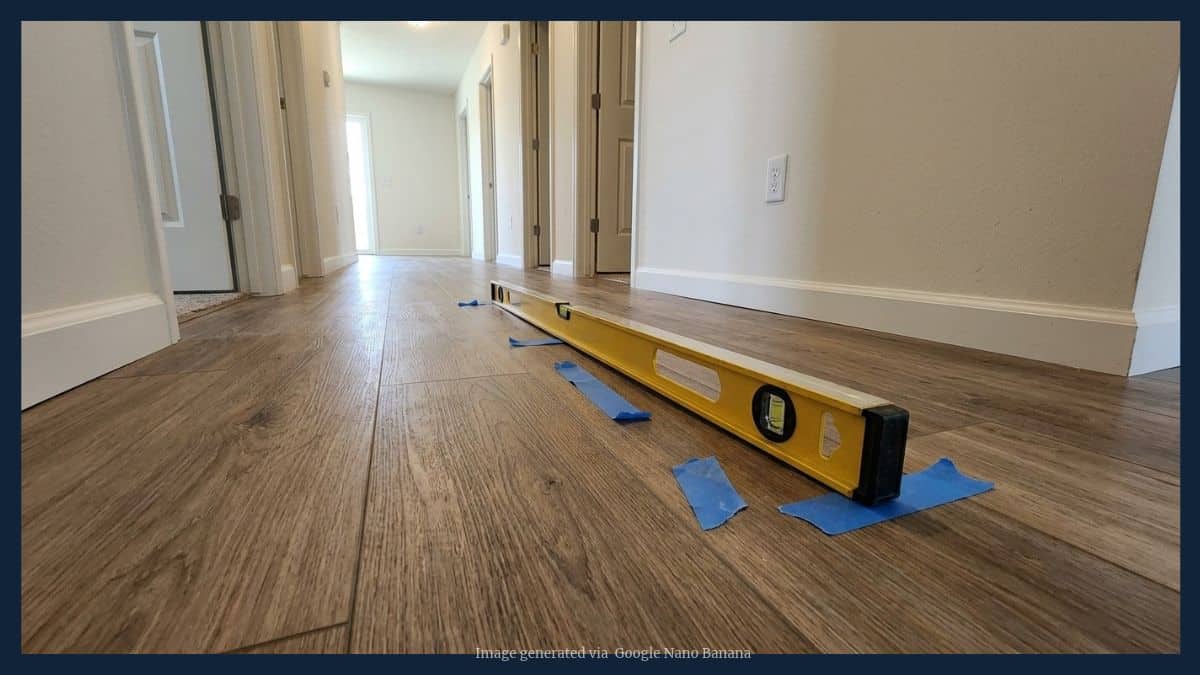
A floor that seems to have gone uneven overnight may have been changing slowly, with something recent making it noticeable. The most common explanations fall into three groups: soil moving under the foundation as its moisture changes, wood framing weakened by moisture, and wood-destroying insects. The floor alone cannot tell you which one you have, and a fast or severe change deserves faster professional attention than a slow one.
TL;DR: A floor that seems suddenly uneven is often slow change that finally became noticeable. Common possibilities include changing soil moisture under the foundation, water-damaged or decayed framing, and wood-destroying insects. Clues like new cracks, sticking doors, or a soft spot can narrow the list but do not confirm a cause. Stay off sagging areas, record the slope, and call a structural engineer for fast-changing or severe cases.
- An uneven floor is a symptom. Soil movement, moisture-damaged framing, and insects are all possible causes, and more than one can be involved.
- Note what changed recently: heavy rain, a dry spell, a leak, or work around the foundation.
- New cracks, sticking doors or windows, and bulging walls alongside the slope point toward movement in the structure.
- Measure and photograph the slope now so you can tell whether it is getting worse.
- Do not jack up, shim, or cut into the floor structure yourself. Get the cause identified first.
Stay off any part of the floor that feels soft, spongy, or visibly sagging, and keep heavy items such as bookcases, safes, and aquariums away from it. If the floor is dropping quickly, a wall is bulging, or doors and windows have suddenly jammed so you cannot open them, treat it as urgent: move everyone out of the affected area and call a structural engineer or your local building department.
If water is present near outlets, cords, or appliances, do not touch them or step into the water, and call an electrician. Do not crawl under the house or pull up flooring to investigate on your own.
Common Causes of a Suddenly Uneven Floor
1. Soil moisture changes under the foundation
Some soils swell when wet and shrink when dry. HUD material on expansive soils explains that swelling soils, usually clays, change volume as their moisture changes, and that this can crack floors, walls, and foundations. A Missouri S&T engineering paper adds that the yearly cycle of wetting and drying makes these soils move every year, and that swelling can lift a foundation. It also describes damage from pockets of moist soil next to a foundation, where one area swells more than another.
That unevenness is the key. Soil that moves the same amount everywhere tends to lift or lower a house together. Soil that moves more in one spot can tilt part of the floor.
The Victorian Building Authority in Australia says foundation movement is often caused by changing soil moisture, but can also come from soil settling after construction, erosion of sandy soils, or tree roots growing under footings. Its advice to avoid changing the moisture conditions around the foundation when doing yard work is worth keeping in mind, since a sudden change around the house, like a new leak, new irrigation, or heavy rain after a drought, may be what made a slow problem noticeable.
2. Settlement or erosion of the soil
Beyond moisture cycles, the soil supporting a footing can compress or wash away. When that happens in one location, the floor above may slope toward it. A contractor or engineer needs to look at the foundation itself to tell this apart from the other causes.
3. Framing weakened by moisture
Floors over a crawl space or basement rest on joists and a subfloor. If those stay wet, they can decay. USDA Forest Products Laboratory material explains that decay fungi need wood to be above roughly 30 percent moisture to grow, that wood kept at about 20 percent or less is generally too dry for decay, and that decay occurs once wood reaches 25 to 30 percent or higher. A university abstract on wood in buildings notes that biological decay can reduce the load a wooden structure can carry.
Where might that moisture come from? Possibilities include plumbing leaks, a damp crawl space, or water entering from outside. EPA advises fixing plumbing leaks promptly and keeping gutters and grading working to move water away from the foundation.
4. Wood-destroying insects
The same university abstract notes that wood can be damaged by fungi and by insects, and that subterranean termites need contact with moisture to establish colonies. Termites can weaken wood from the inside while the surface still looks normal. Signs sometimes cited by pest professionals include mud tubes near the foundation and wood that sounds hollow when tapped, but only a licensed pest professional can confirm an infestation.
- New cracks near doors or windows, plus sticking doors or windows > movement in the foundation or structure may be involved
- Slope appeared after heavy rain, a dry spell, or work near the foundation > changing soil moisture may be involved
- Soft, spongy, or bouncy spot, especially near a bathroom, kitchen, or crawl space > water-damaged or decayed subfloor or joists may be involved
- Damp or musty crawl space or basement beneath the uneven area > ongoing moisture that can weaken wood framing may be involved
- Mud tubes on the foundation or wood that sounds hollow when tapped > wood-destroying insects may be involved
- Slab floor that is higher in the middle or has new cracks > swelling soil pushing up on the slab may be involved
- Water meter reading changes with all water off > a leak that adds moisture to soil or framing may be involved
These clues point toward possibilities. They do not confirm a cause, and two or more causes can be active in the same house.
Safe Steps to Narrow It Down
Do these in order, and stop and call a professional at any point if something looks unsafe.
- Handle safety first. Stay off soft or sagging spots and follow the safety box above.
- Document the slope. Rest a long carpenter’s level or straightedge on the floor, measure any gap under one end with a ruler, and take dated photos. Mark the spot with painter’s tape so you can repeat the measurement the same way.
- Check the cracks and openings. Note any new cracks in walls, ceilings, or flooring, and doors or windows that stick. The Victorian Building Authority treats wall cracks under about 1 mm (roughly 1/25 inch) as normal foundation movement and cracks over about 5 mm (roughly 3/16 inch) as significant, with bulging walls and distorted doors and windows also worth investigating. Those figures are Australian, so use them as a rough guide, not a rule.
- Write down what changed. Heavy rain, drought, a pipe repair, a new irrigation line, tree removal or growth near the house, or other work around the foundation.
- Run the water meter test. EPA says to read your meter, wait two hours with no water in use, and read it again. A change suggests a leak somewhere, though not where.
- Check outdoor drainage from the ground. Look for overflowing gutters, downspouts that dump water beside the house, and soil that slopes toward the foundation. EPA advises making sure the ground slopes away from the house.
- Look without disturbing. If you have safe, dry access to a basement ceiling, look at the joists for dark stains or soft-looking wood. Do not enter a crawl space with standing water or wiring nearby, and do not pry at structural wood.
- Keep monitoring. Re-measure weekly and keep the photos together.
- Mark the ends of a crack with a pencil and date, then re-measure the width with a ruler over the following weeks.
- Keep a simple log of weather, leaks, and work done around the house. A pattern can help an engineer.
- Take photos with a level or tape measure in frame so the slope is clear.
- Do not fill cracks or add leveling compound yet. You may hide evidence of ongoing movement.
- Collect any inspection reports, past repair records, and photos before you call a pro.
Fixes and Prevention
The repair depends entirely on the cause, which is why the cause comes before any floor work.
- Soil and foundation movement: A structural engineer evaluates whether the foundation is moving and recommends what, if anything, to do. Foundation repair itself is contractor work.
- Moisture-damaged framing: The moisture source has to be fixed first, then a contractor repairs or replaces the damaged wood. USDA material makes clear that keeping wood dry is what stops decay.
- Insects: A licensed pest professional confirms and treats an infestation.
- Surface fixes: Flooring or leveling work comes last, after the cause is identified and corrected.
To reduce future risk:
- Keep gutters clear and downspouts directing water away from the foundation.
- Avoid sudden changes in soil moisture beside the foundation, such as a leaking hose bib or heavy watering of one side.
- Be aware of large trees close to the house. The Victorian Building Authority lists tree roots under footings as a cause of movement.
- Fix plumbing leaks promptly and keep crawl spaces and basements dry.
DIY or Professional?
Reasonable to handle yourself: measuring and photographing the slope, logging weather and changes, checking gutters and grading from the ground, running the water meter test, and moving heavy items off the affected area.
Call a professional if:
- The slope is getting worse, appeared quickly, or the floor feels soft, bouncy, or visibly sagging (structural engineer).
- Cracks are widening, doors or windows jam, or walls are bulging (structural engineer). The Victorian Building Authority says excessive movement should be investigated by an engineer.
- The water meter test shows a leak (plumber).
- You see mud tubes, hollow-sounding wood, or other signs of insects (licensed pest professional).
- Wood framing looks stained, soft, or damaged (contractor, after the moisture source is addressed).
- You are not sure what is going on. An independent engineer’s evaluation can also help you compare any repair proposals you receive.
Do not jack up, shim, or cut into joists, beams, or supports yourself. Changing a load path without knowing the cause can make things worse.
- Stay off soft or sagging spots and move heavy items away.
- Measure the slope with a level and ruler, and take dated photos.
- Record cracks and any doors or windows that stick, and mark crack ends.
- Write down recent rain, dry spells, leaks, and work around the house.
- Run the two-hour water meter test and check gutters and grading from the ground.
- If the change is fast, severe, or still growing, call a structural engineer. Call a plumber, pest professional, or contractor for the specific issues above.
FAQs
Sometimes a floor changes quickly, but often a slow change becomes noticeable after a trigger such as heavy rain, a dry spell, or a leak. A fast, large change is a reason for urgent professional attention.
No. Soil movement is one possibility. Moisture-damaged framing and insects can also make a floor sag, and more than one cause can apply.
The Victorian Building Authority treats wall cracks under about 1 mm as normal movement and over about 5 mm as significant, but those are Australian figures. Widening cracks, new cracks, or cracks with sticking doors are worth having an engineer review.
Surface leveling does not stop movement or repair damaged framing. Find and fix the cause first, then do the flooring work.
For a fast, severe, or worsening slope, a structural engineer is a sensible first call because they evaluate the cause instead of selling a repair. For a clear sign of a leak or insects, call a plumber or licensed pest professional.
Sources and References:
- HUD, expansive soils and the FHA soil PVC meter test: https://www.hud.gov/sites/documents/407515hsgh.pdf
- Missouri University of Science and Technology (Rogers), Damage to Foundations from Expansive Soils: https://web.mst.edu/rogersda/expansive_soils/DAMAGE%20TO%20FOUNDATIONS%20FROM%20EXPANSIVE%20SOILS.pdf
- Victorian Building Authority (Australia), Minimising foundation movement and damage to your house: https://www.vba.vic.gov.au/consumers/guides/minimising-foundation-movement
- EPA WaterSense, Fix a Leak Week (two-hour meter check): https://www.epa.gov/node/288682
- EPA, A Brief Guide to Mold, Moisture, and Your Home (2012 reprint): https://www.epa.gov/sites/default/files/2016-10/documents/moldguide12.pdf
