
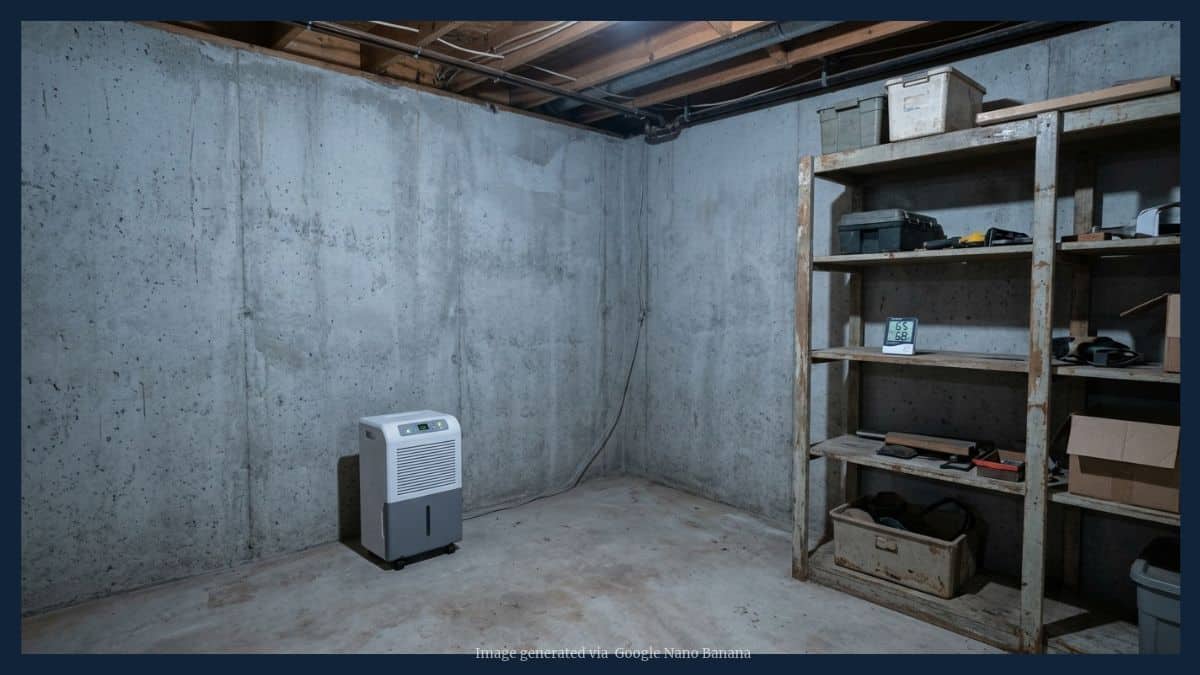
Basement humidity most often traces back to a short list of sources: humid air meeting cool surfaces, water seeping in from the ground, leaks, or moisture released by indoor appliances. EPA suggests keeping indoor humidity below 60 percent, ideally between 30 and 50 percent. If a hygrometer reads above that range for days at a time, something is adding moisture, and finding out what comes before buying equipment.
- Measure first. A hygrometer tells you whether humidity is actually high instead of guessing from the smell.
- Humid air and liquid water are different problems. A dehumidifier addresses the first, not the second.
- Summer condensation on cool walls and pipes is a common cause, and opening windows can make it worse when outdoor air is more humid.
- Gutters, ground slope, dryer venting, and drip pans are all moisture sources you can check safely.
- Dry wet materials within 24 to 48 hours to reduce the chance of mold, and call a pro for standing water, sewage, or large mold areas.
Read this before you go downstairs.
- If there is standing water and outlets, cords, or appliances could be touching it, do not wade in.
- If you cannot reach the panel safely, call your electric utility to cut power at the meter.
- Do not use electric appliances or touch wiring while you are wet or standing in water.
- If the water may be sewage or floodwater, EPA says to bring in a professional experienced with contaminated water rather than cleaning it yourself.
Common causes of high basement humidity
1. Humid air meeting cool basement surfaces
Basement walls and floors stay cool because they sit against the ground. In summer, warm, humid air can condense when it touches cold basement walls, and if cold water taps sweat after use, the lower foundation walls may be doing the same. The same logic applies to cold water pipes and ducts. EPA lists condensation on windows, walls, or pipes as a possible sign of high humidity, and suggests insulating cold water pipes to help prevent it.
This is where a common habit backfires. The Québec government’s energy guidance says that if outdoor humidity is above 70 percent in summer, a dehumidifier makes more sense than letting that air in, because outdoor air raises basement humidity. Ventilation helps only when the outside air is drier than the air inside.
2. Water entering from the ground or foundation
If moisture is coming from outside, the humidity may be a symptom of liquid water. EPA advises keeping gutters clean and in repair and making sure the ground slopes away from the foundation so water does not collect around it. ENERGY STAR notes that improving drainage around the foundation may lower basement humidity. Cracks in foundation walls can also let water in, though diagnosing them is a job for a contractor.
3. Plumbing or appliance leaks
A slow leak adds moisture without any obvious puddle. EPA advises fixing plumbing leaks promptly. You can test for one without opening any walls. Read your water meter, wait two hours with no water in use, and read it again; a change means there is probably a leak. A moving meter does not say where the leak is, only that one exists somewhere on the system.
An air conditioning condensate pan or drain line can also leak or overflow. EPA recommends keeping drip pans clean and drain lines unobstructed.
4. Indoor moisture sources
Everyday appliances add water vapor to the air. EPA recommends venting clothes dryers, stoves, and kerosene heaters to the outside where possible, since combustion appliances release water vapor, and running exhaust fans when showering, cooking, or washing dishes. A dryer that vents into the basement, or a bathroom fan that ends in the ceiling space instead of outdoors, can quietly add moisture every day.
- Beads of water on cold water pipes or ducts, or rust on pipes > condensation on cold surfaces may be involved
- Whole basement feels clammy, worse in warm, humid months > humid outdoor air meeting cool surfaces may be involved
- Damp or stained area on one wall, especially after rain > exterior drainage, gutters, or foundation water may be involved
- Damp area near a pipe, water heater, or appliance > a localized leak or overflow may be involved
- Musty smell with nothing visibly wet > elevated humidity or hidden moisture may be involved
- Water meter changes with all water off > a leak somewhere in the plumbing may be involved
- Hygrometer stays above 50 to 60 percent for days > moisture is being added faster than it leaves, source still unknown
These clues point toward possibilities. They do not confirm a cause, and a basement can have more than one source at the same time.
Safe steps to narrow it down
Do these in order, and stop and call a professional at any point if something looks unsafe.
- Handle electrical safety first. If water is on the floor near electrical items, follow the safety box above before anything else.
- Measure humidity. EPA notes that a small humidity meter, sold at many hardware stores, can measure relative humidity. Check at several spots and at different times of day, and write the readings down for a week.
- Look for liquid water versus damp air. Puddles, stains, or darker patches on walls and floors, especially after rain, point toward water entering from outside. A general clammy feel with dry floors points more toward humid air.
- Check cold surfaces. Look at cold water pipes, ducts, and the lower part of exterior walls for sweating or rust.
- Check indoor sources. Confirm the dryer vents outdoors, bathroom fans exhaust outdoors, and any AC drip pan or drain line is clean and flowing.
- Look at the outside of the house from the ground. Check for overflowing gutters, downspouts that dump water beside the foundation, and soil that slopes toward the house. Do not climb onto the roof or work from a ladder in wet conditions.
- Run the two-hour water meter test described above.
- Dry anything wet quickly. EPA guidance says mold usually does not grow if wet materials are dried within 24 to 48 hours. That is a guideline, not a promise.
- Keep the hygrometer in the basement itself, not just upstairs, since humidity differs by room.
- If you use a dehumidifier, set its built-in humidistat within the 30 to 50 percent range and empty the bucket or use a drain hose.
- Keep belongings off the floor and away from exterior walls so air can move and you can spot dampness early.
- Photograph any stains with the date, so you can tell if they grow.
- Open windows only when the outdoor air is clearly drier than the basement air.
Fixes and prevention
The right fix depends on the source, which is why the checks come first.
- Humid air and condensation: EPA suggests using air conditioners or dehumidifiers when needed to keep humidity down. ENERGY STAR dehumidifiers include a built-in humidistat so you can set a target. Insulating cold water pipes can reduce sweating.
- Liquid water entering: Fix gutters, downspouts, and grading first. A utility fact sheet from Minnesota Power cautions that a dehumidifier is not an effective answer to a seepage problem, so treat equipment as a supplement, not the repair.
- Leaks: A plumber repairs the pipe or fixture. An HVAC technician handles a clogged drain line or pan.
- Appliance moisture: Vent dryers and exhaust fans outdoors.
- Mold afterward: EPA says that if you clean up mold but do not fix the water problem, it will most likely come back, and that moldy surfaces should not be painted over. Hard surfaces can be scrubbed with detergent and water and dried completely, while porous materials like carpet or ceiling tiles may have to be thrown away.
DIY or professional?
Reasonable to handle yourself: measuring humidity, checking gutters and downspouts from the ground, venting the dryer and exhaust fans properly, insulating accessible cold water pipes, running a dehumidifier, and moving belongings off the floor.
- Water is standing near outlets, cords, or appliances (electrician and possibly your utility).
- The water meter test suggests a leak (plumber).
- Water keeps entering after you have fixed gutters and grading, or you see cracks or seepage (a qualified contractor).
- You suspect sewage or other contaminated water. EPA says to use a professional experienced with it.
- Mold covers a large area. EPA says homeowners can often handle mold on less than about 10 square feet, but larger areas or heavy water damage call for more caution. If you have health concerns, EPA suggests consulting a health professional before cleanup.
- You suspect hidden mold behind finished walls. EPA notes that investigating it can release spores and suggests considering an experienced professional.
- If there is standing water near electrical items, stay out and follow the safety steps first.
- Place a hygrometer in the basement and record readings for several days.
- Look for liquid water, stains, or sweating pipes, and note whether they follow rain or warm weather.
- Check the dryer vent, exhaust fans, and any AC drip pan or drain line.
- Check gutters, downspouts, and ground slope from the outside, staying on the ground.
- Run the two-hour water meter test, and call a plumber if the reading changes.
FAQs
EPA suggests staying below 60 percent, ideally between 30 and 50 percent. ENERGY STAR describes 30 to 50 percent as the generally optimal range for a building.
A dehumidifier lowers humidity in the air, but it does not stop liquid water from entering. If humidity keeps climbing or water keeps showing up, find the source and fix it.
Only when the outdoor air is drier than the basement air. A Québec government guide notes that bringing in humid outdoor air in summer raises basement humidity, so a dehumidifier may be the better choice on muggy days. That guide is Canadian, so use it as general guidance.
A musty smell can point to moisture or hidden mold. It does not prove either. Measure humidity and check for sweating pipes, stains, and leaks.
EPA uses 24 to 48 hours as a drying target to prevent mold in most cases, though growth does not always follow that exact timeline.
Sources and references:
- EPA, A Brief Guide to Mold, Moisture, and Your Home (2012 reprint): https://www.epa.gov/sites/default/files/2016-10/documents/moldguide12.pdf
- EPA, Mold Cleanup in Your Home: https://www.epa.gov/node/59549 and EPA, Mold Course Chapter 4, Dry Quickly: https://www.epa.gov/node/58595
- EPA WaterSense, Fix a Leak Week (two-hour meter check): https://www.epa.gov/node/288682
- ENERGY STAR, Dehumidifiers: https://www.energystar.gov/products/dehumidifiers
- Minnesota Power, Dehumidifier fact sheet: https://www.mnpower.com/Content/Documents/EnergyConservation/OneHome/Appliances/dehumidifier-fact-sheet.pdf
- Safe Electricity, flooded-area electrical safety (reprinted by the City of Farmer City): https://cityoffarmercity.org/?p=777
