
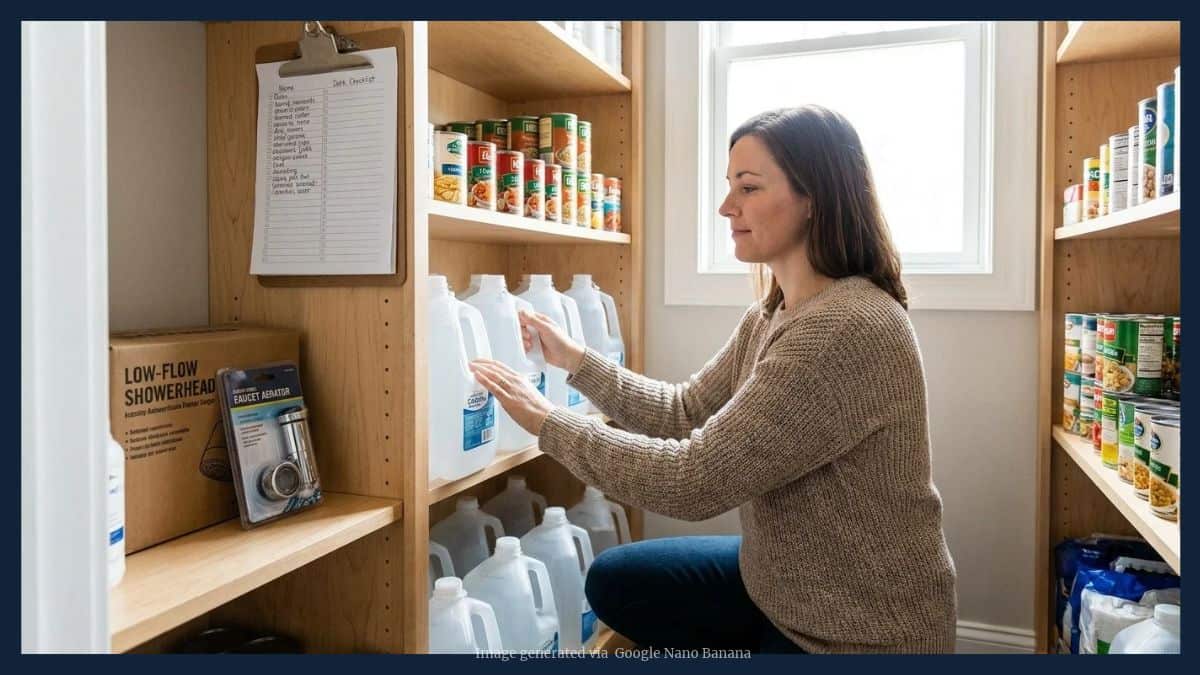
A water shortage can disrupt drinking, cooking, bathing, and cleaning. Whether caused by drought, utility maintenance, damaged pipes, or an emergency, preparing ahead can make it easier to manage. Start by storing drinking water, fixing leaks, reducing unnecessary consumption, and knowing where to get additional supplies.
- A water shortage can affect both essential drinking-water needs and everyday household activities.
- Storing water before an interruption is easier than trying to collect enough during an emergency.
- The CDC’s baseline is at least 1 gallon per person per day for three days, with additional water for individual needs and hot conditions.
- Water conservation helps extend available supplies, but it does not replace the need for safe drinking water.
- Water stored for drinking must be protected from contamination.
- A water interruption may also affect toilets, plumbing equipment, and appliances that depend on a reliable supply.
- Follow local utility and public-health instructions when the water supply is interrupted or its safety is uncertain.
Understand what type of water shortage you may face
Not all water shortages are the same. Knowing the likely situation helps you decide what to store and which precautions to take.
A planned water interruption
Utilities may temporarily shut off water for maintenance, pipe repairs, construction, or upgrades.
In this situation, you may receive advance notice explaining when the interruption will begin and how long it is expected to last.
How to prepare:
- Fill clean containers with water before the interruption, if the utility confirms the water is safe.
- Store enough drinking and cooking water for the expected period.
- Complete laundry and other water-intensive tasks beforehand if necessary.
- Keep a reserve for hygiene and essential cleaning.
- Check whether your utility expects water pressure to return gradually or recommends flushing taps afterward.
Do not assume that water will return at the exact time originally announced. Keep a reasonable reserve if the interruption could last longer than expected.
A drought-related water shortage
Drought can reduce water availability over an extended period. Authorities or utilities may introduce restrictions on lawn watering, vehicle washing, filling pools, or other nonessential uses.
How to prepare:
- Reduce water consumption before restrictions become stricter.
- Repair leaks and replace inefficient fixtures where practical.
- Use drought-tolerant landscaping appropriate for your region.
- Collect rainwater where lawful and suitable for approved non-drinking uses.
- Plan how to maintain essential household needs if restrictions continue for weeks.
A drought-related shortage may not mean your tap water is unsafe. Follow local guidance about water quality and any restrictions on use.
An unexpected water supply failure
A broken main, power failure affecting a water system, natural disaster, or other emergency can interrupt water service without warning.
In these situations, you may also have limited access to stores, transportation, or other services.
How to prepare:
- Keep emergency drinking water at home rather than relying entirely on last-minute purchases.
- Maintain a supply of shelf-stable food that requires little or no water to prepare.
- Keep clean containers available for collecting water from an approved source.
- Store basic hygiene and sanitation supplies.
- Identify where local authorities distribute emergency water.
A water contamination advisory
Sometimes water is available at the tap but may not be safe to use.
A boil-water advisory, for example, means authorities want residents to take precautions against microbial contamination. A do-not-drink or do-not-use advisory may involve hazards that boiling cannot remove.
How to prepare:
- Keep bottled or properly stored emergency water available.
- Know how to receive official public-health and utility alerts.
- Follow the specific instructions issued for your area.
- Do not assume boiling makes water safe from chemicals or other contaminants.
How much emergency water should you store?
The amount you need depends on the number of people in your home, the expected duration of the interruption, the climate, and individual needs.
The CDC recommends storing at least 1 gallon of water per person per day for a minimum of three days. It also recommends aiming for a two-week supply if possible.
This is a preparedness baseline, not a guarantee that the amount will cover every household activity or situation.
Emergency Water Storage Calculator
Use this calculator to estimate a basic emergency supply based on the CDC’s 1-gallon-per-person-per-day guideline.

Dwellnostics Home Tool
Emergency Water Storage Calculator
Plan ahead. Estimate your household’s basic water needs before a water shortage or emergency.
Based on at least 1 gallon per person per day for drinking and basic needs. Actual requirements can be higher.
What does one gallon per person per day cover?
The guideline is intended to support basic emergency needs, including drinking and some food preparation and hygiene. It is not necessarily enough for normal household use, laundry, showers, gardening, and all toilet needs.
Consider additional water for:
- People living in hot climates or doing strenuous activity.
- Infants, pregnant people, and people who are ill.
- Pets and other animals.
- Special dietary or medical requirements.
- Essential cleaning and sanitation.
- A shortage that may last longer than expected.
If you have space and resources, gradually build toward a longer-term supply rather than trying to buy everything at once.
Store drinking water safely
Having water available is only useful if it remains safe to use.
Choose the right water source
Unopened, commercially bottled water is a reliable option for emergency drinking-water storage when kept according to the product instructions.
You can also store water in suitable containers filled with water from a source that authorities consider safe.
For household-filled containers:
- Use food-grade water-storage containers.
- Choose containers that close securely.
- Clean and sanitize them according to public-health guidance and the manufacturer’s instructions.
- Label them with the date filled.
- Keep them away from direct sunlight, heat, and chemicals.
Never reuse containers that held gasoline, pesticides, cleaning chemicals, or other toxic substances.
Where should you store emergency water?
Choose a cool, dark, accessible location. Suitable spaces may include a storage cupboard, pantry, or other clean area where containers will not be exposed to chemicals or extreme temperatures.
Keep containers:
- Off the floor if flooding or contamination is a concern.
- Away from fuel, pesticides, paint, and household chemicals.
- Out of direct sunlight.
- In a location that can support their weight.
Water is heavy. A gallon weighs about 8.3 pounds, so large quantities can put substantial weight on shelves. Use sturdy storage and avoid placing heavy water containers on unsuitable shelving.
How often should you replace stored water?
Follow the manufacturer’s expiration or best-by guidance for commercially bottled water.
For water stored in containers that you fill yourself, the CDC advises replacing the water every six months. Always use clean, suitable containers and follow the recommended storage procedure.
Do not assume that clear-looking water is safe if the container has been damaged, opened, or contaminated.
Avoid contaminating stored water
When using stored water:
- Wash your hands before handling containers.
- Keep lids closed until water is needed.
- Avoid touching the inside of the container or lid.
- Use a clean pouring method.
- Do not return unused water to the storage container.
For detailed instructions, see the CDC’s How to Create and Store an Emergency Water Supply.
Prepare your plumbing before the shortage
A water shortage is a good reason to check whether your plumbing is wasting water or could create problems during an interruption.
Check faucets and showerheads
Inspect taps and showerheads for dripping, damaged washers, or loose connections.
Even a small leak can waste water over time. Repairing it before a shortage helps preserve your available supply.
Consider installing water-efficient fixtures when replacement is needed. Choose products that meet applicable plumbing requirements and provide adequate performance for your household.
Check for leaking toilets
Toilets can waste a significant amount of water if a flapper, fill valve, or other component leaks.
Signs include:
- Water running continuously into the bowl.
- A toilet that refills when nobody has used it.
- Unexpected changes in water use.
- A faint hissing sound near the tank.
Repair faulty components promptly. A plumber can help if the source of the leak is unclear.
Inspect visible pipes and connections
Look under sinks and around accessible plumbing for drips, corrosion, or moisture.
If you find a leak:
- Identify whether it needs immediate repair.
- Know where the relevant shutoff valve is, if it is safe and practical to use.
- Contact a qualified plumber for significant or concealed leaks.
Do not attempt complex plumbing repairs if you are unsure how to perform them safely.
Know where your main water shutoff is
Locate the main shutoff valve so you can stop the water supply if a pipe bursts or a major leak occurs.
Make sure household members know where it is. If the valve is difficult to operate or you cannot identify it, ask a plumber for help before an emergency.
The main shutoff is useful for preventing water damage, but it does not create an additional water supply.
Check water-dependent appliances
Inspect washing machines, dishwashers, refrigerators with water dispensers, and other appliances for visible leaks.
Avoid starting a water-intensive cycle just before a planned interruption if it may leave the appliance or load unfinished. Follow the appliance manufacturer’s instructions if water service is interrupted while it is operating.
Reduce household water use before the shortage
Conserving water early helps extend available supplies and may reduce the impact of restrictions.
In the bathroom
- Take shorter showers.
- Turn off the tap while brushing your teeth or shaving.
- Repair leaking faucets and toilets.
- Avoid unnecessary baths.
- Use water-efficient fixtures when replacing old ones.
If a shortage becomes severe, prioritize essential hygiene and follow local public-health advice.
In the kitchen
- Run the dishwasher with a full load when possible.
- Wash produce in a basin rather than under a continuously running tap.
- Keep drinking water chilled in a reusable bottle or jug instead of running the tap until it feels cool.
- Use only the water needed for cooking.
- Reuse suitable clean water for another appropriate purpose when safe.
Do not reuse water that has contacted raw meat, harmful chemicals, or other contaminants for drinking or food preparation.
In the laundry room
- Run full loads when appropriate for the machine.
- Use water-efficient settings if available.
- Avoid washing clothes that do not need immediate cleaning.
- Repair leaking hoses and connections.
Do not overload the washing machine or use a cycle that is unsuitable for the laundry simply to save water.
Outdoors
During restrictions:
- Delay washing vehicles, driveways, and outdoor surfaces unless necessary.
- Avoid watering lawns when prohibited.
- Use drought-tolerant landscaping appropriate to your region.
- Repair leaking irrigation lines.
- Water plants efficiently when watering is allowed.
Follow local restrictions rather than relying on a general conservation rule.
Reuse water carefully
Some household water can be reused for appropriate non-drinking purposes.
For example, certain relatively clean water from rinsing produce may be suitable for watering ornamental plants. Other reused water, such as laundry or bathing wastewater, may contain detergents, microbes, or other substances and requires more care.
Greywater should never be treated as drinking water. Rules for greywater reuse vary by location, and some uses are restricted. Do not use potentially contaminated water on edible parts of food crops or for tasks requiring potable water.
Prepare for toilets, hygiene, and sanitation
A shortage can affect sanitation as well as drinking water. If water pressure is lost or service stops, some toilets and plumbing fixtures may not operate normally.
Keep basic hygiene supplies
Consider storing:
- Soap and hand sanitizer.
- Disposable or reusable cleaning cloths.
- Household cleaning products.
- Toilet paper and personal hygiene supplies.
- Trash bags.
- Disposable gloves where appropriate.
- Cleaning and disinfecting supplies used according to label directions.
Soap and water are preferred when available. Hand sanitizer can help when handwashing facilities are unavailable, but it does not replace all cleaning needs.
Plan for toilet use
Do not assume that you can flush a toilet normally during an interruption. Some homes have private wells or pressure systems, while others depend on municipal water pressure or specialized plumbing arrangements.
Before a planned outage, ask your utility or building manager what to expect.
If water service is lost:
- Follow official instructions about toilet use and sanitation.
- Do not repeatedly flush if the system cannot refill.
- Do not pour large amounts of stored drinking water into toilets unless necessary and appropriate.
- Keep human waste separate from drinking water and food-preparation areas.
Emergency toilet arrangements depend on the home, local rules, and the nature of the interruption. Follow public-health guidance for safe disposal.
Keep drinking water separate from cleaning water
Clearly label containers so nobody accidentally drinks water reserved for cleaning or other non-potable uses.
Keep cleaning chemicals and sanitation supplies separate from stored drinking water.
What to do with water heaters, pumps, and other equipment
Some homes use equipment that depends on a water supply, electricity, or pressure. How you should respond depends on the system.
Water heaters
If the supply is interrupted, do not assume the water heater can be used as an emergency drinking-water source.
Water stored in a heater may not be suitable for drinking because of its condition, temperature, tank maintenance, or contamination risks. Never use water from a radiator or boiler that is part of a heating system for drinking, cooking, or hygiene.
If you are considering draining a water heater or accessing stored water from it, consult the manufacturer’s instructions and a qualified professional. Improper handling can cause scalding, equipment damage, or other hazards.
Private wells and pressure pumps
Homes with private wells may lose water when the pump fails or electricity is interrupted. A water shortage caused by a drought can also affect well output.
If your home uses a well:
- Maintain the system according to the manufacturer’s guidance.
- Understand what happens to your water supply during a power outage.
- Store emergency drinking water independently.
- Arrange testing if contamination is suspected or if a relevant advisory applies.
Do not assume that well water is safe merely because it looks clear.
Water storage tanks and cisterns
If your home uses a storage tank or cistern, check its condition and maintenance requirements before a shortage occurs.
Make sure the system is protected from contamination and that any refill source is safe for the intended use. Rainwater catchment systems require appropriate design, maintenance, and treatment before water can be considered suitable for drinking.
The CDC provides specific guidance for cistern safety before, during, and after disasters.
Can you collect rainwater during a water shortage?
Rainwater can provide an additional source for certain household tasks, depending on local laws, collection methods, and water quality.
Possible non-drinking uses may include:
- Watering ornamental plants where permitted.
- Some outdoor cleaning tasks.
- Other approved uses that do not require potable water.
However, rainwater can collect contaminants from roofs, gutters, bird droppings, roofing materials, storage containers, and the surrounding environment.
Do not assume collected rainwater is safe to drink, cook with, or brush your teeth with. It requires appropriate collection, treatment, and testing for the intended use, and some contaminants cannot be removed by boiling alone.
If you plan to collect rainwater:
- Check local regulations.
- Use a suitable collection system.
- Keep tanks and containers covered.
- Prevent insects and debris from entering.
- Maintain the system according to its instructions.
- Keep drinking-water storage separate.
Rainwater harvesting can support conservation, but it should not replace a reliable supply of safe drinking water.
What to do when the water shortage actually begins
Once service is interrupted or restrictions take effect, prioritize essential needs and follow official guidance.
Step 1: Confirm the situation
Check your water utility, local emergency-management agency, or public-health authority for information about:
- The expected duration.
- Whether water is unavailable or unsafe.
- Approved water distribution locations.
- Conservation restrictions.
- Any instructions for restoring service.
Avoid relying solely on unverified social media posts or neighborhood rumors.
Step 2: Allocate your stored water
Use safe stored water for drinking, food preparation, brushing teeth, and other essential needs as appropriate.
Track how much water remains so you can plan realistically. Keep enough for people with special requirements and for pets.
Step 3: Reduce nonessential water use
Pause unnecessary laundry, car washing, outdoor cleaning, and other water-intensive tasks.
Use the utility’s restrictions as your guide. Do not compromise essential hygiene or medical needs to meet a general conservation target.
Step 4: Follow water-safety instructions
If officials issue a boil-water advisory, follow their instructions for drinking, cooking, brushing teeth, and other specified uses.
If officials issue a do-not-drink or do-not-use advisory, do not assume boiling will make the water safe. Use an approved alternative source and follow the stated precautions.
Step 5: Obtain more water before your supply runs out
If the shortage is expected to continue, identify an approved source early. Depending on the situation, this may include commercially bottled water, official distribution sites, or another source confirmed safe by authorities.
Use clean, suitable containers for collection and transport.
Step 6: Check on household members who need additional support
Make sure children, older adults, people with disabilities, and anyone with special medical or hydration needs have access to suitable drinking water.
If necessary, contact local support services or emergency-management authorities for assistance.
Common mistakes to avoid during a water shortage
Waiting until the taps run dry to buy water
Emergency supplies may become difficult to find during a widespread interruption. Build your supply gradually before it becomes urgent.
Storing water in unsafe containers
Containers previously used for fuel, pesticides, or cleaning chemicals are not suitable for drinking-water storage. Use food-grade containers and keep them sealed.
Assuming all clear water is safe
Water can contain harmful microbes or chemicals without looking or smelling unusual. Follow official guidance on the safety of your water source.
Boiling water without checking the advisory
Boiling can kill many disease-causing organisms, but it does not remove every chemical contaminant. Follow the specific public-health instructions issued for your area.
Using drinking water for every household task
During a shortage, reserve safe drinking water for essential needs. Use appropriate alternative water for permitted non-potable tasks when available.
Ignoring leaks
A dripping tap or leaking toilet can waste water that could otherwise be conserved. Repair leaks promptly.
Making unplanned plumbing changes
Do not modify plumbing, bypass safety devices, or connect alternative water sources without understanding the risks and applicable requirements. Cross-connections can contaminate drinking-water systems.
Assuming the water will return on schedule
Even planned repairs can take longer than expected. Keep a reserve and monitor official updates.
Household water shortage preparation checklist
Use this checklist to prepare your home before a shortage occurs.
Emergency water
- Calculate your household’s basic water needs.
- Store at least a three-day supply if possible.
- Work toward a two-week supply when practical.
- Add water for pets and special needs.
- Use safe bottled water or appropriate food-grade containers.
- Label stored water and track replacement dates.
- Store water away from sunlight and chemicals.
Plumbing and appliances
- Repair leaking faucets and toilets.
- Check visible pipes and connections.
- Locate the main water shutoff valve.
- Inspect water-using appliances for leaks.
- Understand how your home is supplied with water.
- Know whom to contact for urgent plumbing repairs.
Conservation
- Reduce unnecessary water use.
- Use full loads in water-using appliances where appropriate.
- Install efficient fixtures when replacing old ones.
- Check irrigation systems for leaks.
- Learn local water-restriction rules.
- Identify appropriate non-potable water reuse options.
Hygiene and safety
- Store soap, toilet paper, and cleaning supplies.
- Plan for toilet use if service stops.
- Keep drinking water separate from cleaning water.
- Know how to receive water-quality alerts.
- Understand the difference between a shortage and a contamination advisory.
- Identify approved locations for emergency water supplies.
Household planning
- Explain the water plan to everyone in the household.
- Make sure stored water is accessible.
- Keep a written inventory of supplies.
- Check the plan periodically.
- Review the plan when household needs change.
Frequently asked questions
The CDC recommends at least 1 gallon per person per day for three days and suggests trying to store a two-week supply if possible. You may need more in hot weather or for pets, children, illness, and other special circumstances.
Follow the expiration or best-by guidance for commercially bottled water. For water stored in containers that you fill yourself, the CDC advises replacing it every six months. Proper containers, clean handling, and suitable storage conditions are important.
Use containers specifically suitable for drinking-water storage. Food-grade water-storage containers are preferred for water you fill yourself. Do not use containers that previously held chemicals or other toxic substances.
Do not assume rainwater is safe to drink. It can contain microbes and chemical contaminants from roofs, gutters, collection systems, and the environment. It requires appropriate treatment and testing for the intended use, and boiling alone may not remove chemical hazards.
Pool water should not be treated as drinking water. It may contain disinfectants, contaminants, and substances that make it unsuitable for drinking or cooking. Follow public-health advice and use an approved safe-water source.
Contact your local water utility or emergency-management agency for information about approved distribution sites and safe alternative sources. Avoid drinking water from an unknown source unless it has been confirmed safe or appropriately treated for the suspected hazards.
For a planned interruption, you may choose to collect water for suitable non-drinking uses if your bathtub is clean and the storage method is appropriate. Bathtub water is not automatically safe for drinking, and it can become contaminated. Dedicated clean containers are preferable for drinking-water storage.
Do not assume that water in a water heater is suitable for drinking or cooking. Its condition and safety depend on the system and circumstances. Consult the manufacturer’s instructions and qualified professionals before attempting to access it.
Repair leaks, take shorter showers, turn off taps when they are not needed, use efficient appliances, and follow local outdoor watering restrictions. Reuse water only for appropriate purposes and avoid practices that could contaminate drinking-water supplies.
A water shortage means the available supply is limited or interrupted. A boil-water advisory means authorities have identified or suspect a water-quality risk and require precautions against certain contaminants. A shortage does not automatically mean water is unsafe, and an advisory can occur even when water still comes out of the tap.
Sources and References:
- Centers for Disease Control and Prevention (CDC) — How to Create and Store an Emergency Water Supply
https://www.cdc.gov/water-emergency/about/how-to-create-and-store-an-emergency-water-supply.html - CDC — How to Make Water Safe in an Emergency
https://www.cdc.gov/water-emergency/about/ - Ready.gov — Water
https://www.ready.gov/water - U.S. Environmental Protection Agency — WaterSense
https://www.epa.gov/watersense - CDC — Cistern Safety and Disasters: Before, During, and After
https://www.cdc.gov/water-emergency/about/cistern-safety-and-disasters-before-during-and-after.html - Federal Emergency Management Agency (FEMA) — Are You Ready?
https://www.fema.gov/pdf/areyouready/basic_preparedness.pdf
