
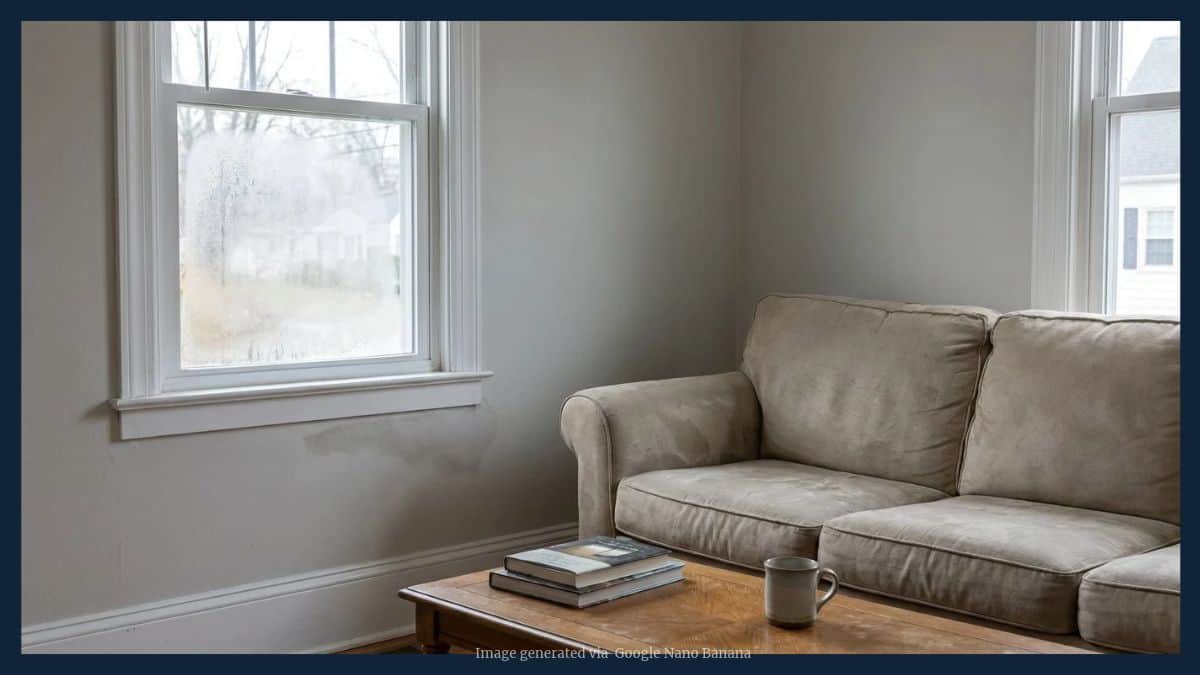
Your house can feel damp even when it isn’t raining because moisture may be building up indoors, entering through the ground or building materials, leaking from plumbing, or condensing on cool surfaces. Everyday activities such as showering, cooking, and drying clothes can also raise indoor humidity.
A house can feel damp without rain because of high indoor humidity, poor ventilation, plumbing leaks, condensation, moisture rising or entering through the ground, or hidden leaks around the roof, windows, and walls. Use a humidity meter, inspect for stains and musty odors, and note where moisture appears. Reduce excess humidity, but investigate hidden water sources if dampness persists or building materials are deteriorating.
7 reasons your house feels damp when it isn’t raining
1. Indoor humidity is too high
One of the most common explanations is excessive moisture in the indoor air.
People generate water vapor through normal daily activities. Showering, cooking, washing dishes, drying laundry indoors, and even breathing add moisture to the home. In a humid climate, outdoor air can contribute even more moisture when it enters the building.
If that moisture is not removed effectively, the air may feel heavy or clammy. Towels may take longer to dry, bedding can feel slightly moist, and a closed room may develop a stale smell.
Clues to look for:
- Several rooms feel damp rather than just one corner.
- Towels or clothes take unusually long to dry indoors.
- Windows, mirrors, or cool surfaces develop condensation.
- A humidity meter regularly shows readings above 60%.
The U.S. Environmental Protection Agency recommends keeping indoor relative humidity below 60%, ideally around 30% to 50% when practical. In a naturally humid climate, controlling indoor humidity may require air conditioning, dehumidification, and effective ventilation.
What to do: Measure the humidity rather than relying only on how the room feels. If readings are consistently high, reduce moisture from daily activities and use suitable equipment to remove excess humidity.
2. Poor ventilation traps moisture indoors
Ventilation helps remove humid air from areas where moisture is generated. When bathroom and kitchen exhaust fans are missing, ineffective, or vented into the wrong space, moisture can accumulate.
A bathroom may stay damp long after someone showers. Steam from cooking can spread into nearby rooms. Laundry drying indoors can also raise humidity, especially in a small room with closed windows and doors.
Poor ventilation can contribute to dampness even when there is no plumbing defect.
Look for these signs:
- Bathroom walls remain wet long after showering.
- Cooking odors and steam linger.
- Condensation repeatedly appears on cool surfaces.
- Dampness is worse in enclosed rooms or closets.
What to do: Use bathroom and kitchen exhaust fans that discharge outdoors where possible. Check whether the fans actually move air and whether their ducts are properly connected. Opening windows may help in some conditions, but it can make humidity worse when the outdoor air is very humid.
Do not assume that more outdoor air is always the answer. The right approach depends on outdoor humidity, indoor conditions, and how your home is ventilated.
3. A hidden plumbing leak is wetting building materials
A small plumbing leak can keep a wall, floor, or cabinet damp without producing a visible puddle.
Water may escape from a pipe beneath a sink, behind a toilet, inside a wall, or near a washing machine. It can travel along framing or building materials before appearing somewhere else.
This can make the source difficult to locate. You might notice a musty odor in a bedroom even though the actual leak is in a nearby bathroom.
Possible clues include:
- One localized area smells musty.
- Paint is bubbling or peeling near plumbing.
- A cabinet base or floor feels soft or swollen.
- A water stain grows or changes despite dry weather.
- The same area remains damp after the room has been aired out.
What to do: Inspect visible plumbing connections and nearby surfaces. If the affected area is close to a bathroom, kitchen, laundry area, or water heater, pay particular attention to those systems.
Do not cut into a wall just because it smells damp. Hidden pipes, electrical wiring, and other components may be present. A plumber or qualified building professional can help identify the source with less risk of unnecessary damage.
4. Moisture is entering through the ground or foundation
Moisture can move from the ground into a building through foundations, floor slabs, crawlspaces, or other poorly protected areas. The process may occur without any current rainfall.
Depending on the building’s design and location, moisture may move through porous materials or enter through gaps and cracks. Poor drainage around the building can make the problem worse by allowing water to collect near the foundation.
This cause is more likely when dampness is concentrated near the bottom of walls or at floor level.
Clues to look for:
- Damp patches near the base of walls.
- Peeling paint or damaged plaster close to the floor.
- A persistent musty smell in a ground-floor room.
- Dampness in a crawlspace or other enclosed area beneath the home.
- Similar problems in several rooms at the same low level.
These signs do not prove that moisture is rising from the ground. A leaking pipe, exterior water intrusion, or condensation can produce similar symptoms.
What to do: Check the ground outside the affected wall for poor drainage, standing water, or downspouts that discharge too close to the building. Look for visible cracks or damaged seals, but avoid sealing cracks blindly before understanding whether they are the source of the moisture.
Persistent dampness near the floor may require a building professional to assess drainage, waterproofing, and possible moisture movement through the structure.
5. Condensation is forming on cool surfaces
Condensation occurs when humid air contacts a surface that is cool enough for water vapor to turn into liquid water.
You may notice it on windows, cold-water pipes, air-conditioning components, tiled walls, or the back of furniture placed against a cool exterior wall.
The process does not require rain or an active leak. It depends on the relationship between the air’s moisture content and the surface temperature.
Signs that condensation may be contributing:
- Water droplets appear on cool surfaces.
- The affected areas become damp when air conditioning is running.
- Moisture is concentrated around windows, pipes, or cold walls.
- Dampness is more noticeable in poorly ventilated rooms.
Condensation can also occur in hidden spaces. In humid conditions, warm outdoor air entering a cavity and contacting a cooled surface can create moisture inside walls or ceilings.
What to do: Reduce excess indoor humidity, improve suitable air circulation, and consider insulation where cold surfaces are repeatedly collecting moisture. If the dampness is inside a wall or around an air-conditioning system, arrange an inspection rather than assuming that room ventilation alone will solve it.
6. Your air conditioner is not removing enough moisture
Air conditioning can help control humidity, but a running unit does not guarantee that indoor moisture is under control.
Possible issues include an incorrectly sized or poorly operating system, inadequate runtime for dehumidification, a dirty or obstructed system, or problems with condensate drainage. In some homes, humid outdoor air entering through gaps can also overwhelm the moisture-control capacity of the system.
A blocked or disconnected condensate drain may cause water to collect around the indoor unit or leak into nearby materials.
Look for:
- The room feels clammy even when it is cool.
- Dampness or water appears near the indoor AC unit.
- Musty odors are strongest around vents or the air conditioner.
- Humidity remains high despite extended cooling.
What to do: Check the user-accessible filters and follow the manufacturer’s maintenance instructions. Look for obvious signs of water around the unit, but do not open electrical compartments or dismantle refrigerant components.
If water is leaking from the unit, drainage is blocked, or dampness appears to originate inside the HVAC system, contact a qualified technician. Persistent mold or moisture inside HVAC components needs appropriate investigation.
7. Moisture is coming from a roof, window, wall, or building defect
Rain does not have to be falling at the moment for water intrusion to affect your home.
Water may enter during an earlier storm and remain trapped in insulation, plasterboard, timber, or other materials. A small roof or window leak can also allow moisture to accumulate gradually. In some cases, water travels through a wall and becomes visible far from the original entry point.
Warning signs include:
- Ceiling stains that grow or return.
- Peeling or bubbling paint around windows.
- Swollen window frames or damp window sills.
- Soft plaster, warped timber, or damaged flooring.
- A musty smell that persists after the weather clears.
If dampness appears only in one location, inspect the nearby ceiling, windows, exterior wall, and plumbing before assuming that the entire home has high humidity.
What to do: Photograph the affected area and check whether the damage changes over time. Arrange a roof, window, plumbing, or building-envelope inspection as appropriate. Do not climb onto a wet roof or attempt repairs at height without proper training and equipment.
How to find out why your house feels damp
You can narrow down the likely cause by combining humidity readings with observations of where and when dampness appears.
Step 1: Measure indoor humidity
Use a digital hygrometer to measure relative humidity. Check more than one room, especially areas where the damp feeling is strongest.
Take readings at different times, such as after showering, after cooking, and during periods when the air conditioner is running.
As a general guide:
- 30% to 50%: A commonly recommended indoor humidity range when practical.
- Above 50%: Not automatically a problem, but worth monitoring if dampness or condensation is present.
- Consistently above 60%: A sign that you should take steps to reduce humidity and investigate possible moisture sources.
A single reading does not establish the cause. Humidity varies by room, time of day, temperature, and weather. A normal reading also does not rule out a localized leak or damp material inside a wall.
Step 2: Map where the dampness occurs
Write down the rooms and surfaces affected.
| Where you notice dampness | Possible causes to investigate |
|---|---|
| Throughout the house | High indoor humidity, insufficient moisture removal |
| Bathroom or kitchen | Showering, cooking, poor exhaust ventilation, plumbing leaks |
| Around windows or cold walls | Condensation, air leakage, exterior water intrusion |
| Near the bottom of walls | Ground moisture, plumbing leaks, exterior drainage issues |
| Near an air conditioner | Condensate drainage, condensation, HVAC moisture-control problems |
| Ceiling or upper wall | Roof leak, plumbing above, exterior wall or window intrusion |
| Inside cabinets or behind furniture | Localized condensation, hidden leaks, restricted air circulation |
Use this table as a starting point, not as a diagnosis. Several causes can produce the same pattern.
Step 3: Look for water damage and odors
Inspect accessible areas for staining, peeling paint, warped materials, corrosion, visible mold, or musty odors.
Pay attention to whether the signs are new, spreading, or recurring after cleaning. A musty smell can indicate a moisture problem even when no water is visible, but odor alone cannot identify the exact source.
Avoid opening walls or ceilings without checking for hidden utilities and considering the possibility of contaminated materials.
Step 4: Track when the problem gets worse
Note whether dampness increases after showers, cooking, laundry, air-conditioning use, or periods of high outdoor humidity.
If humidity rises after everyday activities and improves when moisture is removed, indoor moisture generation may be a major factor. If one wall remains damp regardless of indoor humidity, investigate a localized source such as a leak or water intrusion.
This pattern can help a professional focus the inspection.
Step 5: Check for recurring moisture
Dry any accessible wet surface and observe whether it becomes damp again. Do not conceal stains or repaint affected areas before the source has been identified.
If water returns, the underlying cause may still be active. Persistent dampness needs more than repeated wiping or deodorizing.
How to make your house feel less damp
The right solution depends on the source, but several measures can help reduce excess indoor moisture.
Control indoor humidity
Use a suitable air conditioner or dehumidifier when indoor humidity is consistently high. Follow the equipment’s instructions and make sure collected water drains correctly.
In humid climates, air conditioning can help remove moisture when it operates under suitable conditions. However, cooling a room without adequately reducing humidity may not fully solve a clammy feeling.
Remove moisture at its source
Use effective kitchen and bathroom exhaust ventilation when cooking or showering. If you dry clothes indoors, provide suitable ventilation or use a dryer that is properly vented where applicable.
Fix plumbing leaks and water intrusion rather than relying on a dehumidifier to manage the symptoms.
Improve air circulation where appropriate
Allow air to circulate around furniture and in enclosed areas where dampness tends to collect. Avoid pushing furniture tightly against a persistently damp wall.
Improved circulation can help surfaces dry, but it will not correct a hidden leak or moisture entering through the building structure.
Check exterior drainage and building seals
Look for standing water near the home, damaged window seals, visible wall cracks, and drainage outlets that discharge too close to the building.
Make repairs appropriate to the actual cause. Some foundation and wall moisture problems require professional diagnosis and more extensive work than applying sealant to the visible surface.
Dry wet materials promptly
If materials become wet, address the source and dry them quickly. Wet building materials that remain damp can develop mold and may deteriorate.
Do not paint over damp plaster, cover wet flooring, or hide affected materials behind new panels. Confirm that the area is dry and the underlying problem has been resolved before repairing finishes.
When should you call a professional?
- Damp patches continue to return after humidity has been reduced.
- You suspect a leak inside a wall, ceiling, or floor.
- There is widespread or recurring mold.
- Flooring, plaster, or timber is soft, swollen, sagging, or crumbling.
- Water is leaking from an air-conditioning system.
- You cannot identify the source of a persistent musty smell.
- Dampness is affecting electrical outlets, wiring, or electrical equipment.
Call a plumber for suspected plumbing leaks, an HVAC technician for air-conditioning drainage or system problems, and a qualified building professional for suspected roof, foundation, or wall moisture intrusion.
If water is near electrical equipment or outlets, do not touch wet components. Keep people away from the area and arrange qualified help. If the ceiling is bulging or sagging from suspected water accumulation, stay clear of the area and seek urgent assessment.
Mold cleanup may also require a qualified professional when growth is extensive, hidden, associated with contaminated water, or affecting people who are especially vulnerable to mold exposure.
Damp house checklist
- Measure humidity in several rooms with a hygrometer.
- Note whether the damp feeling affects the whole house or a specific area.
- Check for condensation, water stains, peeling paint, and musty odors.
- Inspect accessible plumbing and the area around the air conditioner.
- Review bathroom and kitchen ventilation and indoor laundry practices.
- Check visible exterior drainage and window or wall damage.
- Reduce excess humidity and dry accessible wet surfaces.
- Arrange a professional inspection if moisture persists, returns, or damages building materials.
Frequently asked questions
Yes. Indoor humidity can rise because of showering, cooking, laundry, and humid outdoor air. Condensation can also wet cool surfaces without a plumbing leak. However, a hidden leak or moisture entering through the building structure may not be immediately visible, so persistent dampness should be investigated.
An air conditioner does not always remove enough moisture to keep indoor humidity under control. The system may not be operating under suitable conditions, humid air may be entering the home, or a separate moisture source may be present. Check humidity readings and look for localized signs of water damage or condensation.
The U.S. EPA recommends keeping indoor relative humidity below 60%, ideally between 30% and 50% when possible. In humid climates, readings may vary, so monitor conditions over time and pay attention to condensation, musty odors, and damp materials as well as the meter.
No. A musty odor can indicate damp materials or microbial growth, but smell alone cannot confirm the presence or type of mold. Investigate moisture sources, inspect accessible areas, and arrange professional assessment if the odor persists or appears to come from a hidden space.
A dehumidifier can help when excessive indoor humidity is the main problem. It cannot repair a leaking pipe, stop water entering through a roof, or correct a foundation drainage problem. Identify and fix the source of moisture first, then use dehumidification where appropriate.
Damp indoor environments and mold can contribute to respiratory symptoms and allergic reactions in some people, particularly those with asthma or mold allergies. Dampness can also damage building materials. Address the moisture source and seek medical advice if you have persistent symptoms you believe are related to your home.
Sources and References:
- U.S. Environmental Protection Agency (EPA). What Are the Main Ways to Control Moisture in Your Home?
- U.S. Environmental Protection Agency (EPA). Mold Course, Chapter 2: Moisture and Humidity
- U.S. Environmental Protection Agency (EPA). A Brief Guide to Mold, Moisture and Your Home
- Centers for Disease Control and Prevention (CDC). About Mold
- Lawrence Berkeley National Laboratory, Indoor Air Quality Scientific Findings Resource Bank. Nature and Causes of Building Dampness
