
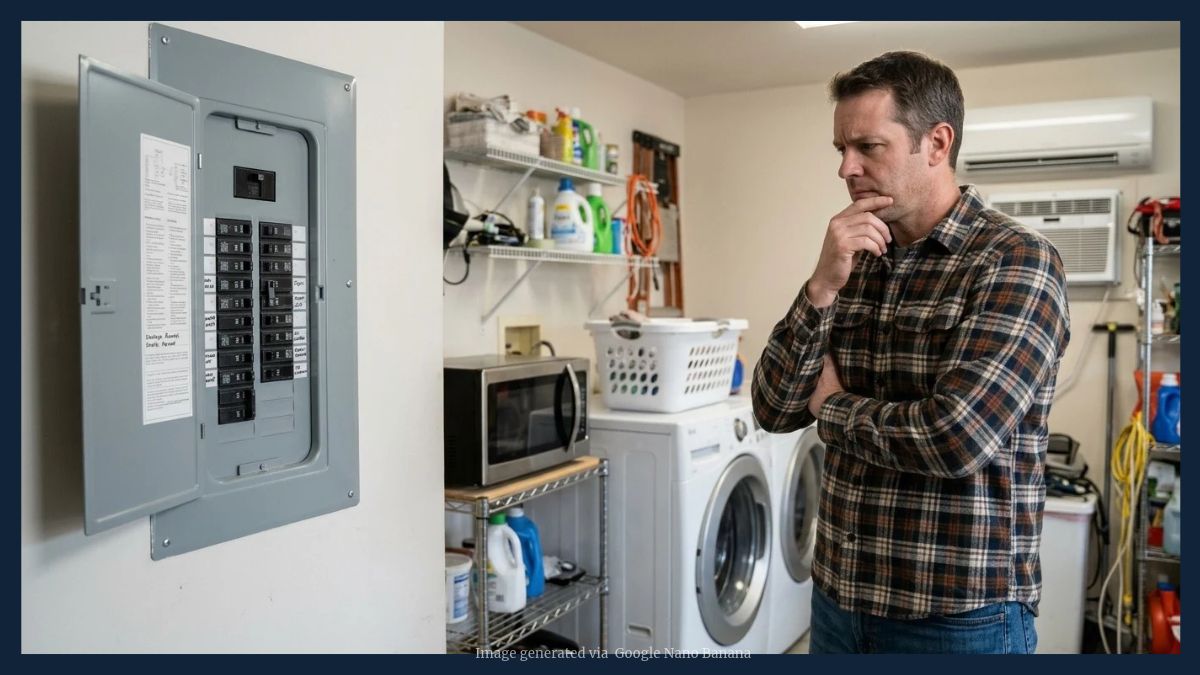
A circuit breaker that keeps tripping is usually responding to an electrical problem. Common causes include an overloaded circuit, a short circuit, a ground fault, or a faulty appliance. A worn or damaged breaker can also be responsible.
- A tripping breaker is a safety warning, not simply an inconvenience.
- Overloaded circuits are a common cause of repeated trips.
- A breaker that trips immediately may indicate a short circuit, ground fault, or equipment problem.
- Faulty appliances and damaged wiring can also cause breakers to trip.
- Warm outlets, burning smells, buzzing, sparks, and scorch marks are serious warning signs.
- Never repeatedly reset a breaker without identifying the cause.
- Electrical panel repairs and fault diagnosis should be handled by a qualified electrician.
If the breaker trips repeatedly, leave it off and have the circuit checked by a qualified electrician. Do not replace it with a higher-rated breaker or attempt to bypass its protective function.
What causes a circuit breaker to keep tripping?
A circuit breaker monitors the electrical current flowing through a circuit. When the current exceeds the safe limit or a protective device detects a fault, the breaker interrupts the flow of electricity.
Here are the most common reasons this happens.
1. Overloaded electrical circuit
An overloaded circuit occurs when the appliances and devices connected to it draw more electrical current than the circuit can safely handle.
For example, several high-power appliances operating on the same circuit can create excessive demand.
Common appliances that may contribute to circuit overload include:
- Space heaters
- Microwave ovens
- Hair dryers
- Electric kettles
- Portable air conditioners
- Irons
- Vacuum cleaners
- High-power kitchen appliances
You may notice that the breaker trips when several appliances are operating simultaneously.
Common signs of an overloaded circuit:
- The breaker trips after several appliances have been running.
- Power goes out when another high-power device is switched on.
- Lights dim when certain appliances start.
- The breaker stays on when some appliances are not being used.
What to do: Stop using the combination of appliances that appears to overload the circuit. Have an electrician evaluate whether the circuit has adequate capacity and whether additional dedicated circuits are needed.
Do not assume that moving appliances to another outlet solves the problem. Multiple outlets may be connected to the same circuit.
2. Short circuit
A short circuit occurs when electrical conductors make an unintended connection, allowing current to flow along an improper path.
For example, a damaged wire may allow a live conductor to contact a neutral conductor. This can cause a sudden increase in current and trip the breaker.
Short circuits can develop because of:
- Damaged electrical insulation
- Frayed appliance cords
- Loose or damaged wiring connections
- Faulty switches or outlets
- Damaged electrical equipment
- Incorrect electrical installation
Common signs of a short circuit:
- The breaker trips immediately when a device is switched on.
- You hear a popping sound from an outlet or appliance.
- There are visible scorch marks.
- A burning smell develops near an electrical component.
- The breaker trips even when the usual appliance load is disconnected.
A short circuit can create dangerous heat and may cause an electrical fire.
What to do: Leave the affected breaker off and contact a qualified electrician. Do not open outlets, switches, or electrical panels to search for the fault yourself.
3. Ground fault
A ground fault happens when electrical current escapes its intended path and flows toward ground through an unintended connection.
This can happen when a live wire contacts a grounded metal component, damaged insulation exposes a conductor, or moisture creates an unwanted electrical path.
Ground faults are particularly important around areas where electricity and water may come into contact.
Possible locations include:
- Bathrooms
- Kitchens
- Laundry areas
- Outdoor outlets
- Garages
- Basements
- Areas exposed to water leaks
Common signs of a ground fault:
- A ground-fault circuit interrupter (GFCI) trips.
- A breaker trips when an appliance is used in a damp area.
- The problem occurs around outdoor outlets or equipment.
- A particular appliance repeatedly causes protective devices to trip.
What to do: Stop using the affected outlet or appliance and leave the circuit off if the fault keeps recurring. Have a qualified electrician inspect the wiring, appliance, and protective device.
Do not touch electrical equipment that is wet or standing in water.
4. A faulty appliance or electrical device
Sometimes the circuit itself is not the main problem. An appliance connected to it may have an internal electrical fault.
A damaged heating element, motor, compressor, power cord, or internal connection can cause excessive current or electrical leakage.
Common examples include:
- Refrigerators
- Washing machines
- Air conditioners
- Dishwashers
- Microwaves
- Water heaters
- Electric ovens
- Portable heaters
If the breaker trips whenever a particular appliance operates, that appliance deserves closer attention.
What to do: Stop using the appliance. If it is safe to do so, unplug it without touching damaged, hot, wet, or exposed electrical parts.
Have the appliance inspected by a qualified repair technician. If the breaker continues to trip without the appliance connected, an electrician should investigate the circuit.
5. A damaged or worn circuit breaker
Circuit breakers are designed to operate reliably, but they can deteriorate or become damaged.
A faulty breaker may trip even when the circuit is not overloaded. However, it is important to rule out wiring problems and connected equipment faults before assuming the breaker itself needs replacement.
Possible warning signs include:
- Repeated trips without an obvious change in electrical load
- A breaker that will not remain switched on
- Visible discoloration around the breaker
- Unusual heat or buzzing near the electrical panel
- A breaker that feels mechanically damaged
Do not remove the panel cover or attempt to test the breaker internally.
What to do: Ask a qualified electrician to inspect the breaker, its connections, and the circuit it protects. If the breaker is defective, the electrician can determine the correct replacement.
6. Arc faults or damaged wiring
An arc fault occurs when electricity jumps across an unintended gap between conductors or through damaged electrical connections.
Arcing can produce intense heat and may ignite nearby materials.
Possible causes include:
- Damaged wire insulation
- Loose electrical connections
- Worn electrical cords
- Deteriorated wiring
- Damaged outlets or switches
- Improper electrical work
Some homes have arc-fault circuit interrupters (AFCIs), which are designed to detect certain dangerous arcing conditions and interrupt the circuit.
Common signs may include:
- An AFCI breaker repeatedly trips.
- A circuit trips when a particular device operates.
- Buzzing or crackling sounds come from an outlet or switch.
- There are burn marks or a burning smell.
An AFCI trip should not be dismissed as a nuisance. The cause may involve damaged wiring or equipment.
What to do: Leave the affected circuit off and arrange an inspection by a qualified electrician. Do not bypass or replace an AFCI with an ordinary breaker to stop the tripping.
7. Moisture entering electrical components
Water and electricity are a dangerous combination.
Moisture can enter outlets, junction boxes, wiring enclosures, outdoor electrical equipment, or other components. Depending on the circumstances, this can create leakage current or a ground fault that causes protective devices to trip.
Possible sources include:
- Roof leaks
- Plumbing leaks
- Flooding
- Condensation
- Water entering outdoor outlets
- Damaged weatherproof covers
- Damp basement or garage areas
Common signs include:
- Breakers tripping during or after heavy rain
- Electrical problems near damp walls
- GFCI outlets or breakers repeatedly tripping
- Visible moisture around electrical equipment
What to do: Do not touch wet electrical equipment or attempt to reset a breaker in an area affected by water. Keep away from the affected area and arrange a professional electrical inspection.
If water has entered the electrical panel, contact an electrician or emergency electrical service. Do not attempt to dry or operate the panel yourself.
Why does my circuit breaker trip immediately?
A breaker that trips immediately after being switched on may be responding to a fault that occurs as soon as power is supplied.
Possible causes include:
- A short circuit in the wiring
- A ground fault
- A faulty appliance
- Damaged insulation
- An electrical connection problem
- A defective breaker
The timing provides a useful clue, but it does not identify the fault with certainty.
If the breaker trips immediately, leave it off. Do not repeatedly switch it on to see whether it will stay on.
Why does my circuit breaker trip after a few minutes?
A breaker that trips after several minutes of operation may be responding to a gradual increase in electrical load or heat.
Possible explanations include:
- Too many appliances operating simultaneously
- A high-power appliance drawing excessive current
- A motor or compressor with an electrical problem
- A loose or deteriorating electrical connection
- A breaker that is damaged or operating incorrectly
For example, an air conditioner may operate for several minutes before the breaker trips because its electrical demand increases under certain operating conditions.
Record which appliances were operating and how long the circuit remained on before tripping. This information can help an electrician investigate the problem.
How can you identify what is causing the breaker to trip?
You can gather useful information without opening the electrical panel or touching exposed wiring.
| What happens | Possible cause | Recommended action |
|---|---|---|
| Breaker trips when several appliances run | Circuit overload | Reduce the connected load and arrange an electrical assessment |
| Breaker trips immediately after switching on | Short circuit, ground fault, or equipment fault | Leave it off and call an electrician |
| Breaker trips when one appliance starts | Faulty appliance or circuit problem | Stop using the appliance and arrange inspection |
| Breaker trips during wet weather | Moisture-related electrical fault | Keep away from affected equipment and arrange inspection |
| Breaker trips with little or no load | Wiring fault or defective breaker | Leave it off and request professional diagnosis |
| AFCI or GFCI breaker repeatedly trips | Possible arcing or ground fault | Do not bypass the protection; arrange inspection |
| Breaker trips alongside burning smells or sparks | Potentially dangerous electrical fault | Keep away and seek urgent professional assistance |
These patterns are clues, not definitive diagnoses.
What should you do when a circuit breaker keeps tripping?
The safest response is to treat a repeated trip as a warning that needs investigation.
Step 1: Stop using the affected circuit
If the breaker has tripped repeatedly, do not continue using the circuit or trying to restore power.
If you notice smoke, sparks, a burning smell, buzzing, scorch marks, or unusual heat, stay away from the electrical equipment and seek urgent assistance.
Step 2: Identify what was operating
Without touching damaged electrical equipment, make a note of the appliances and devices that were running when the breaker tripped.
Record whether the problem occurred when:
- A specific appliance was switched on
- Several high-power devices were operating
- An air conditioner or refrigerator started
- It was raining or an area was wet
- The circuit was being used normally
This information can help an electrician narrow down the cause.
Step 3: Look for visible warning signs
From a safe distance, look for obvious signs such as:
- Burn marks on outlet covers
- Damaged power cords
- Melted or discolored plugs
- Water around electrical equipment
- Smoke or unusual smells
- Visible damage to appliances
Do not remove outlet covers, touch exposed wiring, or open the electrical panel.
Step 4: Leave repeated trips to an electrician
- If the breaker continues to trip, leave it off and arrange professional troubleshooting.
- If a clearly identified overload caused a single trip, the excess load has been removed, and there are no signs of damage or other electrical faults, a single reset may be appropriate according to the breaker manufacturer’s instructions.
- If the cause is uncertain, the breaker trips again, or there are any warning signs, do not attempt another reset.
Step 5: Have the underlying problem corrected
A qualified electrician can inspect the circuit, test connected equipment, and determine whether the problem involves wiring, load capacity, protective devices, or the breaker itself.
The repair should address the cause rather than simply stopping the breaker from tripping.
When should you call an electrician?
You should contact a qualified electrician when a circuit breaker repeatedly trips, particularly if it happens without an obvious overload.
Arrange an inspection if you notice:
- The breaker trips immediately after resetting.
- The breaker trips repeatedly even when appliances are disconnected.
- One particular appliance consistently causes the breaker to trip.
- Several outlets or lights on the same circuit stop working.
- An AFCI or GFCI breaker repeatedly trips.
- The electrical panel makes unusual buzzing or crackling sounds.
- An outlet or switch has visible discoloration or damage.
- The breaker will not stay on.
- Smoke or sparks from an outlet, appliance, or electrical panel
- A burning plastic or electrical odor
- A hot or visibly damaged electrical panel
- Exposed conductors
- Water entering the electrical panel
- Signs of an electrical fire
If there is smoke or fire, move away, evacuate if necessary, and contact emergency services. Do not approach the panel or attempt to put out an electrical fire with water.
How do electricians repair a circuit breaker that keeps tripping?
The repair depends on the actual cause of the problem.
Reducing electrical load
If the circuit is overloaded, an electrician may recommend redistributing appliances across suitable circuits or installing additional dedicated circuits.
The electrician will assess the circuit wiring and electrical capacity before recommending changes.
Repairing damaged wiring
If a short circuit, ground fault, or damaged connection is responsible, the affected wiring or electrical component may need repair or replacement.
The electrician should also identify why the damage occurred so the problem does not return.
Repairing or replacing faulty appliances
If a particular appliance is responsible, it may need electrical testing, repair, or replacement.
The appliance should not be returned to service until the fault has been addressed.
Replacing a defective breaker
If testing confirms that the breaker is faulty, an electrician can replace it with a compatible breaker that matches the electrical panel and circuit requirements.
The replacement must have the correct rating and type. Installing a breaker with a higher current rating simply to prevent tripping can leave the wiring inadequately protected and create a fire hazard.
Improving electrical protection
Depending on the home and the fault identified, an electrician may recommend appropriate GFCI or AFCI protection, circuit improvements, or other safety upgrades.
These changes should be selected according to the electrical installation, local requirements, and manufacturer’s specifications.
Common mistakes to avoid
Repeatedly resetting the breaker
A breaker that trips repeatedly is signaling a problem. Repeatedly resetting it without finding the cause can expose the circuit to continued electrical faults and potential overheating.
Leave it off if the problem recurs.
Replacing the breaker with a higher-rated one
A breaker protects the wiring, not just the appliances connected to it.
Installing a higher-rated breaker without verifying that the wiring and circuit are designed for it can allow dangerous current to flow through conductors that are not rated to handle it.
Never increase a breaker’s rating just to stop it from tripping.
Ignoring burning smells or buzzing sounds
Burning odors, buzzing, crackling, sparks, and discoloration can indicate damaged electrical components or overheating connections.
Stop using the affected circuit and arrange urgent professional assistance.
Assuming the breaker itself is defective
A worn breaker is one possible cause, but overloads, damaged wiring, and faulty appliances are also common explanations.
Replacing the breaker without identifying the underlying problem may not solve the issue.
Attempting electrical panel repairs yourself
Electrical panels can contain dangerous energized components even when an individual breaker is switched off.
Do not remove the panel cover, tighten internal connections, or replace breakers unless you are appropriately qualified to perform the work.
Frequently asked questions
It can be. A breaker may be responding to an overload, short circuit, ground fault, arc fault, or damaged electrical component. Repeated tripping should be investigated rather than treated as a routine inconvenience.
There is no safe number of repeated resets for a breaker that keeps tripping. Do not repeatedly reset it to restore power. If the cause is not clearly an isolated overload, leave it off and contact an electrician.
Yes. A damaged appliance, motor, heating element, compressor, or power cord can create an electrical fault or draw excessive current. If the breaker trips whenever a particular appliance operates, stop using it and have it inspected.
An air conditioner can draw substantial electrical current when starting or operating. A circuit may be overloaded, the appliance may have an electrical fault, or the circuit may have an underlying wiring or breaker problem. If the breaker repeatedly trips when the AC starts, leave it off and arrange an inspection.
Yes. Rainwater can enter damaged outdoor outlets, electrical enclosures, wiring connections, or other components. Moisture may create a ground fault or another electrical problem. Keep away from wet electrical equipment and have the affected circuit inspected.
Sources and references:
