
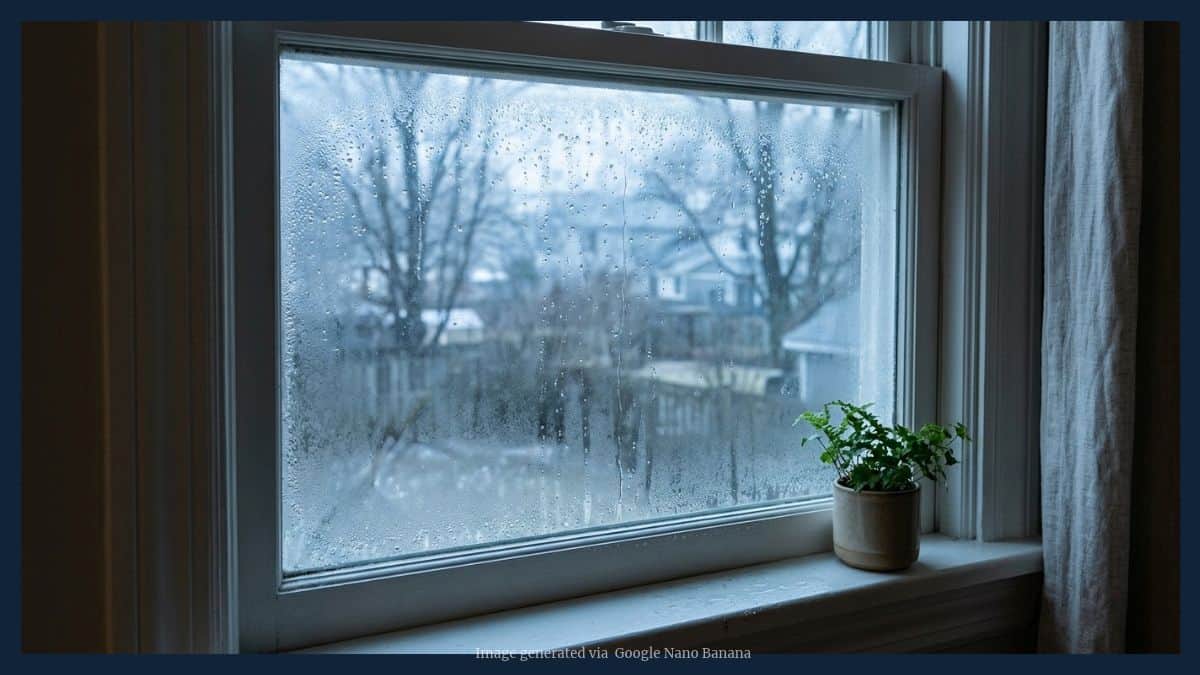
If your windows are wet on the inside, the most common reason is condensation caused by humid indoor air contacting cold window glass. The moisture in the air turns into water droplets when the glass is cold enough. This often happens overnight or in the morning, especially during cold weather.
Interior window condensation usually means indoor air contains enough moisture to form water droplets on cold glass. Reduce excess humidity, use kitchen and bathroom exhaust fans, and improve air circulation around the windows. If water appears after rain, inspect for possible leaks. If moisture is trapped between double-pane glass, the window’s insulating seal may have failed. Persistent wetness deserves attention because it can damage window frames and nearby materials.
Wipe up standing water promptly to help protect window frames, sills, and nearby walls. If you notice soft or rotting wood, extensive mold, water entering near electrical components, or a ceiling or wall that is bulging, address the hazard rather than treating the condensation alone. Avoid disturbing large areas of suspected mold or dismantling sealed window units.
High indoor humidity
High indoor humidity is one of the most common reasons windows develop condensation.
Everyday activities release moisture into the air. Showering, cooking, boiling water, drying laundry indoors, and even breathing can increase indoor humidity. If that moisture has nowhere to go, it can accumulate until it condenses on cooler surfaces.
Windows are particularly vulnerable because their glass and frames can become colder than the surrounding room.
Signs that humidity may be the problem
- Several windows develop droplets at roughly the same time.
- Water is most noticeable in the morning.
- Condensation appears after showers, cooking, or indoor laundry drying.
- The glass clears as the room warms up.
- A humidity meter shows elevated relative humidity.
The U.S. Environmental Protection Agency recommends keeping indoor relative humidity around 30% to 50% when practical and below 60% to help reduce mold risk. The ideal level for preventing window condensation may be lower during very cold weather, depending on the window temperature and outdoor conditions.
What to do: Measure your indoor relative humidity with a hygrometer rather than guessing. Run bathroom and kitchen exhaust fans when generating moisture, and make sure they discharge outdoors. If humidity remains high, consider using a dehumidifier or adjusting your ventilation and air-conditioning settings.
Do not assume that opening a window will always help. In humid weather, outdoor air may add more moisture to your home.
Cold outdoor temperatures
Windows can become cold enough for indoor moisture to condense even when your home’s humidity is not unusually high.
When warm, moisture-containing air touches a cold surface, it can cool below its dew point. At that point, water vapor changes into liquid droplets on the surface.
This explains why windows often appear wet during cold mornings or winter nights. The glass may cool overnight, allowing condensation to form while the room remains relatively warm.
How to recognize weather-related condensation
Look for a pattern:
- The water appears during cold weather.
- The lower part of the glass is wetter than other areas.
- Condensation becomes less noticeable later in the day.
- The problem worsens when outdoor temperatures drop.
These clues suggest condensation, but they do not prove that temperature is the only cause.
What to do: Keep indoor humidity at an appropriate level for the outdoor temperature. Maintain reasonable room temperatures and avoid blocking all airflow around the glass with tightly closed window coverings.
If condensation is frequent, consider whether the windows have adequate insulation. Older single-pane windows and poorly insulated frames may have colder interior surfaces than modern, better-insulated units.
Replacing windows is not always the first or most cost-effective solution. Check humidity and ventilation before assuming the windows need replacement.
Poor Ventilation
A home can accumulate moisture when humid air is not adequately removed or exchanged.
This is especially common in bathrooms, kitchens, laundry areas, and rooms with limited airflow. Even if the house does not feel damp, moisture can build up indoors and collect on windows.
Clues to Look For:
- Windows in the kitchen or bathroom are frequently wet.
- Condensation becomes heavier after cooking or showering.
- The room feels stuffy or has a lingering damp smell.
- Moisture forms in several areas with limited ventilation.
What to do: Use exhaust fans while showering and cooking. ENERGY STAR recommends running bathroom and kitchen fans during these activities and leaving them running for about 20 minutes afterward. Confirm that the fans vent outdoors rather than into an attic or another enclosed space.
Also check that furniture and window coverings are not unnecessarily restricting air movement around the glass.
If your home has persistent humidity despite using exhaust fans, the fans may be undersized, poorly maintained, or incorrectly vented. A qualified contractor can assess the ventilation system.
Cold or poorly insulated window frames
Sometimes the problem is not simply the amount of moisture in the air. The window surface itself may be unusually cold.
Single-pane glass, metal frames without effective thermal breaks, gaps around the window opening, and poorly insulated installation areas can contribute to cold interior surfaces. When the surface temperature falls below the indoor air’s dew point, condensation can form.
Signs that the window may be contributing
- One window is consistently wetter than other windows in the same room.
- Condensation collects around the frame or lower corners.
- You notice drafts near the window.
- The window performs poorly during cold weather despite reasonable humidity levels.
These clues can help identify a window-related issue, but drafts and condensation are not enough to confirm an installation defect.
What to do: Inspect visible weatherstripping and caulk for gaps, deterioration, or separation. Replace damaged weatherstripping or reseal appropriate exterior joints when the work is within your skill level and the materials are suitable for the location.
Do not seal drainage openings designed into the window. These openings help some window systems drain water to the exterior.
If the frame feels unusually cold, the window is visibly damaged, or moisture repeatedly collects around the surrounding wall, have a qualified window or building professional inspect the assembly.
ENERGY STAR explains that condensation resistance varies among windows and that even energy-efficient windows can experience condensation under certain conditions.
Window condensation between the glass panes
Not all window moisture is on the room-facing surface.
Double-pane and triple-pane windows have sealed spaces between their glass layers. If moisture appears trapped inside that space, the insulating glass unit may have a failed seal or another defect that allows moisture to enter.
How to tell the difference
Try wiping the glass with a clean, dry cloth.
- Moisture wipes away from the room-facing side: Ordinary interior condensation is possible.
- Moisture wipes away from the outdoor-facing side: Exterior condensation may be the cause.
- Fog or droplets remain trapped between the panes: A failed insulating glass seal is a possibility.
Do not attempt to open a sealed insulating glass unit to dry it yourself. The unit may need professional evaluation and replacement of the sealed glass assembly.
A failed seal does not necessarily mean the entire window frame must be replaced. Depending on the window design and condition, replacing the insulating glass unit may be an option.
Water leaking around the window
Water around a window is not always condensation. Rainwater can enter through deteriorated caulk, damaged flashing, defective installation, or problems with the surrounding siding and wall assembly.
This distinction matters because reducing indoor humidity will not fix a leak.
Signs that rainwater may be entering
- Moisture appears during or shortly after rain.
- Water runs down the wall below or beside the window.
- Paint bubbles, drywall becomes stained, or wood begins to soften.
- Dampness appears at the upper corners or along the window trim.
- The problem is concentrated around one window rather than appearing throughout the home.
None of these signs alone identifies the exact entry point. Water can travel through building materials before becoming visible indoors.
What to do: Record when the moisture appears and whether it follows rainfall. Inspect visible exterior caulk, trim, and drainage paths from a safe location.
Avoid using a hose to force water into window joints or removing siding without understanding the assembly. If water intrusion is recurring, have a qualified window installer or building-envelope professional inspect the flashing, exterior joints, and surrounding materials.
If the interior wall or sill is already wet, dry accessible surfaces promptly while arranging repairs to the source.
Indoor moisture sources you may be overlooking
Sometimes the source is a combination of ordinary activities rather than a single obvious problem.
Common contributors include:
- Humidifiers: Excessive use can increase indoor moisture.
- Indoor clothes drying: Wet laundry releases water vapor as it dries.
- Cooking: Boiling and steaming can add significant moisture to the air.
- Long showers: Bathroom moisture can spread into nearby rooms.
- Poorly vented dryers: A dryer that releases moist air indoors can increase humidity.
- Crowded window coverings: Heavy curtains or blinds can reduce warm-air movement across the glass.
How to identify the source
Keep a simple record for several days. Note when the condensation appears, which windows are affected, recent cooking or showering, outdoor weather, and the indoor humidity reading.
If condensation increases after a specific activity, improve ventilation during that activity and monitor the result.
How to tell whether window moisture is condensation or a leak
Use the following comparison to narrow down the possibilities.
| What You Notice | Possible Explanation | What to Check Next |
|---|---|---|
| Droplets on the room-facing glass, especially in the morning | Interior condensation | Indoor humidity and glass temperature |
| Moisture on several windows during cold weather | Humidity combined with cold glass | Humidity readings and ventilation |
| Fog trapped between glass panes | Possible failed insulating glass seal | Window inspection |
| Water appears after rainfall | Possible exterior water intrusion | Caulk, flashing, trim, and nearby wall |
| Dampness concentrated around one frame | Condensation or a localized window problem | Frame temperature, drafts, and exterior joints |
| Wet glass after a hot, humid day while air conditioning is running | Possible exterior condensation | Outdoor humidity and exterior glass temperature |
These are diagnostic clues, not definitive diagnoses. More than one cause can be present at the same time.
How to stop your windows from sweating inside
Once you have a reasonable idea of the cause, focus on controlling moisture and reducing unnecessary cooling of the window surface.
1. Measure and manage indoor humidity
Use a hygrometer to monitor relative humidity. Aim for around 30% to 50% when practical, while recognizing that cold-weather conditions may require a lower level to prevent condensation.
If the humidity is consistently high, identify where the moisture is coming from before relying on a dehumidifier alone.
2. Improve kitchen and bathroom ventilation
Run exhaust fans while cooking and showering. Check that the fans actually discharge outdoors and are functioning properly.
If a fan is noisy but moves little air, it may need cleaning, repair, or replacement.
3. Use a dehumidifier when appropriate
A dehumidifier can help when indoor moisture remains high. Choose a unit suited to the room or area and follow the manufacturer’s maintenance instructions.
In humid climates, air conditioning can also help remove moisture when operating correctly. However, condensation problems around windows may still require attention to surface temperatures, airflow, or water intrusion.
4. Improve airflow around the windows
Avoid tightly trapping cold air behind heavy curtains or closed blinds when condensation is a recurring problem. Allowing room air to circulate across the glass can help keep the surface warmer.
Do not use a fan or heater in a way that creates an electrical hazard or damages window coverings.
5. Inspect seals and visible damage
Look for deteriorated caulk, damaged weatherstripping, cracked glass, loose trim, or signs of water entry. Repair only what you can safely identify and access.
If moisture appears to be entering the wall, fixing the visible interior stain will not solve the underlying problem.
6. Dry the glass and sill
Wipe away accumulated water with an absorbent cloth and dry the sill. This reduces prolonged exposure to moisture that can damage finishes and encourage mold growth.
If water repeatedly returns, treat wiping as temporary maintenance rather than the complete solution.
7. Consider window upgrades when necessary
If your windows are old, poorly insulated, or damaged, a professional can explain whether repairs, replacement glass, storm windows, or new windows are appropriate.
Window replacement may improve comfort and condensation resistance, but it will not automatically correct excessive indoor humidity or a water leak elsewhere in the assembly.
The EPA recommends controlling moisture, reducing condensation, and addressing water problems promptly to help prevent mold growth.
When should you worry about window condensation?
Occasional droplets on cold glass do not automatically mean your home has a serious moisture problem. However, recurring condensation deserves attention if it leaves water standing on the sill or wetting nearby materials.
Pay particular attention to these warning signs:
- Wood trim is soft, swollen, stained, or beginning to rot.
- Paint is peeling or drywall is becoming discolored.
- Mold or a persistent musty odor develops near the window.
- Water appears after rain or spreads into the wall.
- Moisture is trapped between glass panes.
- Multiple rooms remain damp despite reasonable humidity control.
The EPA advises drying wet or damp materials promptly and fixing the source of moisture to help prevent mold growth. If materials remain wet or mold covers a large area, professional assessment may be appropriate.
DIY vs. Professional help: Who should you call?
DIY may be reasonable when:
- Condensation is limited to the glass surface.
- A humidity meter indicates elevated indoor humidity.
- You can improve exhaust fan use or airflow safely.
- You can wipe up water and inspect visible seals without climbing or dismantling anything.
- Water enters during rainfall.
- The frame, sill, or nearby wall shows signs of deterioration.
- Condensation is trapped between sealed glass panes.
- You suspect a hidden leak or persistent mold problem.
- The window is cracked, unstable, or difficult to access safely.
A window professional can evaluate the glass, frame, and installation. A qualified building-envelope contractor may be better suited to investigate recurring rainwater intrusion. If the problem involves widespread moisture or mold, an appropriately qualified moisture or mold remediation professional may be needed.
A window condensation checklist
- Wipe the glass and identify which side is wet.
- Check whether moisture is trapped between the panes.
- Record the indoor humidity level.
- Note whether condensation appears overnight, after showers, during cooking, or after rain.
- Check whether one window or several windows are affected.
- Run kitchen and bathroom exhaust fans when generating moisture.
- Inspect accessible window trim and visible seals for damage.
- Dry the sill and nearby surfaces.
- Arrange a professional inspection if moisture persists, water enters the wall, or materials show damage.
Frequently asked questions
It can be normal for windows to develop occasional condensation, especially when outdoor temperatures are low and indoor air is humid. However, frequent or heavy condensation should not be ignored because standing water can damage window components and nearby finishes.
Not necessarily, but daily condensation indicates that the conditions for moisture buildup are recurring. Measure indoor humidity, improve ventilation, and monitor whether the glass dries during the day. If water repeatedly pools on the sill or damages nearby materials, investigate further.
No. Condensation can occur even on relatively efficient windows when indoor humidity is high enough or the glass becomes cold enough. If one window is consistently worse than others, inspect for differences in insulation, drafts, damage, or installation.
It may help if excess indoor humidity is the main cause. It will not repair a failed window seal or stop rainwater from entering through damaged flashing. Identify the likely cause before choosing a solution.
Fog or droplets that cannot be wiped from either accessible glass surface may indicate a failed seal in the insulating glass unit. Have the window evaluated to determine whether the sealed glass unit can be replaced or whether a larger repair is necessary.
Persistent moisture can support mold growth on window frames, sills, drywall, and other nearby materials. Wipe up water, dry damp areas, and address the underlying moisture source. Condensation alone does not prove that mold is present.
Sources and references:
- U.S. Environmental Protection Agency (EPA). “What Are the Main Ways to Control Moisture in Your Home?” https://www.epa.gov/mold/what-are-main-ways-control-moisture-your-home
- ENERGY STAR. “Residential Windows, Doors, & Skylights.” https://www.energystar.gov/products/res_windows_doors_skylights
- U.S. Environmental Protection Agency (EPA). “A Brief Guide to Mold, Moisture, and Your Home.” https://www.epa.gov/mold/brief-guide-mold-moisture-and-your-home
- U.S. Environmental Protection Agency (EPA). “Care for Your Air: A Guide to Indoor Air Quality.” https://www.epa.gov/indoor-air-quality-iaq/care-your-air-guide-indoor-air-quality
