
A hidden water leak can waste water for weeks or months before you notice it. A dripping pipe behind a wall, a leaking toilet, or a damaged irrigation line may not seem urgent until your water bill rises or a drought puts pressure on your household’s water supply.
- Check your water meter when no water is being used.
- Compare your current water bill with previous months.
- Test toilets for silent leaks using food coloring.
- Inspect under sinks, around appliances, and near water heaters.
- Look for damp spots, musty odors, peeling paint, or unexplained mold.
- Check outdoor faucets, irrigation lines, and sprinkler heads.
- Contact a plumber if you suspect a leak inside a wall, beneath a slab, or in an inaccessible pipe.
The U.S. Environmental Protection Agency recommends checking for leaks regularly. Even small leaks can waste substantial amounts of water over time. Finding them before drought conditions worsen can help you reduce unnecessary water use.
Check your water meter for hidden leaks
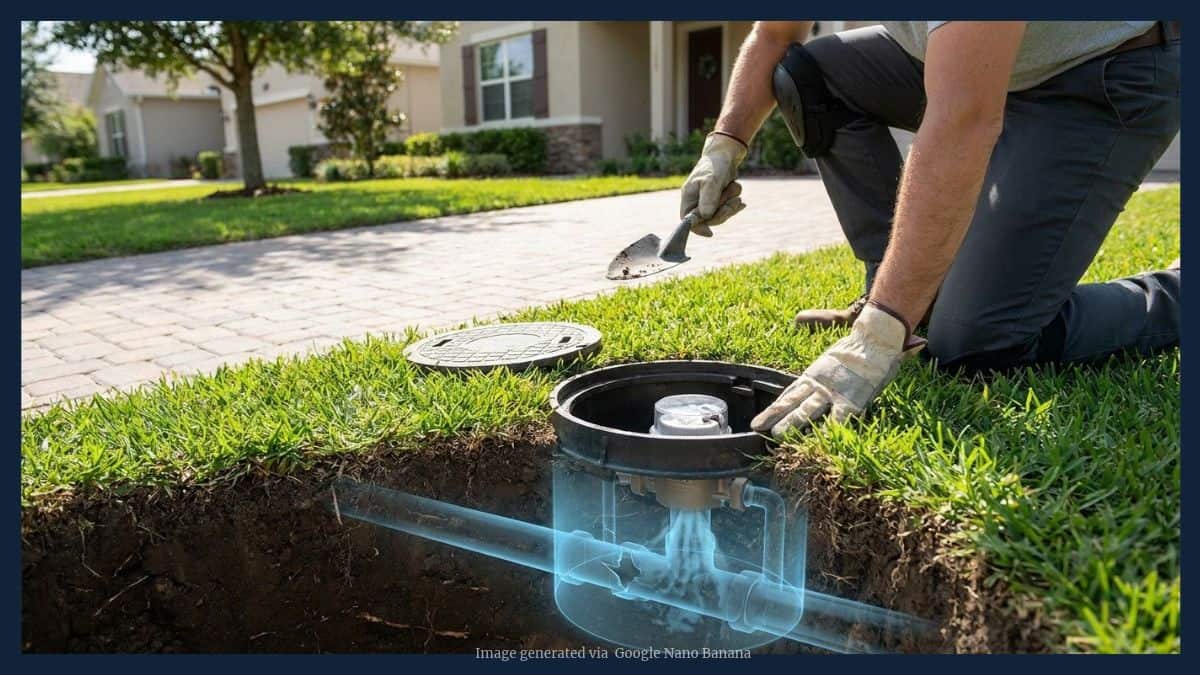
Your water meter is one of the most useful tools for identifying a possible plumbing leak. It measures the water entering your property, including water that may be escaping through a damaged pipe or faulty fixture.
A meter check can help you determine whether water is being used when your household should be using none.
How to perform a water meter leak test
Follow these steps:
Step 1: Find your water meter.
Depending on your home and water utility, the meter may be near the street, in an outdoor meter box, in a basement, or in another designated location.
Step 2: Turn off water-using fixtures and appliances.
Make sure faucets, showers, washing machines, dishwashers, irrigation systems, and other water-using equipment are not operating.
If your home has an automatic appliance or irrigation cycle, make sure it will not start during the test.
Step 3: Record the meter reading.
Take a photo or write down the reading. If your meter has a leak indicator, check whether it is moving.
Step 4: Wait without using water.
The EPA recommends comparing the meter before and after a two-hour period when no water is being used.
Step 5: Check the meter again.
If the reading has changed, water may be flowing somewhere in your plumbing system.
A changing meter does not always identify the exact location of a leak. It may also indicate an appliance or irrigation system that was not fully turned off. If the meter continues to register water use when everything is off, investigate further or contact your water utility or a plumber.
Look for signs of hidden water leaks inside your home
Not every leak is visible. Water may escape from pipes concealed behind walls, beneath floors, or above ceilings.
Although some hidden leaks are difficult to locate without professional equipment, your home may show clues that water is escaping.
Common warning signs
| Warning Sign | What It May Indicate |
|---|---|
| Unexplained increase in water bills | A leak or unexpected water use |
| Musty or damp odor | Moisture trapped behind a wall, floor, or cabinet |
| Peeling or bubbling paint | Moisture affecting the painted surface |
| Discolored ceiling or wall | Possible plumbing leak or water intrusion |
| Soft or swollen flooring | Moisture beneath the flooring |
| Persistent dampness | A possible ongoing leak |
| Mold growth | Excess moisture that may be associated with a leak or condensation |
These signs are not proof of a plumbing leak. Condensation, roof leaks, poor ventilation, and exterior water intrusion can produce similar symptoms.
If you notice persistent moisture, determine where the water may be coming from rather than simply covering the affected area with paint or sealant.
For more help distinguishing possible causes, see our guides:
- Why Is My Ceiling Stained but There Is No Leak?
- How to Tell If Your Walls Have Hidden Water Damage
- Why Is My House Humid With the AC On?
Test your toilets for silent leaks
Toilets are a common source of hidden water waste. A toilet can leak from its tank into the bowl without producing an obvious sound.
A worn flapper or faulty flush valve seal may allow water to escape continuously.
The food coloring test
You can check for a silent toilet leak without dismantling the toilet.
- Remove the toilet tank lid.
- Add a few drops of food coloring to the tank water.
- Do not flush the toilet.
- Wait approximately 10 minutes.
- Check whether colored water appears in the toilet bowl.
If the color appears in the bowl, water is likely leaking from the tank into the bowl.
The problem may involve a worn flapper, flush valve seal, or another component inside the tank. Some repairs are straightforward, but a plumber may be needed if the toilet continues running or the cause is unclear.
Flush the toilet after the test to prevent the dye from staining the tank or bowl.
Inspect under sinks and around plumbing fixtures
Leaks around plumbing connections may be small enough to go unnoticed while still wasting water over time.
Check the areas beneath kitchen and bathroom sinks, where supply lines, drain pipes, and connections are often concealed inside cabinets.
What to look for:
- Water droplets on pipe connections
- Damp cabinet floors
- Rust or corrosion around fittings
- Swollen or discolored cabinet materials
- Water pooling beneath the sink
- Loose or damaged supply hoses
Use a flashlight to inspect the area. If everything appears dry, place a dry paper towel beneath accessible connections and check it later for signs of moisture.
Do not rely on the paper towel test alone. A leak may occur only when a fixture is running or when a pipe is under pressure.
Also inspect:
- Faucets and showerheads
- Bathtub connections
- Washing machine supply hoses
- Dishwasher connections
- Refrigerator water supply lines
- Water heater connections
If a connection is actively leaking, shut off the relevant water supply if you can do so safely. Avoid attempting repairs on damaged or inaccessible pipes if you are unsure how to proceed.
Check your water heater for leaks
A water heater can develop leaks around its connections, tank, or associated plumbing.
Look for:
- Water beneath the tank
- Rust or corrosion
- Dampness around pipe connections
- Water dripping from the unit
- Unusual pooling near the water heater
A leaking water heater may require professional repair or replacement, especially if the tank itself is damaged.
Water heaters may contain hot water and operate using electricity or gas. Do not touch electrical components or attempt repairs involving gas connections. If you notice an active leak, follow the manufacturer’s safety instructions and contact a qualified professional.
Inspect outdoor faucets and irrigation systems
Outdoor leaks can be especially wasteful during drought conditions because they may go unnoticed for long periods.
A damaged irrigation line can leak underground, while a broken sprinkler head may spray water onto pavement instead of the landscape.
Inspect hose connections and outdoor faucets for:
- Dripping when turned off
- Water leaking around the handle
- Loose hose connections
- Damaged washers
- Water pooling near the foundation
Turn on the faucet briefly to check whether water flows properly and whether the connection leaks.
Inspect your irrigation system
If your home has an irrigation system, run it briefly while observing the sprinkler heads and accessible components.
Look for:
- Broken or missing sprinkler heads
- Water spraying in the wrong direction
- Areas that remain unusually wet
- Water bubbling from the ground
- Uneven water distribution
- Damp spots that persist when irrigation is off
If an area remains wet even when the irrigation system has not been running, there may be an underground leak or another source of water.
The EPA recommends checking outdoor water systems and correcting leaks as part of drought-aware water conservation.
Check for leaks around your foundation
Water accumulating near your foundation does not always mean a plumbing leak. Rainwater, poor grading, clogged gutters, and irrigation runoff can also cause water to collect around the home.
However, persistent unexplained wetness may warrant further investigation.
Look for:
- Wet areas that remain after dry weather
- Unusually green patches of grass
- Soil that stays saturated
- Water appearing near a buried service line
- Dampness near the point where the water supply enters the house
If you suspect a leak in an underground water supply line, a plumber may be able to use specialized leak detection equipment to locate it without extensive excavation.
Do not dig around buried utility lines without first checking for their locations through the appropriate local utility-locating service.
Monitor your water bill for unusual changes
Your water bill can provide an early warning of a hidden leak.
Compare your recent water use with previous billing periods. Consider whether the increase can be explained by seasonal activities such as watering the lawn, filling a pool, or hosting guests.
If your household’s water use rises unexpectedly, investigate before assuming that the increase is normal.
What to check on your water bill
- Total water use
- Billing period length
- Previous months’ usage
- Seasonal changes
- Any available daily or hourly usage information
Some water utilities provide online usage dashboards or leak alerts. If your utility offers these services, they may help you identify unusual water consumption sooner.
A high bill is not proof of a leak, but it is a useful reason to investigate.
Consider a leak detection system
If you want to monitor your home more consistently, a leak detection or water flow monitoring system may be useful.
These devices can detect moisture, monitor water flow, or alert you to unusual water use.
Some systems can also close a main water valve automatically when they detect a possible leak.
Common leak detection options
| Device Type | What It Does |
|---|---|
| Moisture sensor | Detects water near the sensor |
| Smart water monitor | Tracks water flow and identifies unusual usage patterns |
| Automatic shutoff system | Can close a water valve when a leak is detected |
| Whole-home flow monitor | Monitors water use throughout the plumbing system |
These devices may be especially useful for homes with inaccessible plumbing, frequent travel, or a history of water leaks.
However, no monitoring system guarantees that every leak will be detected. Choose a device suited to your plumbing system and follow the manufacturer’s installation and maintenance instructions.
When should you call a professional?
Some leaks are easy to identify and repair, while others require specialized tools or professional experience.
- Your water meter indicates a leak but you cannot locate it.
- You suspect a leak behind a wall or beneath a floor.
- Water is leaking from an inaccessible pipe.
- Your water bill rises significantly without explanation.
- A water heater or pressurized supply line is leaking.
- You suspect an underground service line leak.
- A leak continues after a basic fixture repair.
A professional may use acoustic equipment, thermal imaging, moisture meters, or other methods to locate hidden water leaks.
If you notice extensive water damage, persistent dampness, or signs of structural deterioration, additional assessment may be necessary.
Why finding leaks before a drought matters
During a drought, water supplies may become limited and local utilities may introduce restrictions.
Finding and repairing leaks before those conditions worsen can help reduce unnecessary water consumption. It may also prevent water damage that becomes more expensive to address over time.
The EPA encourages homeowners to monitor water use, check for leaks, and follow their local water utility’s conservation guidance.
Frequently asked questions
Common signs include an unexplained increase in your water bill, a water meter that changes when no water is being used, damp areas, musty odors, or unexplained moisture. A toilet dye test can also help identify silent toilet leaks.
A water meter may indicate that water is flowing when no fixtures are being used, but it usually cannot identify the exact location of the leak. A plumber may need specialized equipment to locate a leak behind a wall.
A practical approach is to inspect accessible plumbing, fixtures, and outdoor water systems periodically, such as during seasonal home maintenance. Check your water bill regularly and investigate unusual changes as soon as possible.
Yes. Persistent moisture from a plumbing leak can contribute to mold growth. However, mold can also result from condensation, roof leaks, or other moisture sources. Identifying and correcting the source of moisture is important.
If you find an active leak and can safely access the relevant shutoff valve, turning off the water may help limit damage. For a major leak, shut off the main water supply if it is safe to do so and contact a plumber.
You may notice warning signs such as unusually wet soil, persistent pooling, or unexpected water meter movement. However, locating an underground leak accurately often requires professional equipment. Avoid digging until buried utilities have been located.
Sources and references:
