
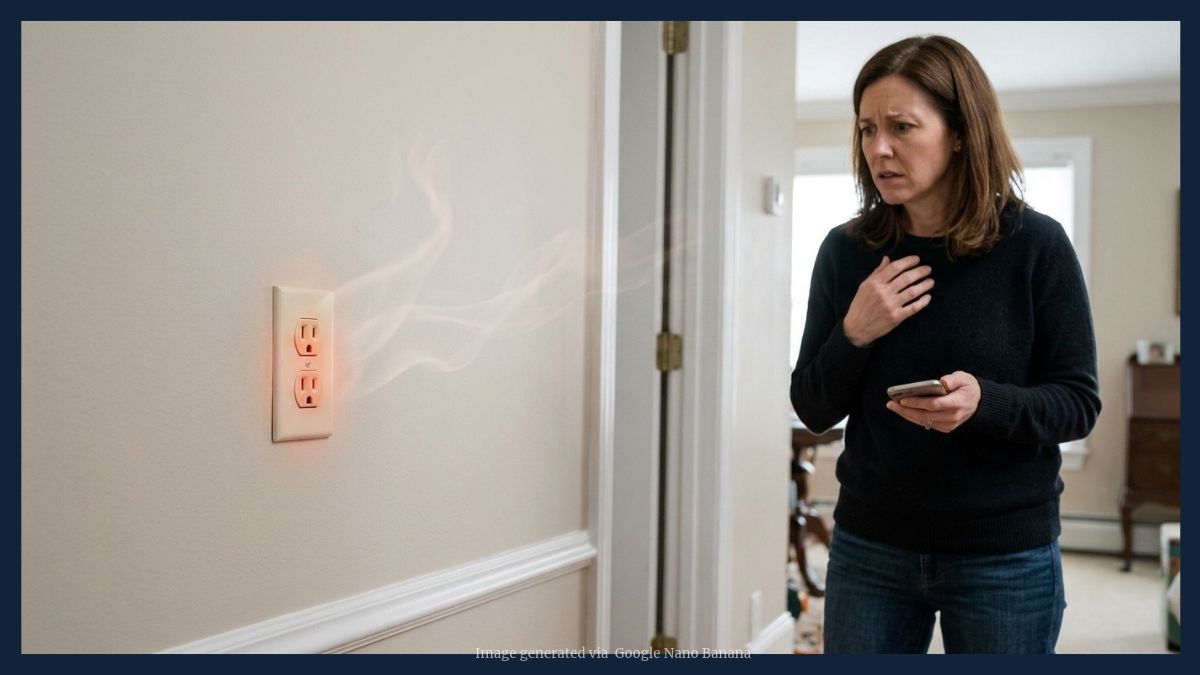
A fishy smell coming from an electrical outlet is not something to ignore. It can be a warning that electrical components, wiring insulation, or plastic parts inside the outlet are overheating. As these materials heat up, they can release an unusual chemical odor that some homeowners describe as fishy, urine-like, or similar to burning plastic.
- A fishy smell near an outlet can indicate overheating electrical components.
- Loose wiring connections and worn outlet contacts are possible causes.
- An overloaded circuit or faulty appliance may also contribute to overheating.
- The smell can occur before visible damage or smoke appears.
- Stop using the outlet and turn off its breaker if you can do so safely.
- Never remove the outlet cover or attempt electrical repairs yourself.
- Contact a qualified electrician before restoring power to the affected outlet.
If water is near electrical equipment, keep away from wet components. Do not touch affected switches, outlets, or equipment. Seek qualified assistance.
Why does an electrical outlet smell like fish?
Electrical outlets contain plastic housings, insulation, metal contacts, and other components. When an electrical connection becomes excessively hot, nearby materials can degrade and release an unusual odor.
Some electrical plastics and insulation materials produce odors that people describe as fishy, chemical-like, or similar to burning plastic when overheated. The smell itself cannot identify the exact failed component, but an odor concentrated around an outlet should be treated as a possible electrical warning.
The underlying problem may be inside the outlet box, elsewhere on the circuit, or in a connected appliance.
6 possible reasons your outlet smells like fish
1. Loose electrical connections
A loose connection is one possible explanation for an outlet producing a fishy or burning-plastic smell.
Electrical wires must maintain secure contact with the outlet terminals. If a connection becomes loose, electricity may encounter increased resistance at that point. This can generate localized heat, potentially damaging nearby insulation and plastic components.
Possible contributing factors include:
- Improper installation
- Connections that have loosened over time
- Worn electrical components
- Damage caused by repeated heating and cooling
A loose connection may overheat without immediately causing the circuit breaker to trip.
2. Overloaded electrical circuit
An overloaded circuit occurs when connected electrical devices demand more current than the circuit is designed to handle.
For example, operating several high-power appliances on the same circuit may increase the electrical load. Depending on the circuit and equipment, excessive current can cause wiring and connection components to overheat.
Common high-demand household appliances include:
- Space heaters
- Microwaves
- Hair dryers
- Electric kettles
- Portable air conditioners
An overloaded circuit does not automatically explain every fishy odor. However, if the smell becomes noticeable when several appliances are operating, the electrical load should be investigated.
3. Worn or damaged electrical outlet
Electrical outlets can deteriorate through age, repeated use, physical damage, or poor installation.
The internal metal contacts are designed to grip the plug blades securely. When these contacts become worn, the connection may become unreliable and generate heat.
Look for visible warning signs from a safe distance, such as:
- Brown or black discoloration
- Cracked or melted outlet covers
- A plug that no longer stays securely in place
- Visible scorching around the outlet
Do not touch a suspicious outlet to check its temperature or attempt to remove its cover.
4. Faulty appliance or power cord
The odor may not originate from the outlet itself. A connected appliance, plug, extension cord, or power adapter could be overheating.
A damaged power cord or failing electrical component may produce a burning or chemical odor that seems to come from the wall outlet.
If the smell appears when a particular appliance is operating, that is useful information for the electrician. However, do not reconnect the appliance or test it in another outlet until the source has been assessed.
5. Damaged wiring or electrical insulation
Electrical wiring is protected by insulation that prevents conductors from making unintended contact with other materials.
If wiring becomes damaged, deteriorated, or overheated, its insulation may release an unpleasant odor. A fault may occur inside an outlet box, a wall cavity, or another part of the electrical circuit.
Possible warning signs include:
- A persistent burning-plastic smell
- Flickering lights
- Buzzing or crackling sounds
- Repeatedly tripping circuit breakers
- Discoloration around outlets or switches
These symptoms do not establish the exact cause, but they warrant professional inspection.
6. An overheating breaker or another nearby electrical component
Sometimes the odor appears to come from an outlet even though the source is elsewhere.
A breaker, switch, junction box, electrical connection, or nearby device may be overheating. Odors can travel through a room or wall cavity, making the source difficult to identify.
If the smell is strongest near the electrical panel, do not remove its cover or attempt to investigate the internal components. Contact an electrician. If the panel is smoking, sparking, or visibly damaged, move away and contact emergency services.
What should you do if your outlet smells like fish?
Treat the odor as a possible electrical fault rather than waiting to see whether it disappears.
Step 1: Stop using the outlet
Do not plug in another device or continue operating an appliance connected to the suspicious outlet.
Avoid touching the outlet, plug, or cord if you notice heat, melting, discoloration, or other signs of damage.
Step 2: Switch off the affected circuit if it is safe
If you can confidently identify the corresponding breaker and safely reach the electrical panel, switch it off.
Do not approach or operate a panel that is smoking, sparking, hot, visibly damaged, or surrounded by water. Move away and seek emergency assistance instead.
Step 3: Do not open the outlet
Never remove the faceplate, loosen screws, pull the receptacle from the wall, or attempt to inspect internal wiring.
Even if the breaker has been switched off, electrical systems can present additional hazards. Internal inspection and testing should be left to a qualified electrician.
Step 4: Watch for signs of an electrical emergency
From a safe distance, look for smoke, visible melting, scorching, or sparks. Listen for unusual buzzing or crackling without approaching the outlet.
If you notice smoke, flames, or active sparking, leave the area and contact your local fire department or emergency services. Do not attempt to extinguish an electrical fire yourself.
Step 5: Arrange a professional inspection
Have a qualified electrician inspect the outlet and the associated circuit before restoring power or using the outlet again.
The electrician may need to examine the receptacle, wiring connections, circuit load, breaker, and any connected equipment to identify the source.
Warning signs that an outlet may be overheating
A fishy odor is not the only warning sign of an electrical problem. Other symptoms can indicate that an outlet or its surrounding wiring needs attention.
| Warning sign | What it may indicate |
|---|---|
| Fishy or burning-plastic smell | Overheating electrical materials |
| Brown or black marks | Possible heat damage or scorching |
| Melted or distorted outlet cover | Excessive heat |
| Buzzing or crackling | Possible electrical arcing or loose components |
| Flickering lights | Possible wiring, connection, or circuit problem |
| Repeated breaker trips | Overload or another electrical fault |
| Loose-fitting plugs | Worn outlet contacts or physical damage |
A breaker that has not tripped does not necessarily mean the outlet is safe. Some loose or high-resistance connections can produce localized heat without drawing enough current to trip a conventional circuit breaker.
When should you call an electrician?
Call a qualified electrician as soon as possible whenever a fishy or burning odor appears to come from an electrical outlet. Do not wait for visible damage before arranging an inspection.
- The odor persists after the appliance has stopped operating.
- The outlet has visible discoloration or melted plastic.
- You hear buzzing, crackling, or popping.
- The breaker trips repeatedly.
- The smell appears to come from inside the wall.
- Several outlets or switches in the same area show unusual symptoms.
If there is smoke, flame, or active sparking, prioritize evacuation and emergency services rather than waiting for an electrician’s routine visit.
What will an electrician check?
Depending on the symptoms, an electrician may:
- Inspect the outlet for heat damage, discoloration, and worn contacts.
- Check wiring connections and terminals for looseness or damage.
- Examine the circuit for excessive electrical loads.
- Inspect the breaker and other electrical components associated with the circuit.
- Test the wiring and protective devices using appropriate equipment.
- Replace damaged components and repair wiring where necessary.
The goal is not simply to replace the outlet. The electrician needs to identify and correct the underlying cause so that the problem does not return.
Can you still use an outlet after the fishy smell disappears?
No. The disappearance of the odor does not establish that the outlet is safe.
An overheating connection may cool down when an appliance stops operating or the electrical load decreases. However, the damaged connection or component may remain in place and overheat again when electricity flows through it.
Keep the affected circuit switched off if it has been safely isolated. Do not restore power or use the outlet until a qualified electrician has investigated and addressed the problem.
Frequently asked questions
No. A fishy odor does not necessarily mean an electrical fire has started. However, it can indicate overheating electrical components, which may create a fire hazard if the underlying problem is ignored.
The odor may become noticeable when an appliance draws electricity and increases the load on a worn outlet, loose connection, or damaged electrical component.
Yes. Some people describe odors from overheating electrical plastics and insulation as rotten fish, urine-like, or chemical-like. Smell descriptions vary, so the odor cannot reliably identify the specific material or component involved.
Yes. An overheating electrical component may release an odor before smoke or visible damage appears. The absence of smoke does not mean the outlet is safe.
The odor may become stronger when an electrical load increases and fade when the affected components cool down. A loose connection, worn outlet, or faulty appliance may produce intermittent symptoms.
No. A fishy or burning smell suggests that there may be an underlying electrical fault. Replacing the visible outlet without identifying the cause could leave damaged wiring or another overheating component unaddressed.
Sources and references:
- U.S. Consumer Product Safety Commission: A Guide to Home Wiring Hazards – Guidance on electrical warning signs, including overheated receptacles, damaged insulation, and unusual odors.
- Bureau of Fire Protection: Fire Safety for the General Public – Public fire-safety guidance discussing discolored outlets and overheated switch plates.
- GAC Services: Why Does My Outlet Smell Like Fish? – Additional discussion of possible causes and warning signs.
