
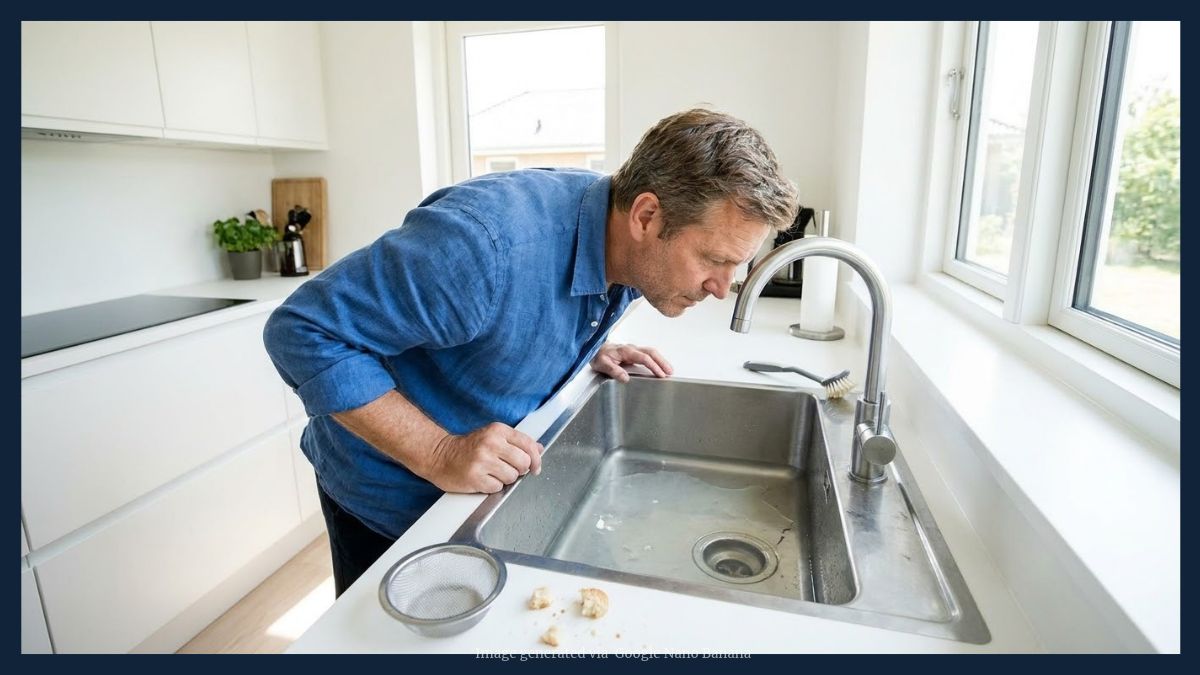
A sink usually drains slowly because something is restricting water flow through the drainpipe. Common causes include hair and soap buildup in bathroom sinks, grease and food particles in kitchen sinks, debris inside the P-trap, and blockages farther down the drain line.
- Hair, soap scum, and toothpaste commonly slow bathroom sinks.
- Grease, cooking oil, and food particles are frequent causes of kitchen sink blockages.
- The P-trap beneath the sink can collect debris and restrict drainage.
- A sink can drain slowly even when there is no obvious blockage at the opening.
- Gurgling sounds or several slow drains may indicate a deeper plumbing or venting problem.
- Avoid pouring boiling water or harsh chemical cleaners into an unknown plumbing system.
- Recurring blockages may require professional drain cleaning or inspection.
Why is my sink draining slowly?
A sink drains slowly when water cannot pass through its drainage system as freely as it should. In many cases, the cause is a partial blockage that allows some water through but restricts the overall flow.
The problem often develops gradually. Hair, soap residue, grease, food particles, and other debris accumulate along the drainpipe until the opening becomes narrow enough to noticeably slow drainage.
The location of the problem matters. A bathroom sink is more likely to collect hair and personal-care products, while a kitchen sink is more likely to develop grease and food-related blockages.
If only one sink is affected, the restriction may be close to that fixture. If several sinks, showers, or toilets are draining slowly, the issue may involve a shared drain line or plumbing vent.
Common causes of a slow-draining sink
1. Hair and soap buildup in the drain
Hair and soap residue are common causes of slow bathroom sink drainage.
Hair can become trapped around the stopper or inside the drainpipe. Soap, toothpaste, shaving products, and skincare residue then stick to the hair, gradually forming a blockage.
What to look for:
- Water takes longer to disappear from the basin.
- Hair or slimy residue is visible around the stopper.
- The drain has become slower over several weeks.
- The problem is limited to one bathroom sink.
What to do: Remove accessible hair and debris around the stopper. If the stopper is designed to be removed, follow the manufacturer’s instructions and clean it carefully.
A small drain-cleaning tool may help remove nearby hair, provided it is suitable for the drain and used according to its instructions.
2. Grease and food particles in the kitchen drain
Kitchen sinks regularly receive small amounts of food residue, oil, and cooking grease. These materials can accumulate inside the drainpipe.
Grease may enter the drain while warm and liquid, then cool and stick to pipe walls. Food particles can become trapped in the residue, gradually restricting water flow.
What to look for:
- The kitchen sink drains slowly after washing dishes.
- The drain produces an unpleasant odor.
- Water collects in the basin before gradually disappearing.
- The problem becomes worse with regular kitchen use.
What to do: Remove visible food particles from the sink strainer and clean accessible drain components. For minor grease residue, a flush with hot tap water may help, provided it is suitable for your plumbing.
Do not pour cooking oil or grease down the sink. Allow it to cool and dispose of it appropriately.
3. A partially blocked P-trap
The P-trap is the curved section of pipe beneath the sink. Its primary purpose is to hold water and prevent sewer gases from entering the home.
However, its curved shape can also collect hair, grease, food particles, and other debris.
As the material accumulates, it can restrict the amount of water passing through the pipe.
What to look for:
- The sink drains slowly even after cleaning the stopper.
- Debris or residue is visible around accessible pipe connections.
- The problem affects only one sink.
- Water drains better temporarily after removing surface debris.
What to do: Start by cleaning the stopper and drain opening. If the blockage appears to be inside the P-trap, a plumber can clean it without risking damage to the pipe connections.
If you are experienced with basic plumbing and the trap is accessible, follow the manufacturer’s or plumbing-fixture guidance. Place a bucket underneath before loosening any connections because the trap contains standing water. Avoid forcing old or fragile fittings, and stop if connections appear corroded or begin leaking.
4. A blocked or restricted drainpipe farther downstream
Sometimes the blockage is not directly beneath the sink. Grease, soap residue, hair, and other debris can accumulate farther along the branch drain.
This can make the sink drain slowly even when the stopper and P-trap appear clean.
What to look for:
- The sink remains slow after accessible debris has been removed.
- Cleaning the stopper makes little difference.
- The problem returns shortly after a temporary improvement.
- Water drains slowly despite the visible pipework appearing normal.
What to do: Avoid repeatedly trying different cleaning chemicals. A plumber can use appropriate drain-cleaning equipment to reach the obstruction and determine whether it is caused by accumulated debris, a foreign object, or pipe damage.
5. A blocked plumbing vent
Drainage pipes need proper venting to allow air to move through the plumbing system as wastewater flows away.
Vent pipes help regulate pressure and prevent drainage problems. If a vent becomes blocked or damaged, water may drain slowly or produce gurgling sounds.
What to look for:
- The sink gurgles while water drains.
- Several fixtures drain slowly.
- The sink produces a bubbling sound after a toilet is flushed.
- Drain odors accompany the slow drainage.
What to do: Do not climb onto the roof to inspect or clear plumbing vents unless you are properly equipped and qualified. A plumber can inspect the vent system and determine whether a blockage or installation problem is affecting drainage.
6. Mineral deposits or corrosion inside older pipes
In some homes, mineral deposits and corrosion gradually reduce the internal diameter of older drainpipes.
Hard-water minerals can accumulate on pipe surfaces, while aging metal pipes may corrode or develop rough internal areas that catch debris.
This can make drainage progressively slower even when there is no single obvious clog.
What to look for:
- The sink has drained poorly for a long time.
- The problem gradually worsens.
- The home has older metal plumbing.
- Cleaning the stopper and accessible trap does not restore normal drainage.
What to do: A plumber can inspect the pipe condition and determine whether cleaning, repair, or replacement is appropriate. Chemical drain cleaners are not a reliable solution for corroded or deteriorating pipes.
7. A foreign object stuck inside the drain
Small objects can accidentally fall into a sink and become trapped in the drain assembly or pipe.
Examples include:
- Jewelry.
- Small plastic caps.
- Bottle seals.
- Toothpaste caps.
- Food packaging fragments.
- Other small household items.
Unlike grease or soap buildup, a solid object may not dissolve or break down with ordinary drain-cleaning methods.
What to look for:
- The sink suddenly becomes slow after an object falls into it.
- Water drainage changes abruptly.
- The blockage does not improve after removing visible debris.
- A drain-cleaning tool seems to encounter a solid obstruction.
What to do: If you suspect a valuable or solid object is stuck inside the drain, avoid pushing it farther into the pipe with a snake or other tool. Arrange a plumbing inspection so it can be retrieved safely.
How to identify the cause of a slow sink
The symptoms can help you narrow down the likely source of the problem.
| What you notice | Possible cause | What to check |
|---|---|---|
| Bathroom sink drains slowly | Hair and soap buildup | Stopper and drain opening |
| Kitchen sink drains slowly | Grease and food residue | Strainer and accessible drain components |
| Sink drains slowly despite a clean opening | P-trap or downstream blockage | Drainpipe and trap |
| Sink gurgles while draining | Venting or drainage restriction | Other fixtures and plumbing vent |
| Several fixtures drain slowly | Shared drain or main-line problem | Other sinks, showers, and toilets |
| Sink suddenly becomes slow after an object falls in | Foreign object in the drain | Stopper and drain assembly |
| Problem keeps returning after cleaning | Deeper restriction or pipe condition | Branch drain and plumbing system |
These are diagnostic clues rather than definitive diagnoses. More than one problem can produce similar symptoms.
How to fix a slow-draining sink
Start with the simplest checks before attempting more involved work. You may be able to clear a minor blockage without dismantling the plumbing.
Step 1: Remove visible debris
Look around the drain opening and stopper.
For bathroom sinks, remove accessible hair, soap residue, and other debris. For kitchen sinks, remove food particles from the strainer.
Wear gloves when handling drain debris and wash your hands afterward.
Step 2: Clean the sink stopper
Bathroom sink stoppers can collect a surprising amount of hair, toothpaste, and soap residue.
If your stopper is removable, follow the fixture manufacturer’s instructions. Clean the stopper and the accessible drain opening before putting everything back in place.
Make sure the stopper operates correctly and does not obstruct the drain when open.
Step 3: Try a sink plunger
A small cup-style sink plunger can help dislodge certain partial blockages.
To use one:
- Remove any visible debris from the drain.
- Add enough water to cover the plunger’s rubber cup.
- Cover the overflow opening with a wet cloth if the sink has one.
- Position the plunger directly over the drain.
- Push and pull steadily several times while maintaining a seal.
- Remove the plunger and check whether the water drains more freely.
Avoid plunging if you have already poured chemical drain cleaner into the sink. The chemical could splash onto your skin or into your eyes.
Stop if the plumbing moves, leaks, or appears fragile.
Step 4: Flush with hot tap water when appropriate
For minor kitchen grease residue, hot tap water may help soften some deposits.
Run hot tap water through the drain for a short period, following the limitations of your plumbing and fixture manufacturer.
Do not assume boiling water is safe for every sink. It can create a burn hazard and may damage some plastic pipes, seals, or plumbing connections.
Hot water will not remove solid objects, heavy blockages, or mineral buildup.
Step 5: Inspect the P-trap if appropriate
If the sink remains slow and you are comfortable with basic plumbing, the P-trap may need inspection.
Before attempting any work:
- Stop using the sink.
- Place a bucket beneath the trap.
- Wear gloves and eye protection.
- Check whether the fittings are plastic, metal, corroded, or damaged.
- Follow the fixture or plumbing manufacturer’s instructions.
The trap contains standing water and debris, so be prepared for spillage.
If the fittings are old, stuck, or fragile, do not force them. A plumber can remove and clean the trap without unnecessarily damaging the pipework.
Step 6: Arrange professional drain cleaning if the problem remains
If the sink is still slow after basic cleaning, the obstruction may be farther down the branch drain.
A plumber can use suitable equipment to locate and clear the blockage. If the same problem repeatedly returns, the plumber may recommend a camera inspection to identify the underlying cause.
What not to do when your sink drains slowly
Some common DIY methods can create additional problems, particularly when the plumbing condition is unknown.
- Do not pour boiling water into every drain. It may damage certain plastic pipes, seals, or fittings.
- Do not mix drain cleaners. Combining chemical products can release dangerous fumes or cause hazardous reactions.
- Do not plunge after using chemical drain cleaner. The product may splash back and cause chemical burns.
- Do not force tools deep into the pipe. You may push a foreign object farther inside or damage the plumbing.
- Do not repeatedly use harsh chemical cleaners. They may damage some pipes and do not correct problems such as corrosion, venting defects, or broken connections.
- Do not ignore recurring slow drainage. A temporary improvement does not necessarily mean the underlying blockage has been removed.
If you have already used a chemical drain cleaner, tell the plumber what product was used before they begin working on the pipe.
When should you call a plumber?
A single slow sink is often caused by a localized blockage. However, certain symptoms suggest that the problem extends beyond the fixture.
- The sink remains slow after cleaning the stopper and accessible drain components.
- The blockage returns shortly after being cleared.
- Several sinks, showers, or toilets drain slowly at the same time.
- You hear persistent gurgling from the plumbing.
- Sewage odors accompany the slow drainage.
- Wastewater backs up into another fixture.
- You suspect a foreign object is trapped inside the pipe.
- The plumbing is old, corroded, leaking, or difficult to access.
If wastewater is backing up into the home, stop using affected fixtures and arrange prompt plumbing service. Avoid continuing to run water in an attempt to flush the blockage away.
Should you hire a professional?
If the problem is limited to visible hair, food residue, or a dirty stopper, basic cleaning may be enough. A sink plunger can also help with some minor blockages.
However, recurring slow drainage, gurgling, multiple affected fixtures, or wastewater backups are signs that the issue may be deeper in the plumbing system.
A qualified plumber can inspect the P-trap, branch drain, venting system, and main drainage line. Depending on the symptoms, they may use mechanical drain-cleaning tools or a camera inspection to identify the obstruction.
Before approving major repairs, ask the plumber to explain where the blockage is and why the recommended work is necessary.
How to prevent your sink from draining slowly
A few everyday habits can reduce the amount of debris entering your plumbing.
- Use a sink strainer. Catch food particles before they enter the kitchen drain.
- Keep grease out of the sink. Collect cooking oil and grease in a suitable container and dispose of it appropriately.
- Use a hair catcher. Bathroom sink strainers can prevent hair from entering the drain.
- Clean the stopper regularly. Remove accumulated hair, toothpaste, and soap residue before it becomes a blockage.
- Avoid putting unsuitable materials down the drain. Coffee grounds, food scraps, wipes, and other debris can contribute to clogs.
- Address slow drainage early. A small restriction is generally easier to investigate than a completely blocked pipe.
- Maintain older plumbing. If drainage problems keep recurring, have the pipe condition assessed rather than relying on repeated chemical treatments.
Frequently asked questions
A sink can drain slowly even when there is no obvious blockage at the opening. A partial obstruction may be inside the P-trap or farther down the drainpipe. Mineral deposits, pipe corrosion, and venting problems can also restrict drainage.
Bathroom sinks commonly become slow because hair, soap scum, toothpaste, and personal-care products collect around the stopper or inside the P-trap. Cleaning the stopper and removing visible debris are sensible first steps.
Grease, cooking oil, food particles, and residue can accumulate inside kitchen drainpipes. These materials gradually restrict water flow. Use a sink strainer and avoid pouring grease or oil down the drain.
Yes. The P-trap can collect hair, soap residue, grease, and other debris. As the buildup increases, it can restrict water flow. Cleaning the trap may restore drainage if the blockage is located there.
Baking soda and vinegar may help with some minor residue, but the mixture is not a reliable solution for a substantial blockage. It will not remove a solid object, repair damaged pipes, or correct a plumbing vent problem.
Not always. Boiling water can damage some plastic pipes, seals, and plumbing connections. It can also cause serious burns. If hot water is appropriate for your plumbing, use hot tap water rather than assuming boiling water is safe.
Gurgling may indicate that air is having difficulty moving through the drainage system. A partial blockage or plumbing vent problem may be responsible. If several fixtures gurgle or drain slowly, arrange a plumbing inspection.
If several sinks or other fixtures become slow together, the problem may involve a shared branch drain, main sewer line, or plumbing vent. It is less likely to be a separate blockage at every sink. A plumber should investigate the shared drainage system.
If cleaning the stopper and accessible trap restores normal drainage, the blockage may have been close to the fixture. If the sink remains slow despite a clean trap, the restriction may be farther along the branch drain or related to venting or pipe condition. A plumber can confirm the location.
Sources and references:
- Angi: 6 reasons your bathroom sink is draining slowly
Covers hair, soap buildup, foreign objects, and venting problems affecting bathroom sinks. - Plumber.com: Why is my sink draining slowly?
Provides a practical overview of common causes, troubleshooting steps, and situations that warrant professional plumbing service.
