
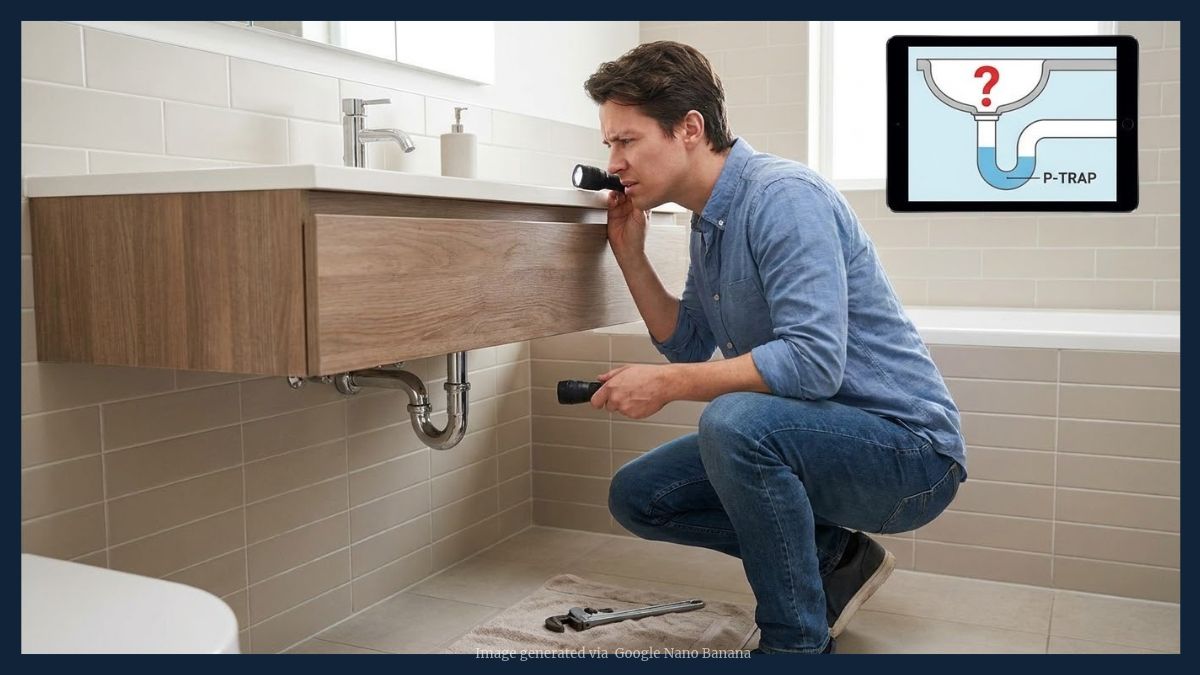
A drain that smells like sewage may have a dry P-trap, organic buildup, a blocked plumbing vent, or a damaged drain or sewer pipe. The P-trap normally holds water that prevents sewer gases from entering your home. When that water evaporates or the trap stops working properly, unpleasant odors can travel through the drain.
- A dry P-trap is one of the most common reasons sewer odors enter a home through a drain.
- Hair, grease, soap residue, and other organic material can create unpleasant smells inside drainpipes.
- Gurgling drains and odors from several fixtures may indicate a plumbing vent or drainage problem.
- A damaged pipe or failed toilet seal can allow sewer gases to escape into the home.
- Refilling a dry trap may solve the problem, but recurring odors need further investigation.
- Never mix chemical drain cleaners or use them together with other cleaning products.
Why does my drain smell like sewage?
A sewage-like smell coming from a drain usually means unpleasant gases or decomposing organic material are reaching the indoor space through the plumbing system.
Your home’s drainage system is designed to carry wastewater away while preventing sewer gases from entering living areas. One important part of this protection is the P-trap, a curved section of pipe that holds water. That water creates a seal between the drain opening and the sewer or drainage pipe.
If the trap dries out, becomes damaged, or loses its seal, odors can travel back through the drain. Alternatively, accumulated debris inside the pipe can produce a foul smell even when the trap is working properly.
The location and pattern of the odor can help narrow down the cause. A smell coming from one unused shower drain is different from a sewage odor affecting several bathrooms and sinks.
Common causes of a sewage smell coming from a drain
1. A dry P-trap
A dry P-trap is one of the most common causes of sewer odors inside a home.
The P-trap is the curved pipe beneath many sinks and connected to showers, tubs, and floor drains. It holds a small amount of water that acts as a barrier against sewer gases.
When a drain is not used regularly, the water inside the trap can evaporate. Without that water seal, sewer gases may travel back through the drain opening.
What to look for:
- The smell comes from a rarely used sink, shower, bathtub, or floor drain.
- The odor becomes noticeable after a vacation or extended period away from home.
- Other nearby drains do not have the same smell.
- The odor improves after water runs through the drain.
What to do: Run water through the affected fixture for several seconds to refill the trap. For an unused floor drain, slowly pour enough water into it to restore the water seal.
If the smell disappears and does not return, evaporation may have been the cause. If it comes back quickly despite regular use, the trap may be leaking, improperly installed, or losing its seal for another reason.
2. Buildup of hair, soap, grease, and organic debris
Drainpipes can collect material that gradually decomposes and produces unpleasant odors.
In bathrooms, hair, soap residue, shampoo, and personal care products can accumulate around the drain opening and inside the pipe. Kitchen drains can collect grease, food particles, and other organic debris.
This buildup may produce a rotten or sewage-like smell even when sewer gases are not escaping through a failed trap.
What to look for:
- The smell is strongest directly above the drain opening.
- The drain is slow or partially clogged.
- Hair or slimy residue is visible around the drain cover.
- The odor improves temporarily after cleaning.
What to do: Remove accessible debris from the drain cover and clean the area with an appropriate household cleaning method. For a bathroom drain, a drain brush can help remove hair and residue within reach.
For kitchen sinks, clean the drain components and garbage disposal according to their manufacturer’s instructions. Avoid pouring cooking grease down the drain.
If the odor persists or the drain remains slow, the buildup may extend farther into the pipe and require professional cleaning.
3. A blocked or damaged plumbing vent
Your plumbing system has vent pipes that help regulate air pressure inside the drainage network. These pipes commonly extend through the roof and allow sewer gases to escape outdoors.
If a vent becomes blocked by leaves, debris, or an animal nest, the drainage system may not receive the airflow it needs. This can interfere with drainage and contribute to odors entering the home.
A cracked or disconnected vent pipe can also allow sewer gases to escape into an attic, wall cavity, or other indoor space.
What to look for:
- Drains make bubbling or gurgling sounds.
- Water drains slowly from multiple fixtures.
- The sewage smell affects more than one room.
- The odor becomes noticeable when toilets are flushed or other fixtures are used.
What to do: Do not climb onto the roof to inspect or clear a vent unless you are properly equipped and qualified to do so. A licensed plumber can inspect the vent system and determine whether it is blocked, damaged, or incorrectly installed.
4. A damaged or leaking drainpipe
A cracked, loose, or disconnected drainpipe can allow wastewater and sewer gases to escape before they reach the main drainage line.
The damage may be beneath a sink, behind a wall, under a floor, or in an inaccessible part of the plumbing system.
What to look for:
- The sewage smell is persistent and does not disappear after cleaning.
- There are damp patches, water stains, or unexplained moisture near plumbing.
- The odor is strongest around a cabinet, wall, floor, or pipe connection.
- You hear unusual drainage noises or notice recurring leaks.
What to do: Check only visible and accessible pipe connections for obvious leaks. Avoid dismantling concealed plumbing or attempting repairs inside walls and floors.
Arrange a plumbing inspection if you suspect a damaged drainpipe. A plumber may use specialized inspection equipment to locate the leak without unnecessarily opening large sections of the home.
5. A failed toilet seal
A toilet is connected to the drainage system through a sealed connection at its base. A wax ring or another approved sealing component helps prevent wastewater and sewer gases from escaping around the toilet.
If this seal deteriorates, becomes improperly seated, or is damaged during toilet removal or installation, sewage odors may enter the bathroom.
What to look for:
- The smell is strongest around the base of the toilet.
- The toilet rocks or moves when used.
- Water appears around the toilet base.
- The odor continues even after nearby sink and shower drains are cleaned.
What to do: Do not assume that applying caulk around the toilet base will correct the problem. Caulk may conceal signs of leakage without repairing a failed seal.
A plumber can check the toilet connection, replace the seal if necessary, and confirm that the toilet is properly secured.
6. A clogged or partially blocked drain
A partial blockage can trap wastewater, hair, grease, and other debris inside a pipe. As the material accumulates, it may produce a foul smell.
Unlike a dry P-trap, a blockage is more likely to come with slow drainage or water collecting around the fixture.
What to look for:
- Water takes longer than usual to drain.
- The sink or shower produces bubbling sounds.
- The smell becomes stronger when water is used.
- Debris or wastewater occasionally backs up into the fixture.
What to do: Remove accessible debris and use a suitable drain-cleaning tool if the blockage is close to the opening and can be cleared safely.
Avoid forcing objects deep into the pipe. Do not combine chemical drain cleaners, and follow the product label if you use one. If the blockage is severe, recurring, or affects several fixtures, contact a plumber.
7. A problem with the main sewer line
If several drains in your home smell like sewage or begin draining slowly at the same time, the issue may be farther down the drainage system.
A damaged, obstructed, or backed-up main sewer line can affect multiple fixtures. Tree roots, accumulated debris, pipe deterioration, or other obstructions may contribute to the problem.
What to look for:
- Several drains become slow at the same time.
- Toilets gurgle when sinks, showers, or washing machines drain.
- Wastewater backs up into a bathtub, shower, or floor drain.
- The sewage odor affects multiple rooms.
- The problem returns after individual drains have been cleaned.
What to do: Stop using water-intensive fixtures if you suspect a sewer backup. Arrange a prompt inspection by a licensed plumber.
A professional may use a drain camera to inspect the sewer line and identify obstructions, damaged sections, or root intrusion.
How to identify where the sewage smell is coming from
Start by locating the strongest odor rather than cleaning every drain immediately. The pattern can help you determine whether the problem is isolated or affects the wider plumbing system.
| Where you notice the smell | Possible cause | What to check |
|---|---|---|
| Bathroom sink | Organic buildup or dry P-trap | Clean the drain opening and run water |
| Shower or bathtub | Hair buildup or dry trap | Inspect the drain cover and refill the trap |
| Kitchen sink | Food residue, grease, or drain buildup | Clean accessible components and check drainage |
| Floor drain | Evaporated water in the trap | Add water to restore the trap seal |
| Around the toilet | Failed toilet seal | Check for movement, moisture, or odor at the base |
| Several drains throughout the home | Venting or main sewer-line problem | Look for gurgling, slow drainage, and backups |
| Near a wall, cabinet, or floor | Possible concealed pipe leak | Look for moisture and arrange an inspection |
How to get rid of a sewage smell from your drain
The correct solution depends on the source of the odor. Follow these steps to address common problems without unnecessarily disturbing your plumbing.
Step 1: Locate the affected drain
Check whether the smell comes from one fixture or several.
Pay attention to:
- Whether the drain is used regularly.
- Whether the odor is strongest at the opening or around the surrounding plumbing.
- Whether water drains normally.
- Whether other fixtures make gurgling sounds.
If the smell is strong throughout the home, do not spend time testing every drain. Leave the affected area and seek professional assistance.
Step 2: Refill the P-trap
If the affected drain is rarely used, run water through it for several seconds.
For a floor drain, slowly add water to restore the trap seal. Check the drain again after the water has settled.
If the smell disappears, the trap may simply have dried out. If it returns quickly, there may be a leak, siphoning problem, or another plumbing defect.
Step 3: Remove visible drain buildup
If the smell comes from a frequently used sink or shower, inspect the drain cover.
Remove accessible hair and debris, then clean the cover and surrounding surfaces. Use a drain brush where appropriate to remove residue within safe reach.
For a kitchen sink, clean the strainer and garbage disposal components according to their instructions.
Do not reach into a garbage disposal or put your hand inside a drain where sharp objects or hidden debris may be present.
Step 4: Check for slow drainage and gurgling
Run water briefly and observe how the drain behaves.
Water that drains slowly, bubbles, or backs up may indicate a blockage or venting issue.
If several fixtures show these symptoms, the problem may be in a shared drainage line rather than an individual drain.
Step 5: Inspect visible plumbing connections
Look beneath sinks and around accessible plumbing for:
- Water leaks.
- Loose pipe connections.
- Damaged seals.
- Damp cabinets or flooring.
- Unusual stains or residue.
Do not dismantle pipes or open walls to investigate concealed plumbing.
Step 6: Arrange professional inspection if the odor persists
If the smell returns after refilling the trap and cleaning the drain, the cause may be a failed seal, blocked vent, damaged pipe, or sewer-line problem.
A plumber can inspect the plumbing system and use tools such as a drain camera or smoke testing where appropriate to locate the source.
When should you call a plumber?
Contact a licensed plumber if:
- The sewage smell continues after refilling the trap and cleaning the drain.
- The odor repeatedly returns from the same fixture.
- Several drains smell like sewage at the same time.
- Drains gurgle or become slow without an obvious local blockage.
- Wastewater backs up into sinks, showers, or floor drains.
- You notice water stains, damp flooring, or signs of a concealed leak.
- The toilet smells around its base or moves when used.
- You suspect a damaged sewer line or plumbing vent.
Should you hire a professional?
A dry P-trap or accessible drain buildup may be manageable without a service call. However, persistent sewage odors should not be treated as a simple cleaning problem.
A licensed plumber can determine whether the odor is coming from a failed water seal, damaged pipe, faulty toilet connection, blocked vent, or main sewer line. Depending on the problem, the inspection may involve drain-camera testing, smoke testing, or checking the plumbing vent system.
If the issue affects several fixtures or involves wastewater backing up into the home, arrange service promptly rather than repeatedly using chemical drain cleaners.
Is a sewage smell from a drain dangerous?
A sewage-like odor should be taken seriously, particularly if it is strong, persistent, or spreading through multiple rooms.
Sewer gas is a mixture of gases produced by decomposing waste. Its composition varies, and it can include hydrogen sulfide, methane, ammonia, and other compounds.
At sufficiently high concentrations, some components can cause health effects or create other hazards. However, the presence of an odor alone does not tell you the concentration or exact composition of the gases.
Take these precautions:
- Leave the affected area if the odor is strong or widespread.
- Ventilate the area from a safe location if possible.
- Avoid flames, smoking, or other ignition sources if a significant sewer-gas accumulation is suspected.
- Do not enter confined spaces, sewer pits, septic tanks, or other enclosed drainage areas.
- Seek professional assistance to identify and correct the source.
If anyone experiences dizziness, nausea, headaches, breathing difficulty, or other concerning symptoms, move to fresh air and seek medical assistance. For a severe odor or suspected hazardous gas accumulation, contact the appropriate emergency service.
How to prevent sewage smells from returning
Once the odor is resolved, a few maintenance habits can help prevent common drain problems.
- Use rarely accessed drains periodically. Run water through guest bathroom sinks, showers, tubs, and floor drains to keep their traps filled.
- Clean drain covers regularly. Remove hair, soap residue, and visible debris before it accumulates.
- Keep grease out of kitchen drains. Allow cooking oil and grease to cool, then dispose of them appropriately rather than pouring them into the sink.
- Use drain strainers. These can catch hair and food particles before they enter the plumbing.
- Address slow drainage early. A recurring blockage should be investigated instead of repeatedly treated with chemicals.
- Maintain plumbing connections. Have damaged seals, leaking pipes, and loose connections repaired.
- Schedule plumbing inspections when needed. Older plumbing or recurring drainage problems may benefit from professional assessment.
If you have a floor drain or another fixture that is rarely used, consider asking a plumber whether a suitable trap primer or other approved solution would help prevent the trap from drying out.
Frequently asked questions
A rotten-egg smell may come from sewer gas containing hydrogen sulfide, but organic buildup inside the drain can also produce sulfur-like odors. Check whether the smell is limited to one drain, and investigate the P-trap and drain buildup. A strong or persistent odor needs professional attention.
Cleaning the drain opening may remove surface grime without correcting the underlying problem. A dry P-trap, blocked vent, damaged pipe, or failed toilet seal can continue allowing sewer odors into the bathroom.
If the shower has not been used for an extended period, water inside its P-trap may have evaporated. Run water for several seconds to refill the trap. If the smell continues, the trap or another part of the drainage system may need inspection.
Food particles, grease, and other organic debris can accumulate in the sink drain, strainer, garbage disposal, or P-trap. Clean accessible components and check for slow drainage. If the smell persists despite cleaning, a plumber may need to inspect the pipework.
Yes. A P-trap holds water that creates a barrier between the drain opening and sewer gases. When that water evaporates, odors can enter the home through the drain. Running water through the fixture can restore the water seal if evaporation is the only problem.
A sewage odor that becomes noticeable during or after heavy rain may be associated with drainage-system pressure changes, sewer-line problems, or water entering areas around damaged plumbing. The exact cause depends on the home’s drainage arrangement. If the smell repeatedly follows rainfall, ask a plumber to inspect the system.
Bleach is not a reliable solution for every drain odor, particularly when the cause is a dry trap, damaged pipe, or venting problem. It can also create hazardous reactions if mixed with other cleaners. Use products only as directed on their labels, and never mix bleach with ammonia, acids, or other drain-cleaning chemicals.
Baking soda and vinegar may help with some minor surface residue, but they will not repair a dry or damaged P-trap, blocked vent, leaking pipe, or sewer-line problem. If the odor comes from sewer gas, address the plumbing issue rather than relying on deodorizing mixtures.
A smell affecting several rooms may indicate a plumbing vent problem, a damaged drain or sewer pipe, or a main sewer-line issue. A strong, widespread odor should be treated seriously. Leave the affected area, ventilate if safe, and contact a qualified professional.
Sources and references:
- Wisconsin Department of Health Services: Sewer gas
Explains sewer-gas composition, possible entry points, and precautions for preventing exposure. - City of Phoenix Water Services Department: Guidance supplement 9: Sewer odors in a building or house
Explains how P-traps prevent sewer gases from entering a home and how evaporation and drain buildup can cause odors. - Metropolitan Council: Report sewer odors
Describes common household sources of sewer odors, including dry traps, loose toilet seals, and organic buildup. - Ohio Environmental Protection Agency: Sewer gas odors in a home
Discusses possible routes for sewer gas to enter a home and when professional or emergency assistance may be appropriate. - City of Surrey: Sanitary sewer issues
Provides information about P-traps, toilet seals, blocked roof vents, and plumbing-related sewer odors.
