
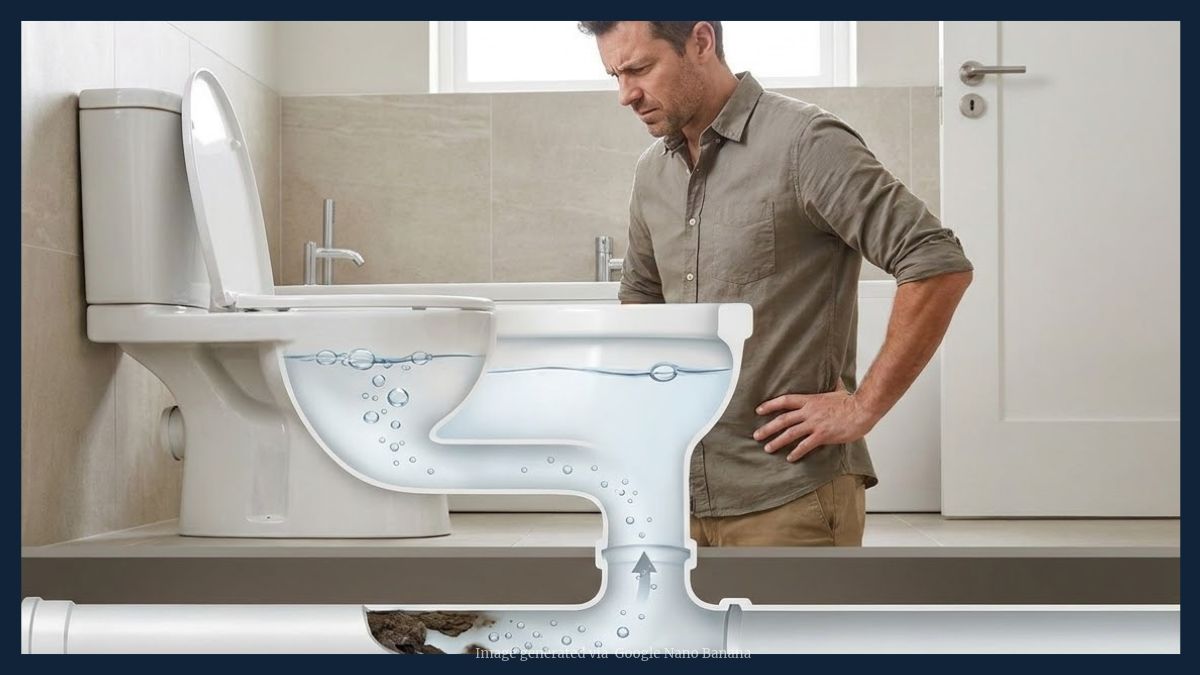
A toilet that bubbles or gurgles usually indicates that air is moving abnormally through the drainage system. The most common causes include a partial drain blockage, a blocked plumbing vent, or a restriction in the main sewer line.
- Partial toilet drain blockage: Waste, excessive toilet paper, or foreign objects restrict wastewater flow and cause trapped air to bubble through the bowl.
- Blocked plumbing vent: An obstructed vent pipe disrupts air pressure inside the drainage system.
- Main sewer line blockage: A restriction in the main drain can affect several fixtures and cause air or wastewater to move back toward the toilet.
- Septic system problem: Homes with septic systems may experience gurgling when the tank, outlet, or drain field has a problem.
- Improper drainage or pipe damage: Poor pipe slope, damaged sections, or other installation problems can interfere with wastewater flow.
If several fixtures gurgle, drain slowly, or back up at the same time, stop using water where practical and arrange a plumbing inspection.
Common reasons your toilet bubbles or gurgles
Your home’s drainage system carries wastewater and air through a network of connected pipes. Plumbing vents help regulate air pressure so wastewater can move through the drains without disturbing the water seals in plumbing traps.
A toilet can gurgle when this normal movement of air and water is disrupted.
Here are the most common explanations.
1. There is a partial blockage in the toilet drain
A partial blockage is one of the first things to investigate when a toilet makes bubbling or gurgling sounds.
Wastewater normally moves through the toilet’s trap and into the drainpipe. When something restricts the passage, water may not flow smoothly. Air can become trapped or displaced, producing bubbling sounds as it moves through the toilet bowl.
Common causes include:
- Excessive toilet paper.
- Flushable wipes that do not break down easily.
- Paper towels or tissues.
- Sanitary products.
- Small objects accidentally dropped into the toilet.
- Accumulated waste or debris inside the drain.
A partial blockage may still allow the toilet to flush, which can make the problem difficult to recognize at first.
Signs of a partial toilet drain blockage:
- The toilet gurgles during or immediately after flushing.
- Water drains more slowly than usual.
- The bowl water rises higher than normal before dropping.
- The toilet occasionally struggles to clear waste.
- The problem becomes more noticeable after repeated flushing.
What to do:
Try using a toilet plunger designed for toilets, preferably a flange-style plunger that fits the bowl opening.
If plunging does not improve the drainage, the obstruction may be deeper in the toilet trap or drainpipe. A toilet auger may help remove an accessible blockage.
Avoid repeatedly flushing a toilet that is draining slowly or whose water level is rising. Doing so can cause an overflow.
2. The plumbing vent pipe is blocked
Your drainage system needs more than pipes that carry wastewater. It also needs a way for air to move through the system.
This is the purpose of the plumbing vent.
In many homes, a vent pipe connects to the drainage system and extends through the roof. It allows air to enter and leave the plumbing network, helping maintain balanced pressure as wastewater flows.
If the vent becomes blocked, air may not move through the system properly. This pressure imbalance can disturb the water inside the toilet trap and produce bubbling or gurgling sounds.
Possible causes of a blocked vent include:
- Leaves and other debris.
- Bird nests.
- Small animals or nesting materials.
- Accumulated dirt or other obstructions.
- Ice or snow in climates where freezing conditions occur.
- Damaged or improperly installed vent piping.
Signs of a blocked plumbing vent:
- The toilet gurgles even when it is not being flushed.
- Several sinks or drains make bubbling sounds.
- Water drains slowly from multiple fixtures.
- You hear sucking or slurping noises from nearby drains.
- Unpleasant sewer odors appear near plumbing fixtures.
What to do:
A plumber can inspect the vent system and determine whether an obstruction is preventing proper airflow.
Do not climb onto the roof or attempt to clear a vent pipe without the appropriate equipment and experience. Roof access can be dangerous, and some obstructions require specialized tools.
3. The main sewer line is partially blocked
If several plumbing fixtures are affected, the problem may be farther downstream in the main sewer line.
The main sewer line carries wastewater from your home’s individual drains toward the public sewer system or, in some properties, a private wastewater treatment system.
When this line becomes partially blocked, wastewater cannot move through it as freely as it should. The restriction can disturb air pressure and cause bubbling or gurgling in the toilet.
Common causes include:
- Tree roots growing into pipe joints or cracks.
- Grease and other accumulated deposits.
- Foreign objects entering the drainage system.
- Damaged or collapsed pipe sections.
- Misaligned joints or deteriorated pipes.
- Improper pipe installation or drainage slope.
A partial sewer line blockage can gradually become a complete obstruction if it is not addressed.
Signs of a possible main sewer line blockage:
- The toilet gurgles when the shower or bathtub drains.
- Several toilets or sinks drain slowly.
- Water backs up into a shower or floor drain.
- The toilet water level rises unexpectedly.
- You notice sewage odors or wastewater coming back through drains.
What to do:
Avoid using multiple water-consuming fixtures until the problem has been assessed. If wastewater is backing up, stop flushing and stop using affected drains.
A plumber may need to inspect and clear the main drain. A sewer camera inspection can help identify tree roots, damaged pipes, or other obstructions when the cause is not visible.
4. There is a problem with your septic system
If your property uses a septic system rather than a public sewer connection, a toilet that bubbles or gurgles may be related to the wastewater treatment system.
A septic system receives wastewater from the house and separates solids from liquids before the treated wastewater moves into the drain field.
When part of the system cannot handle wastewater properly, drainage may become restricted. This can contribute to gurgling sounds in toilets and other fixtures.
Possible causes include:
- A septic tank that needs pumping.
- A blocked or damaged outlet filter.
- A problem with the tank’s outlet or connecting pipe.
- A saturated or failing drain field.
- A damaged wastewater pipe between the house and tank.
Signs of a possible septic system problem:
- Multiple drains inside the house are slow.
- Toilets gurgle or bubble repeatedly.
- Sewage odors appear near the tank or drain field.
- Wet or unusually green areas develop over the drain field.
- Wastewater backs up into the house.
What to do:
Contact a qualified septic system professional to inspect the tank, outlet, and drain field.
Avoid opening septic tanks or attempting to enter them. Septic tanks can contain dangerous gases and present serious hazards.
If wastewater is backing up into the home, reduce water use and arrange prompt professional assistance.
5. The drainage pipes are damaged or improperly installed
Not every gurgling toilet is caused by a removable blockage. Sometimes the drainage pipes themselves are preventing wastewater from flowing correctly.
Drainage pipes need appropriate sizing, connections, and slope to carry wastewater away from the home.
Problems can develop when pipes:
- Have an incorrect slope.
- Sag or settle over time.
- Become misaligned at their joints.
- Crack or collapse.
- Are damaged by soil movement or construction work.
- Were installed incorrectly.
A sagging or improperly sloped pipe can allow wastewater and debris to accumulate instead of flowing away efficiently.
This may create repeated drainage restrictions and unusual air movement within the system.
Signs of damaged or improperly installed pipes:
- Gurgling keeps returning after drain cleaning.
- Multiple fixtures experience recurring slow drainage.
- Blockages develop repeatedly in the same area.
- Wastewater backs up without an obvious local clog.
- The problem started after construction, landscaping, or ground movement.
What to do:
A plumber can inspect the drainage system and determine whether the problem is a blockage, pipe damage, or an installation issue.
A sewer camera inspection may be useful for identifying hidden pipe defects without immediately excavating the affected area.
Why does my toilet gurgle when other fixtures are used?
One of the most useful diagnostic clues is whether another plumbing fixture triggers the noise.
Toilets, sinks, showers, and bathtubs may connect to shared drainage and venting systems. When one fixture releases a large amount of water, it can affect airflow and pressure elsewhere in the system.
If your toilet bubbles when another fixture drains, the issue may be in a shared pipe or vent rather than inside the toilet itself.
Toilet bubbles when the shower runs
A toilet that gurgles when the shower runs may have a partial blockage in a shared drain line or a plumbing vent problem.
As shower water moves through the drainage system, it can displace air. If the drain is restricted or the vent cannot supply adequate airflow, air may escape through the toilet’s water trap.
Check whether the shower also drains slowly. If both fixtures are affected, the restriction may be farther downstream.
Toilet gurgles when the washing machine drains
Washing machines discharge a relatively large amount of water over a short period.
If the toilet gurgles whenever the washing machine drains, a partially blocked shared drain or a venting problem may be preventing wastewater and air from moving normally.
Pay attention to whether nearby sinks or floor drains also make noises.
Toilet bubbles when the sink drains
If the toilet bubbles when you empty a nearby sink, the two fixtures may share part of their drainage or vent system.
A local restriction, shared branch blockage, or venting problem may be affecting how air moves through the pipes.
If only one sink and toilet are involved, the issue may be limited to that branch. If several fixtures react, a larger drainage problem becomes more likely.
Toilet gurgles when it is not being used
A toilet that bubbles without anyone flushing it may be reacting to wastewater movement elsewhere in the plumbing system.
For example, a washing machine, dishwasher, shower, or another toilet may be discharging water through connected pipes.
If the toilet gurgles when no other fixtures are being used, the problem may involve an intermittent drainage or pressure issue. A plumber can investigate whether the vent, drain, or sewer connection is responsible.
How to identify the cause of toilet bubbling or gurgling
Before attempting a repair, observe when the sound occurs and whether other fixtures are affected.
These checks can help narrow down the likely source.
Step 1: Observe when the toilet makes the noise
Start by identifying the circumstances that trigger the bubbling.
Ask yourself:
- Does it happen immediately after flushing?
- Does it happen when the shower or bathtub drains?
- Does the washing machine trigger the sound?
- Does it happen when nobody is using the plumbing?
- Is the noise becoming more frequent?
The answers can help distinguish a toilet-level blockage from a problem involving shared drainage or venting.
Step 2: Check the water level in the bowl
Observe the water inside the toilet bowl before and after the gurgling occurs.
Look for:
- Water rising higher than normal.
- Water suddenly dropping.
- Visible bubbles breaking through the surface.
- Water moving or rippling without a flush.
A changing water level can indicate abnormal pressure or drainage conditions.
If the water rises significantly or wastewater appears, stop flushing and arrange a professional inspection.
Step 3: Check nearby sinks, showers, and drains
Run water briefly in nearby fixtures only if there are no signs of an active backup or rising wastewater.
Notice whether:
- A sink drains slowly.
- The shower makes a gurgling sound.
- A floor drain releases an unpleasant odor.
- The toilet bubbles when another fixture empties.
If several fixtures show symptoms, the problem is less likely to be limited to the toilet.
Do not deliberately run large amounts of water to test a system that is already backing up.
Step 4: Look for signs of a drainage backup
Inspect accessible drains and the area around the toilet.
Look for:
- Wastewater rising in the toilet bowl.
- Dirty water appearing in a shower or floor drain.
- Water collecting around an accessible drain opening.
- Persistent sewage odors.
- Multiple fixtures draining poorly.
These symptoms can indicate a developing main drain or sewer blockage.
Step 5: Consider the home’s wastewater system
Determine whether your home connects to a public sewer system or uses a private septic system.
If you have a septic system, consider whether it is due for routine inspection or maintenance.
If your home connects to a public sewer, ask whether neighboring properties are experiencing similar drainage problems. A shared sewer problem may sometimes affect more than one property.
Do not assume that the public sewer is responsible without checking the private drainage system as well.
Troubleshooting guide: What the symptoms may indicate
Use this table as a starting point when identifying the possible source of toilet bubbling.
| What you notice | Possible cause | Recommended next step |
|---|---|---|
| Toilet gurgles during flushing and drains slowly | Partial toilet blockage | Try a suitable toilet plunger |
| Toilet bubbles when the shower drains | Shared drain restriction or vent problem | Check nearby drains and arrange inspection if persistent |
| Toilet gurgles when the washing machine drains | Shared drain or vent problem | Have the affected drainage line assessed |
| Several fixtures gurgle at once | Main drain or sewer restriction | Contact a plumber |
| Toilet bubbles and water rises in the bowl | Possible serious drain blockage | Stop flushing and arrange prompt assistance |
| Gurgling occurs with sewage odors | Drain restriction or disturbed trap seal | Investigate the drainage and vent system |
| Problem keeps returning after plunging | Deeper blockage or pipe problem | Consider professional drain inspection |
| Toilet and other drains are slow in a septic property | Possible septic system restriction | Contact a septic professional |
These symptoms are clues rather than definitive diagnoses. Different plumbing layouts can produce similar noises.
What can you do to stop a toilet from bubbling or gurgling?
The appropriate fix depends on the source of the problem. A simple toilet blockage may be manageable with basic tools, while a blocked vent or main sewer line generally requires professional attention.
Use a toilet plunger for a minor blockage
If the toilet is draining slowly and there are no signs of a larger backup, a toilet plunger may help clear an obstruction near the fixture.
Use a flange-style plunger designed to fit the toilet outlet.
- Make sure the plunger has enough water around its cup to create a seal.
- Position it over the toilet outlet.
- Press down gently to establish a seal.
- Use controlled push-and-pull movements.
- Remove the plunger and observe whether the water drains normally.
Avoid forceful plunging if the bowl is close to overflowing.
If the blockage does not clear, stop and consider using a toilet auger or contacting a plumber.
Use a toilet auger for a stubborn obstruction
A toilet auger is designed to reach obstructions inside the toilet trap and nearby drain passage.
It can help remove objects or compacted waste that a plunger cannot dislodge.
Use an auger specifically designed for toilets to reduce the risk of scratching the porcelain.
If you cannot reach the obstruction or the toilet continues to gurgle after clearing it, the problem may be farther down the drainage system.
Keep unsuitable materials out of the toilet
Preventing blockages is easier than repeatedly clearing them.
Only flush toilet paper and human waste unless your local plumbing authority or toilet manufacturer specifically permits other materials.
Avoid flushing:
- Wet wipes, including products labeled flushable.
- Paper towels.
- Cotton pads and cotton swabs.
- Sanitary products.
- Dental floss.
- Food waste.
- Grease or other household debris.
Even materials marketed as flushable may not break down as quickly as toilet paper and can contribute to drain restrictions.
Arrange a plumbing vent inspection
If the toilet continues gurgling despite normal drainage, the plumbing vent may need inspection.
A professional can check whether debris, nesting materials, or a damaged pipe is restricting airflow.
Vent pipes often extend through the roof, so inspection and clearing may involve working at height. Avoid attempting roof repairs without proper training and safety equipment.
Have the main drain inspected
If several fixtures are affected, a toilet plunger is unlikely to resolve the underlying problem.
A plumber can inspect the main drainage line and use appropriate equipment to remove an obstruction.
If blockages keep returning, a camera inspection may help determine whether tree roots, pipe damage, or another structural issue is responsible.
When should you call a professional plumber?
A gurgling toilet should not automatically be treated as an emergency, but certain symptoms indicate that the drainage system needs prompt attention.
- The toilet repeatedly bubbles or gurgles despite basic troubleshooting.
- Several sinks, showers, or toilets drain slowly.
- The toilet water rises when another fixture is used.
- Wastewater backs up into a shower, bathtub, or floor drain.
- Sewage odors persist inside the home.
- Blockages keep returning after plunging.
- You suspect a blocked or damaged main sewer line.
- You cannot identify the cause of the pressure or drainage problem.
Stop using affected plumbing and seek urgent assistance if sewage or wastewater is backing up into the home. Avoid flushing toilets, running washing machines, or using showers until the blockage has been assessed.
If wastewater has overflowed, avoid direct contact with it. Keep children and pets away from the affected area and follow appropriate cleanup guidance.
Should you hire a professional?
A single toilet blockage may be manageable with a plunger or toilet auger. However, recurring gurgling or bubbling often points to a problem beyond the toilet bowl.
A plumber can determine whether the cause is a blocked branch drain, obstructed vent, main sewer line restriction, or damaged pipe.
For recurring problems, ask whether the inspection includes checking the affected drainage branches and whether a sewer camera inspection is appropriate.
If your home uses a septic system, contact a qualified septic service provider rather than assuming a standard drain-clearing service will address the entire problem.
Professional diagnosis is particularly important when multiple fixtures are affected or wastewater is backing up.
Frequently asked questions
The noise itself is not usually dangerous, but it can indicate a drainage or venting problem that may become worse.
The toilet and shower may share part of the same drainage and vent system. A partial blockage or venting problem can disrupt normal airflow and cause air to escape through the toilet bowl.
A partial blockage in the toilet trap or drainpipe can interfere with wastewater flow and cause air to move through the bowl.
Yes. A blocked vent can prevent the plumbing system from balancing air pressure properly.
Not necessarily. A partial toilet blockage or obstructed vent can produce similar symptoms.
Avoid repeated flushing if the toilet drains slowly, the bowl water is rising, or wastewater is backing up.
It can be associated with sewer odors, particularly if abnormal air pressure disturbs the water seal in a plumbing trap.
Sources and references:
- WaterSafe: Why is my toilet gurgling? – Explains common causes, including partial drain blockages, blocked vents, and sewer line restrictions.
- This Old House: How to fix a gurgling toilet – Explains how plumbing vents maintain pressure and why drainage problems can cause gurgling.
- The Spruce: Why is my toilet bubbling when the shower is running? – Covers shared drainage, venting problems, and practical troubleshooting.
- Missouri Department of Health and Senior Services: Troubleshooting system problems – Includes wastewater and septic-system symptoms such as gurgling fixtures, backups, and plugged vents.
- Australian Capital Territory: Sewer blockages and surcharges – Describes common signs and causes of sewer blockages, including gurgling drains, tree roots, and damaged pipes.
