
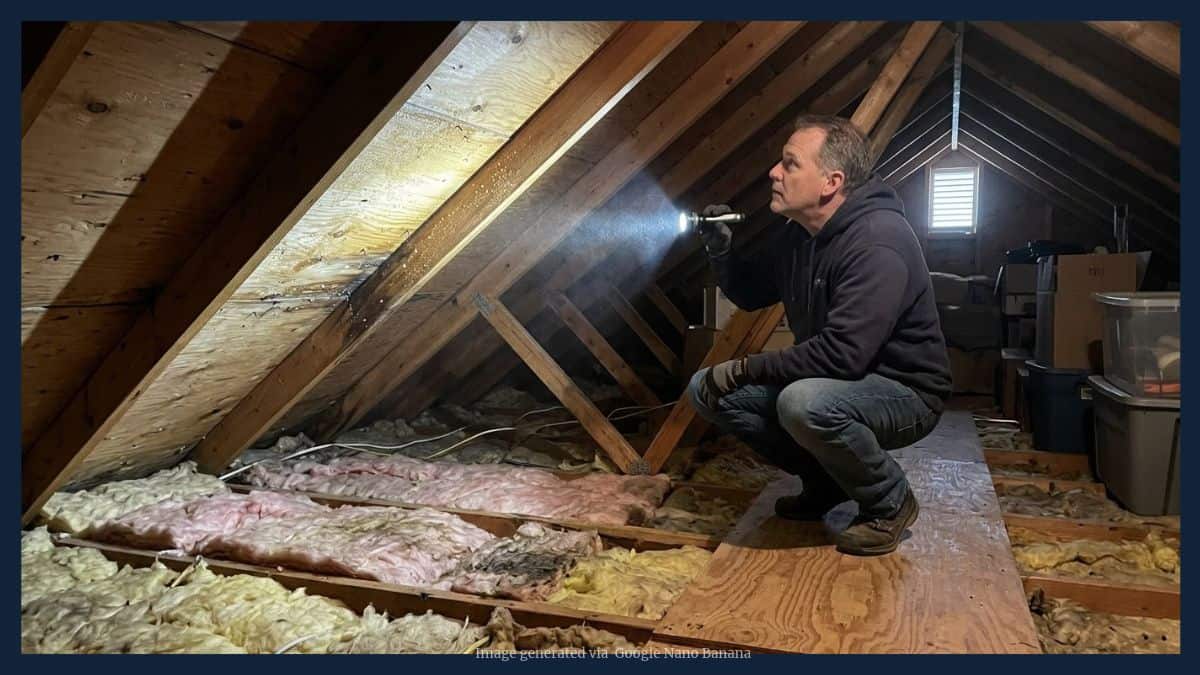
If your attic feels damp, smells musty, or has wet insulation, water stains, or dark patches on the roof decking, excess moisture may be entering or accumulating in the space. Common causes include roof leaks, condensation, bathroom or kitchen exhaust fans venting into the attic, plumbing leaks, poor air sealing, and ventilation problems.
- A damp attic can result from liquid water, condensation, or humid air entering the space.
- The timing and location of moisture provide useful diagnostic clues.
- Bathroom and kitchen exhaust ducts should discharge outdoors, not into the attic.
- Roof leaks and condensation can produce similar symptoms, so inspect the evidence before choosing a repair.
- Air sealing, insulation, and ventilation must work together and suit the home’s climate and attic design.
- A powered attic fan is not automatically the right solution and can create problems if the building is not properly designed and sealed.
- Persistent moisture should be corrected before damaged materials are repaired or covered.
What are the signs of a damp attic?
You may notice attic moisture during a routine inspection, after a storm, or when investigating a musty smell inside the home. Some warning signs are obvious, while others require closer inspection.
Water stains on roof decking or rafters
Brown or dark stains on the underside of the roof decking, rafters, or other framing can indicate previous or current water exposure.
Look for:
- Discoloration below roof valleys or penetrations.
- Stains near chimneys, skylights, vents, or flashing.
- Drip marks or water trails on wood.
- Areas that appear darker than surrounding materials.
- Stains that become more noticeable after rain.
Old stains can remain after a leak has been repaired. Their presence does not automatically prove that water is still entering, so look for fresh dampness and changes over time.
What to do: Photograph the affected areas and check whether the marks correspond with a roof feature above them. If the wood is actively wet or the stains are growing, arrange a roof inspection.
Water droplets on nails or the underside of the roof
Small droplets on exposed nail tips, roof decking, or metal components can be a sign of condensation.
This can occur when humid air contacts a surface that is cold enough for water vapor to condense. In some homes, it is particularly noticeable during cold weather, but condensation can occur under other temperature and humidity conditions too.
Clues that favor condensation include:
- Moisture appearing across multiple roof sections.
- Similar droplets on many exposed nail tips.
- Dampness that develops without rainfall.
- Moisture associated with high indoor humidity or air leakage from below.
These clues are not conclusive. A roof leak can also wet multiple areas, depending on the roof design and the path water takes.
What to do: Look for a pattern and consider whether indoor moisture is reaching the attic. If condensation repeatedly occurs, investigate air leakage, exhaust ducts, insulation, and the attic’s ventilation strategy.
Wet or compressed insulation
Attic insulation may become damp when exposed to roof leaks, plumbing leaks, or condensation.
Signs include:
- Insulation that feels wet or appears discolored.
- Matted or compressed material.
- Water staining on insulation near the eaves.
- Damp insulation below pipes or mechanical equipment.
- A persistent musty odor around affected areas.
Wet insulation can lose some of its intended thermal performance and may take a long time to dry, depending on the material and conditions.
What to do: Identify the moisture source before replacing insulation. Avoid handling wet or contaminated insulation without suitable protection. If the material is extensively wet or moldy, seek professional advice about safe removal and replacement.
A musty or damp smell
A musty smell can indicate moisture in wood, insulation, stored items, or other materials. It may also suggest mold growth, although odor alone cannot confirm mold or identify its location.
Pay attention if:
- The smell becomes stronger when you open the attic hatch.
- The odor persists after the attic has been ventilated.
- The smell is accompanied by water stains or damp insulation.
- The odor seems to enter rooms below the attic.
What to do: Look for moisture sources and affected materials rather than masking the smell with fragrances or air fresheners. If the source is hidden or the odor persists, consider a professional moisture assessment.
Mold-like growth or dark patches on wood
Dark discoloration on roof decking or framing may be associated with mold, but not every dark patch is mold. Dirt, staining, wood characteristics, and previous water exposure can look similar.
Suspect a moisture problem when discoloration appears alongside:
- Damp wood.
- Musty odors.
- Water droplets or stains.
- Wet insulation.
- Repeated condensation.
Do not rely on color alone to identify mold or determine whether it is hazardous.
What to do: Correct the moisture source first. Extensive growth, suspected contamination, or affected areas that are difficult to access safely warrant professional assessment.
Rust on metal components
Rust on exposed nails, fasteners, metal ductwork, or other components can indicate repeated exposure to moisture or condensation.
Check whether rust is concentrated near:
- Roof penetrations.
- Condensation-prone metal surfaces.
- HVAC equipment.
- Plumbing connections.
- Areas with other signs of dampness.
Rust is evidence of corrosion, not proof of a particular leak source. Further inspection is needed to determine why moisture is present.
Soft, warped, or rotted wood
Wood that is soft, crumbling, visibly warped, or deteriorating may have experienced prolonged moisture exposure.
This is more concerning than an isolated old stain because it can indicate damage to building materials.
What to do: Avoid leaning on or disturbing weakened framing. Arrange a qualified inspection to assess the extent of the damage and determine whether structural repairs are needed.
What is causing your attic to become damp?
Several problems can produce similar signs. The following causes are useful starting points for an investigation.
A roof leak
A damaged roof can allow rainwater to enter the attic through shingles, flashing, roof valleys, vents, skylights, chimneys, or other penetrations.
Common clues include:
- Water stains that appear or worsen after rain.
- Localized wet insulation below a roof feature.
- Drip marks or water trails on the underside of the roof.
- Dampness around chimneys, skylights, or roof vents.
- Damaged or displaced roofing materials visible from the ground.
Water may travel along rafters or roof decking before becoming visible. The damp patch inside the attic may therefore be some distance from the actual entry point.
What to do: Check the roof from the ground for visible damage and arrange a qualified roof inspection if you suspect a leak. Do not climb onto a wet, steep, or damaged roof.
Condensation on cold roof surfaces
Condensation occurs when moist air comes into contact with a surface cold enough for water vapor to turn into liquid.
Attics are particularly vulnerable when humid air enters from the living space and reaches cooler roof decking or framing. In cold climates, this can happen when warm indoor air leaks through the ceiling. In other climates and seasons, condensation can occur when humid air meets cooler surfaces under suitable temperature conditions.
Possible warning signs include:
- Moisture across several parts of the roof underside.
- Droplets on nail tips.
- Dampness that develops without rain.
- Repeated moisture during particular weather conditions.
- Musty smells or mold-like growth near roof decking.
What to do: Investigate sources of indoor humidity and air leakage. Check whether bathroom or kitchen exhaust ducts discharge outdoors. Have insulation and ventilation assessed as a system rather than making one isolated change.
Bathroom or kitchen exhaust fans venting into the attic
This is an important cause to investigate because the source may be relatively easy to identify.
Bathroom fans remove humid air from showers and baths. Kitchen exhaust systems can also carry moisture from cooking. If their ducts terminate in the attic rather than outdoors, that moisture is released into the attic space.
Look for:
- An exhaust duct that ends openly in the attic.
- A disconnected or damaged duct.
- Moisture or discoloration near the duct outlet.
- Dampness that seems worse after showers or cooking.
- A recurring musty smell near the exhaust duct.
The U.S. Department of Energy identifies exhaust fans venting into attics as a significant moisture problem.
What to do: Have the exhaust duct properly routed to an approved outdoor termination. The installation should comply with applicable local requirements and account for duct length, connections, insulation where needed, and the building’s ventilation design. Do not simply direct the duct toward an attic vent or soffit opening.
Air leaks between the house and the attic
Small gaps in the ceiling can allow indoor air and water vapor to move into the attic.
Common leakage locations include:
- Attic access hatches or pull-down stairs.
- Gaps around plumbing pipes and electrical penetrations.
- Recessed lights and ceiling fixtures.
- Duct openings and dropped soffits.
- Gaps near wall tops and ceiling joints.
- Openings around chimneys or other penetrations.
The U.S. Environmental Protection Agency explains that air leakage from living spaces can carry warm, moist air into attic areas, where it may condense on cooler surfaces.
What to do: Have the ceiling plane inspected for air leaks. Appropriate air sealing can help control moisture movement, but work around electrical equipment, chimneys, flues, and other heat-producing components must follow safety requirements and the equipment manufacturer’s clearances.
Inadequate, blocked, or poorly designed ventilation
Some attics are designed to use outdoor air for ventilation, while others are designed as unvented or conditioned assemblies. The correct approach depends on the roof design, climate, insulation, air barrier, and applicable building requirements.
In a vented attic, blocked soffit vents or other restricted ventilation paths may interfere with the intended airflow. However, ventilation alone cannot correct a roof leak or a large source of humid air entering from the house.
Look for:
- Visible vents that are blocked by insulation or debris.
- Disconnected or obstructed ventilation paths.
- Dampness that persists despite apparently intact roofing.
- Signs of moisture alongside air leakage or wet insulation.
What to do: Confirm which attic design your home uses before changing ventilation. A qualified building or roofing professional can determine whether vents are blocked, whether the design is appropriate, and whether air sealing or moisture control should be addressed first.
Do not install a powered attic fan or add vents without assessing the entire system. Poorly planned changes can draw conditioned air out of the house or interfere with the intended airflow.
Plumbing leaks
Some attics contain water supply pipes, drain or vent pipes, or plumbing serving upper-floor bathrooms. A leak in these components can wet insulation, framing, or ceiling materials.
Possible clues include:
- Moisture directly below a pipe or connection.
- Water stains that appear regardless of rainfall.
- Dampness after a fixture is used.
- Corrosion, drips, or mineral deposits near accessible connections.
What to do: Avoid dismantling plumbing or electrical equipment to investigate. If a concealed pipe or connection may be leaking, contact a qualified plumber.
Hvac equipment or condensate drain problems
An attic may contain an air handler, ductwork, refrigerant lines, or a condensate drainage system. A leaking drain pan, blocked condensate line, or poorly insulated cold duct can introduce moisture.
Look for:
- Water around the HVAC unit.
- Damp insulation near ducts or drain lines.
- Condensation on cold duct surfaces.
- Water stains below mechanical equipment.
- A recurring leak when the air conditioner operates.
What to do: Arrange an HVAC inspection if you find water near the equipment or suspect a drainage problem. Do not open electrical panels or handle wet wiring.
Humid outdoor air or moisture from other sources
Outdoor humidity can affect attic conditions, particularly when humid air enters the building and contacts cooler surfaces. Moisture may also come from other parts of the building, depending on its design and use.
Possible contributors include:
- Poorly sealed attic access points.
- Uncontrolled air leakage.
- Wet materials from an earlier leak.
- Moisture entering from connected spaces.
- Building assemblies that are not suited to the local climate.
What to do: Determine how the attic is designed to manage air and moisture. Avoid assuming that sealing every opening or increasing ventilation is always the right answer. The appropriate solution depends on the climate and the specific building assembly.
Damp attic troubleshooting guide
| What you notice | Possible explanation | What to investigate |
|---|---|---|
| Wet patch after rain | Roof leak or exterior water entry | Roof covering, flashing, valleys, penetrations |
| Droplets on multiple nail tips | Condensation | Indoor humidity, air leakage, roof temperature |
| Dampness near an exhaust duct | Exhaust air entering the attic | Duct connections and outdoor termination |
| Wet insulation around plumbing | Plumbing leak or condensation | Pipes, connections, and nearby cold surfaces |
| Water around an attic HVAC unit | Drainage or equipment problem | Condensate pan, drain line, and duct insulation |
| Musty smell throughout the attic | Persistent moisture or possible mold growth | Roof, insulation, exhaust ducts, and framing |
| Dampness near eaves | Roof-edge leak, condensation, or blocked airflow | Roof edges, insulation, soffit vents, and flashing |
| Wood that is soft or deteriorating | Prolonged moisture exposure | Source of water and condition of framing |
| Moisture that appears without rain | Condensation, plumbing, or HVAC issue | Indoor humidity, pipework, and equipment |
| Mold-like patches on roof decking | Moisture accumulation | Condensation, roof leaks, and ventilation design |
These clues can help prioritize an inspection, but none proves the cause on its own.
How to check for moisture in your attic safely
A preliminary inspection can help you gather useful information without dismantling the roof or disturbing insulation.
Step 1: Start from a safe access point
If the attic is accessible, use a stable ladder and adequate lighting. Avoid entering if the access is unsafe, the space is extremely hot, there is standing water, or electrical hazards are visible.
Never step directly on unsupported ceiling drywall. In an unfinished attic, use only appropriate load-bearing walkways or structural members where it is safe to do so.
If you are unsure how to move safely, inspect from the hatch or hire a professional.
Step 2: Look for water stains and droplets
From a safe position, inspect visible roof decking, rafters, and framing.
Look for:
- Fresh-looking water marks.
- Droplets on wood or metal.
- Water trails below roof features.
- Damp patches that differ from surrounding surfaces.
- Rust or signs of repeated wetting.
Take photographs and record where the moisture appears. Avoid touching weakened wood or disturbing suspect growth.
Step 3: Check the insulation without disturbing it
Look for visible wetness, compression, discoloration, or signs that water has passed through the insulation.
Do not pull apart insulation unnecessarily. Older insulation may contain hazardous materials, and disturbing contaminated materials can release dust.
If the insulation is extensively wet, moldy, or of uncertain composition, arrange professional assessment.
Step 4: Consider when the dampness appears
Timing helps narrow down possible causes.
Ask yourself:
- Does the dampness appear after rainfall?
- Does it worsen after showers or cooking?
- Does moisture appear during particular temperature conditions?
- Is the attic damp even after a long dry period?
- Does the problem recur after a previous repair?
A moisture log with dates, weather conditions, and photographs can help a professional identify patterns.
Step 5: Inspect visible exhaust ducts
From a safe position, look for bathroom or kitchen exhaust ducts that terminate inside the attic or appear disconnected.
Do not crawl over insulation to reach a duct or attempt repairs near electrical wiring or other hazards. If the termination is unclear, have it checked by a qualified contractor.
Step 6: Look for plumbing or hvac clues
If pipes or mechanical equipment are visible, check for water stains, drips, corrosion, or damp materials nearby.
Do not dismantle equipment, handle refrigerant lines, or touch wet electrical components. Arrange qualified service if you suspect a leak.
Step 7: Arrange further testing if the source is unclear
A professional may use moisture meters, thermal imaging, targeted inspections, or other diagnostic tools to identify areas that need closer attention.
A moisture meter can help compare readings in materials, but the result depends on the material and instrument. Thermal imaging detects surface temperature patterns, not water directly. Neither tool independently confirms the source of moisture or proves whether mold is present.
How to fix a damp attic
The correct repair depends on the cause. Avoid replacing insulation, adding vents, or installing an attic fan before identifying the source.
If the roof is leaking
Have the roof covering, flashing, roof penetrations, or other defective components repaired. Replace water-damaged materials when necessary.
After the leak is corrected, assess the condition of insulation and framing. Do not assume that the attic is dry just because the rain has stopped.
If condensation is the main problem
Investigate where humid air is coming from and why it is reaching cold surfaces.
Depending on the attic design and climate, appropriate work may include:
- Correcting exhaust ducts that discharge indoors.
- Air sealing gaps between the living space and attic.
- Improving insulation where appropriate.
- Correcting blocked or inadequate ventilation in a vented attic.
- Addressing HVAC or plumbing sources of moisture.
Because these measures interact, a building professional may need to assess the whole roof and ceiling assembly before recommending changes.
If an exhaust fan vents into the attic
Have the duct routed to an appropriate outdoor termination. Check that connections are secure and that the duct is installed according to applicable requirements.
Simply adding attic ventilation is not a substitute for removing the moisture source.
If plumbing or hvac equipment is leaking
Have the responsible system repaired by a qualified plumber or HVAC technician.
Once the source has been corrected, assess any affected insulation, wood, drywall, and other materials for drying, cleaning, or replacement.
If ventilation is blocked or inadequate
Have a professional determine whether the attic is designed to be vented or unvented and identify what is preventing the intended moisture-control strategy from working.
For a vented attic, the solution may involve clearing or correcting ventilation paths. In other designs, air sealing and moisture management may be more important than adding vents.
Do not cover soffit vents with insulation in an attic designed to use them. Conversely, do not create new openings in a roof assembly without understanding how they will affect moisture and airflow.
If insulation is wet
Find and fix the source before replacing the insulation.
The appropriate action depends on the insulation type, the extent of wetting, contamination, and whether the material can be safely dried and restored. Some materials may need removal and replacement.
Do not install new insulation over damp materials or conceal a moisture problem behind a fresh layer.
Can a damp attic cause mold or wood rot?
Yes. Persistent moisture can encourage mold growth and may contribute to deterioration of wood and other building materials.
Potential warning signs include:
- Musty odors.
- Mold-like growth on framing or roof decking.
- Repeated condensation.
- Wet insulation.
- Wood that is soft, warped, or deteriorating.
- Rusted metal components.
Mold growth depends on moisture conditions and the materials present. You cannot reliably identify a mold type by color or appearance alone.
The U.S. Environmental Protection Agency emphasizes that moisture control is central to preventing mold problems. Wet materials should be dried promptly when possible, and the underlying water source should be corrected.
If mold-like growth is extensive, hidden, associated with contaminated water, or located in an area that is difficult to access safely, consider a qualified remediation or building professional.
When should you call a professional?
A professional inspection is advisable when the moisture source is uncertain, the problem keeps returning, or building materials have been damaged.
| Situation | Professional to consider | Reason |
|---|---|---|
| Moisture appears after rain | Roofer | To identify leaks in roofing, flashing, or penetrations |
| Droplets appear across roof decking | Building-envelope or moisture specialist | To assess condensation, air leakage, and moisture control |
| Bathroom exhaust duct ends in the attic | Qualified ventilation or HVAC contractor | To route exhaust outdoors correctly |
| Pipes or plumbing connections are wet | Licensed plumber | To locate and repair plumbing leaks |
| Water is near an attic air handler | Qualified HVAC technician | To inspect condensate drainage and equipment |
| Insulation is extensively wet | Insulation or restoration professional | To assess drying, contamination, and replacement |
| Framing is soft or deteriorating | Qualified building or structural professional | To assess damage and safety |
| Mold-like growth is extensive | Qualified mold remediation professional | To plan safe assessment and cleanup |
What to ask before hiring someone
Before approving work, ask:
- What evidence points to the suspected moisture source?
- How will you distinguish a roof leak from condensation?
- Are the exhaust ducts correctly routed outdoors?
- Does the attic design require ventilation, and are its ventilation paths functioning as intended?
- Could air leakage from the living space be contributing to the problem?
- What materials need drying, cleaning, or replacement?
- How will the repair be checked to confirm the moisture problem has been addressed?
Be cautious about recommendations to install a powered attic fan, replace all insulation, or add ventilation without first establishing why the attic is damp.
How to prevent attic moisture problems
Prevention focuses on keeping rain out, controlling moisture from the living space, and ensuring the attic assembly manages heat and moisture appropriately.
Maintain the roof and flashing
Arrange repairs for damaged roofing materials, failed flashing, and other points where water may enter. Check visible roof edges and drainage components periodically, particularly after severe weather.
Vent exhaust fans outdoors
Bathroom, kitchen, and clothes-dryer exhaust systems should discharge outdoors as appropriate for the appliance and local requirements. They should not release moisture into the attic.
Air seal the ceiling plane
Gaps around the attic access, ceiling penetrations, and other openings can allow indoor air and moisture to enter the attic. Seal appropriate gaps using methods suitable for the materials and conditions.
Special precautions are necessary around chimneys, flues, electrical equipment, and heat-producing fixtures.
Keep insulation and ventilation compatible with the attic design
Insulation, air barriers, and ventilation should work together. In a vented attic, keep designed airflow paths clear. In an unvented attic, follow the appropriate design and moisture-control requirements.
Do not assume that adding more insulation or more vents will automatically solve a dampness problem.
Control indoor moisture
Use bathroom and kitchen exhaust fans to remove moisture from the home. Address indoor humidity problems and repair plumbing leaks promptly.
A damp attic may be a symptom of moisture generated elsewhere in the building.
Inspect after significant leaks or storms
If the roof has been damaged or the attic has experienced a leak, check for lingering dampness once it is safe to do so. Water can remain in insulation and wood even after visible dripping stops.
Monitor previously affected areas
Keep photographs and check whether stains, condensation, odors, or damp insulation return. Recurring symptoms mean the cause may not have been fully corrected.
Frequently asked questions
No. Roof leaks are one possible cause, but condensation, exhaust fans venting into the attic, air leakage from the house, plumbing leaks, and HVAC drainage problems can also introduce moisture. The timing and location of the dampness can help narrow down the cause.
Condensation is one possibility, especially if humid air is reaching cooler roof surfaces. Plumbing leaks, HVAC drainage problems, and moisture from exhaust ducts can also cause dampness without rainfall.
Water droplets on exposed nail tips can indicate condensation when humid air meets cold metal. Widespread droplets may suggest a moisture problem, but roof leaks and other sources should also be considered. Check indoor humidity, exhaust ducts, and air leakage from the living space.
Yes. If the fan’s exhaust duct terminates in the attic instead of outdoors, it can release humid air directly into the space. Have the duct routed to an appropriate outdoor termination and check for existing moisture damage.
Not automatically. A powered attic fan may not solve the underlying problem and can draw conditioned air out of the house if the attic and ceiling are not properly configured. First determine whether the moisture comes from a leak, condensation, exhaust air, or another source. Then assess the attic’s ventilation design.
Sometimes, but the answer depends on the insulation material, how much water it absorbed, contamination, and whether it can be dried safely and completely. Find and repair the source of moisture first. Extensively wet, contaminated, or deteriorated insulation may need professional removal and replacement.
Musty odors, mold-like growth, wet insulation, and recurring dampness can suggest a moisture problem that may support mold growth. Appearance alone cannot confirm the type of growth or determine the full extent. Correct the moisture source and seek professional help if the affected area is extensive or difficult to access.
In many homes in cold climates, warm indoor air can leak into a cold attic and condense on roof surfaces during winter. However, condensation can occur in other climates and seasons when humid air contacts surfaces below its dew point. The relevant conditions depend on the building design and local climate.
Persistent moisture can contribute to mold growth, corrosion, and wood deterioration. If roof decking or framing is repeatedly wet, identify and correct the source before the damage progresses.
Not necessarily. The odor may come from wet insulation, mold growth, wood, or another moisture source. Investigate the cause first. Replacing insulation without correcting the source may only lead to the same problem recurring.
Sources and References:
- U.S. Department of Energy — Consumer Guide to Durable Attics
https://www.energy.gov/sites/default/files/2021-08/ES-Durable%20Attics_081221.pdf - U.S. Environmental Protection Agency — Remodeling Your Home and Indoor Air Quality
https://www.epa.gov/indoor-air-quality-iaq/remodeling-your-home-and-indoor-air-quality - U.S. Department of Energy, Building Science Education — Air Sealing Existing Attics
https://bsesc.energy.gov/energy-basics/air-sealing-existing-attics - U.S. Department of Energy, Building Science Education — Air Sealing Attic Access
https://bsesc.energy.gov/energy-basics/air-sealing-attic-access - U.S. Environmental Protection Agency — A Brief Guide to Mold, Moisture and Your Home
https://www.epa.gov/mold/brief-guide-mold-moisture-and-your-home - U.S. Environmental Protection Agency — Moisture Control Guidance for Building Design, Construction and Maintenance
https://www.epa.gov/indoor-air-quality-iaq/moisture-control-guidance-building-design-construction-and-maintenance-0
