
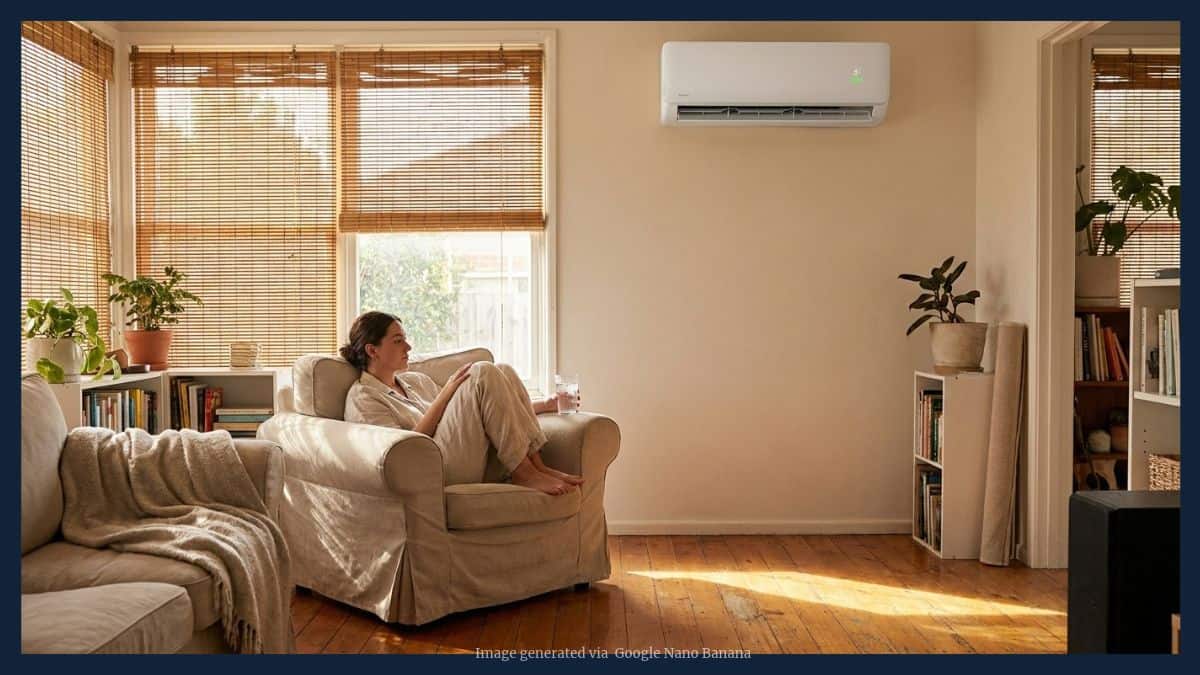
When outdoor temperatures climb, your home can become uncomfortably hot, especially if sunlight enters through exposed windows, your attic traps heat, or your cooling system struggles to keep up. Extreme indoor heat can also become a health concern, particularly for older adults, young children, and people with certain medical conditions.
To keep your house cool during extreme heat, reduce the amount of sunlight entering your home, limit indoor heat sources, use air conditioning efficiently, and improve ventilation when outdoor air is cooler. If your home becomes dangerously hot, prioritize your health and move to an air-conditioned location rather than relying on fans alone.
How to keep your house cool during extreme heat
- Close blinds, curtains, or shades on sun-exposed windows during the day.
- Use exterior shading, such as awnings or shutters, where practical.
- Open windows when outdoor air is cooler than indoor air, provided outdoor air quality and security allow it.
- Keep windows and doors closed when outdoor air is hotter than inside.
- Reduce heat from ovens, stovetops, lighting, and electronics.
- Maintain your air conditioner and replace or clean filters as recommended.
- Use fans only when they can provide effective cooling.
- Improve attic insulation and air sealing to reduce heat transfer.
- Find an air-conditioned location if your home becomes dangerously hot.
These measures can help reduce indoor temperatures, but they may not be enough during prolonged extreme heat or a power outage. The EPA and CDC recommend planning ahead for cooling and recognizing the signs of heat-related illness.
Block sunlight before it heats your home
Sunlight entering through windows can raise indoor temperatures, especially when it shines directly into a room for several hours.
One of the simplest ways to keep your house cooler is to prevent sunlight from entering in the first place.
Close blinds and curtains during the day
Cover windows that receive direct morning or afternoon sunlight.
You can use:
- Thermal curtains
- Blackout curtains
- Roller shades
- Blinds
- Window shutters
- Reflective window coverings
The most important windows to address are those receiving direct sunlight during the hottest parts of the day.
If your curtains or blinds are light-colored or designed to reflect sunlight, they may help reduce the amount of solar heat entering the room.
Consider exterior shading
Exterior shading can be more effective than indoor curtains because it blocks sunlight before it passes through the glass.
Options include:
- Window awnings
- Exterior shutters
- Outdoor shade screens
- Louvers
- Strategically placed shade trees
Awnings and exterior shading devices can reduce solar heat gain, particularly on windows exposed to strong afternoon sunlight.
For a long-term improvement, consider shading windows that receive substantial direct sun rather than installing expensive cooling equipment before addressing the source of the heat.
Open windows at the right time
Opening windows can help cool your home, but it depends on the temperature outside.
If outdoor air is cooler than indoor air, ventilation may help remove accumulated heat. If outdoor air is hotter, opening windows can bring more heat inside.
When should you open your windows?
A practical approach is:
| Outdoor Conditions | What to Do |
|---|---|
| Outside is cooler than indoors | Consider opening windows to release indoor heat |
| Outside is hotter than indoors | Keep windows closed to limit heat entering |
| Outdoor air quality is poor | Keep windows closed when possible |
| Outdoor air is cooler at night | Use secure ventilation to help cool the home |
| Outdoor humidity is high | Be cautious about bringing in humid air, especially if indoor humidity is already high |
If your home is warmer than the outdoor air in the evening, opening windows on opposite sides of the house may help create cross-ventilation.
However, do not leave windows open if doing so creates a security risk or allows smoke, dust, or other pollutants into your home.
Use ventilation strategically
If your home has windows on opposite sides, opening them when outdoor conditions are favorable may help move air through the rooms.
You can also use an exhaust fan to remove hot air from a room, provided the fan is designed for that purpose and outdoor conditions support ventilation.
In hot, humid climates, ventilation may not provide much cooling if the incoming air is both hot and humid. In those conditions, air conditioning and humidity control may be more effective.
Use fans properly
Fans can make a room feel more comfortable by moving air across your skin. They do not lower the actual air temperature of a room.
This distinction matters during extreme heat.
Use ceiling fans to improve comfort
A ceiling fan can help circulate air and make occupants feel cooler.
During warm weather, many ceiling fans should rotate counterclockwise when viewed from below, creating a downward airflow. Check the manufacturer’s instructions because fan designs vary.
A fan can help you feel comfortable while using air conditioning, potentially allowing you to adjust the thermostat to a slightly higher setting.
However, fans should not be treated as a substitute for air conditioning when indoor temperatures become dangerously high.
Use portable fans carefully
Portable fans can help move cooler air into a room or exhaust hot air when outdoor conditions are favorable.
But there is an important safety limitation.
The CDC advises that electric fans should only be used for cooling when indoor temperatures are below 90°F (32.2°C). At higher temperatures, a fan may increase body temperature rather than provide effective cooling.
If your home is hotter than this, seek a cooler environment rather than relying on a fan alone.
Reduce heat from appliances and electronics
Your home can become warmer even when the sun is not shining directly through the windows.
Appliances, cooking equipment, lighting, and electronics release heat into indoor spaces.
During extreme heat, reducing unnecessary heat sources can make a noticeable difference.
Avoid using the oven during the hottest part of the day
Ovens can release substantial heat into your kitchen.
Instead, consider:
- Preparing meals earlier in the day
- Using a microwave when appropriate
- Choosing meals that do not require cooking
- Cooking outdoors when safe and practical
- Using smaller appliances that generate less indoor heat
Avoid using outdoor grills, portable generators, or fuel-burning cooking equipment indoors. These can produce dangerous carbon monoxide.
Turn off unnecessary electronics
Computers, televisions, gaming systems, and other electronics generate heat while operating.
Turn off devices when they are not needed, especially in smaller rooms.
You can also reduce unnecessary lighting by using daylight when it does not cause excessive solar heating.
Limit laundry and other heat-producing activities
Dryers can release heat into the home, particularly if they are poorly vented.
If practical, run laundry during cooler hours or use an outdoor drying area.
Use your air conditioner efficiently
If your home has air conditioning, it is one of the most effective ways to reduce indoor heat during an extreme heat event.
However, an air conditioner may struggle if it is poorly maintained, incorrectly sized, or exposed to excessive heat entering through the building.
Check your air conditioner before extreme heat arrives
Before a heat wave, inspect your system for basic maintenance needs.
Check:
- Whether the air filter needs cleaning or replacement
- Whether the outdoor unit has adequate airflow
- Whether supply and return vents are unobstructed
- Whether the thermostat is working properly
- Whether the system is producing cool air
- Whether the condensate drain appears to be functioning
Follow the manufacturer’s maintenance instructions.
If the system is not cooling properly, has unusual noises, or repeatedly shuts down, arrange for a qualified HVAC technician to inspect it.
Keep the thermostat at a practical setting
Choose a temperature that keeps occupants comfortable and safe without unnecessarily overworking the system.
Avoid repeatedly lowering the thermostat far below your desired temperature in an attempt to cool the house faster. Most air conditioners do not cool more quickly simply because the thermostat is set much lower.
If you use a programmable or smart thermostat, consider adjusting settings around your household’s schedule while ensuring that indoor temperatures remain safe.
Keep doors and windows closed while cooling
When air conditioning is running, open windows can allow hot and humid air to enter.
Keep exterior doors and windows closed unless ventilation is necessary for indoor air quality or another safety reason.
Reduce heat entering through your attic and roof
Your roof and attic can contribute significantly to indoor heat, especially in homes with limited insulation or inadequate air sealing.
A hot attic can transfer heat into rooms below, making your cooling system work harder.
Check attic insulation
Insulation slows the transfer of heat between your attic and the living space.
If your attic insulation is damaged, insufficient, or unevenly installed, heat may pass into your home more easily.
Consider having an insulation professional assess your attic if:
- The upper floor becomes much hotter than the rest of the house.
- Your air conditioner struggles during sunny afternoons.
- You notice large temperature differences between rooms.
- Your attic has visible gaps or poorly insulated areas.
Seal attic air leaks
Air leaks around attic access panels, recessed lights, plumbing penetrations, and other openings can allow hot attic air to enter the living space.
Air sealing can help reduce unwanted heat transfer.
However, attic air sealing should be performed carefully. Do not block required ventilation openings or cover equipment that needs clearance.
Consider roof improvements
Depending on your home and climate, reflective roofing materials or a properly designed cool roof may reduce the amount of solar heat absorbed by the roof.
These improvements can be more expensive than basic window shading, so consider them as part of a broader home energy assessment.
Keep indoor humidity under control
Humidity can make hot weather feel more uncomfortable because it reduces how effectively sweat evaporates from your skin.
In humid climates, your home may feel hot and sticky even when the air conditioner is operating.
What can you do?
- Use air conditioning when appropriate.
- Repair plumbing leaks and other moisture sources.
- Use bathroom and kitchen exhaust fans when needed.
- Avoid bringing in excessively humid outdoor air when indoor humidity is already high.
- Consider a dehumidifier if indoor humidity remains elevated and the space is suitable for one.
A dehumidifier can remove moisture from indoor air, but it also releases heat into the room. In an already hot room, this may make the temperature problem worse.
If you use a dehumidifier, consider whether air conditioning or another moisture-control strategy would be more effective.
For more information, see our guide: Why Does My House Feel Humid With the AC On?
Cool down your home during a power outage
Extreme heat can place heavy demand on electrical systems and increase the risk of power outages.
If your air conditioner stops working, your home may heat up quickly.
What to do when the power goes out
- Close blinds and curtains on sun-exposed windows.
- Keep exterior doors and windows closed if outdoor air is hotter than indoors.
- Reduce heat-producing activities.
- Drink water and monitor household members for signs of heat illness.
- Identify an air-conditioned location where you can go if your home becomes too hot.
If outdoor air becomes cooler than indoor air, opening windows may help remove accumulated heat, provided outdoor air quality and security allow it.
Never use a generator indoors
Portable generators must be operated outdoors and away from doors, windows, and vents, following the manufacturer’s instructions.
Generators can produce carbon monoxide, a colorless and odorless gas that can be deadly.
Never use a generator in a home, garage, basement, or other enclosed or partially enclosed space.
Know when your home is too hot to stay in
A home can become dangerously hot even if it does not feel unbearable at first.
If indoor temperatures continue rising, especially during a prolonged heat wave or power outage, consider moving to an air-conditioned location.
Possible options include:
- A public cooling center
- A library
- A shopping center
- A community center
- A friend or family member’s air-conditioned home
People at higher risk of heat-related illness include older adults, young children, pregnant people, and individuals with certain medical conditions.
Check on household members, neighbors, and pets who may have difficulty responding to extreme heat.
Warning signs of heat-related illness
Symptoms may include:
- Heavy sweating
- Muscle cramps
- Headache
- Dizziness
- Weakness
- Nausea
- Confusion
Heat stroke is a medical emergency. If someone develops confusion, loss of consciousness, or other signs of severe heat illness, call emergency services immediately and begin appropriate cooling while waiting for help.
Do not wait for symptoms to become severe before seeking a cooler environment.
Frequently asked questions
If outdoor air is cooler than indoor air, opening windows may help release heat. If you have air conditioning, use it and keep exterior windows and doors closed. Closing sun-exposed blinds and reducing heat-producing activities can also help.
Block direct sunlight, use exterior shading, reduce heat from appliances, and ventilate when outdoor air is cooler than indoor air. If indoor temperatures become dangerously high, move to an air-conditioned location. Fans alone may not provide safe cooling during extreme heat.
Opening windows may help if outdoor air is cooler than the indoor air. Consider outdoor air quality, humidity, security, and local conditions before doing so.
Yes. Curtains, blinds, and shades can reduce the amount of sunlight entering through windows. Exterior shading is often more effective because it blocks sunlight before it passes through the glass.
A ceiling fan moves air and can make people feel cooler, but it does not lower the room’s actual air temperature. It may improve comfort when used appropriately, but it should not replace air conditioning or another safe cooling option during dangerous indoor heat.
Your home may absorb heat through the roof, walls, and windows. Poor insulation, air leaks, direct sunlight, and heat from appliances can also raise indoor temperatures. In some homes, inadequate ventilation or cooling system problems may contribute.
Yes. Insulation slows heat transfer from the attic into the living space. Air sealing and appropriate attic ventilation may also help, depending on the home’s design and climate.
Sources and references:
