
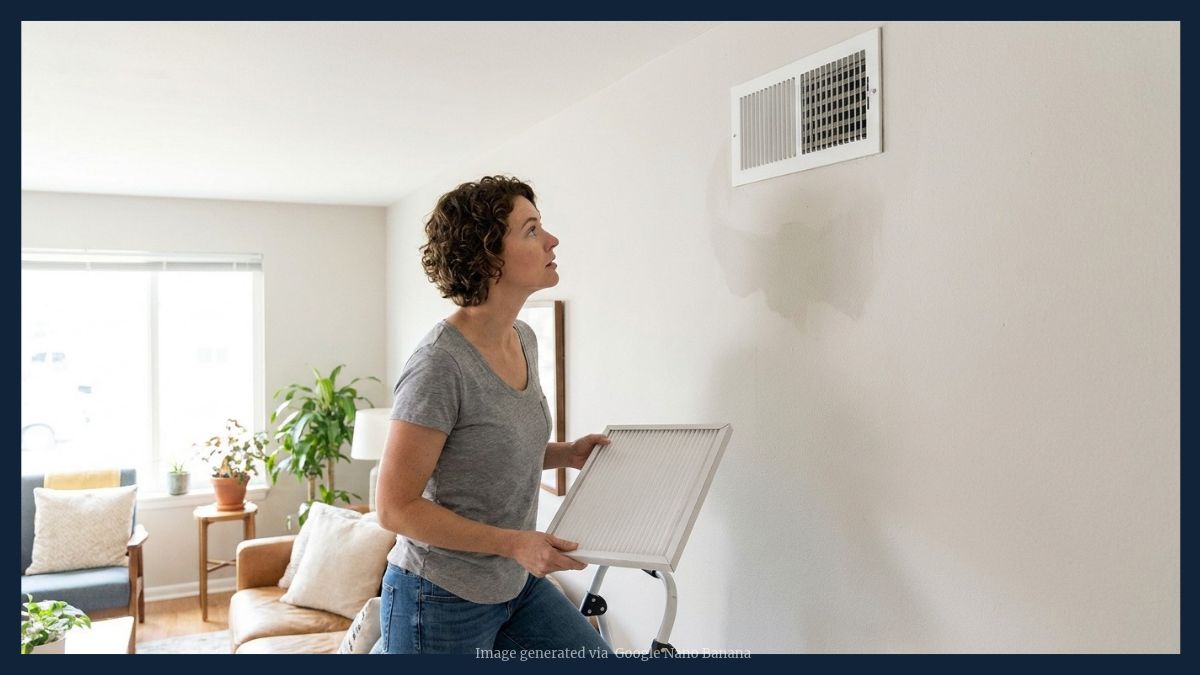
If your house smells musty whenever the air conditioner runs, moisture buildup inside the AC system is one of the first things to investigate. A dirty filter, damp evaporator coil, clogged condensate drain, standing water in the drain pan, or moisture inside the ductwork can create conditions that produce unpleasant odors.
A musty smell can suggest mold or another moisture problem, but the odor alone cannot confirm where mold is growing or identify its type.
- A musty odor that appears when the AC starts is a clue worth investigating.
- The indoor coil, drain pan, condensate line, filter, and ductwork are useful places to check.
- A damp basement or hidden water leak may be the real source.
- Replacing the filter may help, but it will not resolve a blocked drain or contaminated internal component.
- Do not run an HVAC system if you know or reasonably suspect it is contaminated with mold.
- Fix the moisture problem before attempting to eliminate the odor.
What causes a musty smell when the AC runs?
1. A dirty or damp air filter
The air filter collects airborne particles before air passes through the system. Over time, dust and debris can accumulate on the filter. If it becomes damp, the combination of moisture and trapped material may contribute to unpleasant odors.
Possible signs include:
- A visible layer of dust on the filter.
- A filter that smells musty when inspected.
- A filter that is wet or discolored.
- Reduced airflow from the vents.
What to do: Turn the system off as directed by the manufacturer’s instructions and inspect the accessible filter. Replace disposable filters or clean reusable ones according to the manual. Make sure a washable filter is completely dry before reinstalling it.
If the filter is wet, investigate why. A wet filter is not normal and may indicate a drainage, condensation, or other moisture problem.
1.2 A damp or dirty evaporator coil
The evaporator coil is the indoor component that cools the air. During normal cooling, moisture condenses on its cold surface and should drain into a collection pan.
The coil naturally becomes wet during operation. Problems can arise when moisture combines with accumulated dust and debris or when drainage and maintenance are inadequate.
Clues may include:
- A musty odor coming directly from supply vents.
- A smell that appears shortly after cooling starts.
- An odor that returns soon after filter replacement.
- Reduced cooling or airflow.
What to do: Check the accessible filter and note whether the smell comes from the vents. Coil inspection and cleaning may require removing equipment panels, so leave internal cleaning to a qualified technician unless the manufacturer specifically permits the task as routine homeowner maintenance.
Do not spray household cleaners, bleach, or fragrance products onto the coil.
1.3 A clogged condensate drain line
Air conditioners remove moisture from indoor air. The resulting condensate normally drains through a designated drain line.
If that line becomes blocked, water may collect in the drain pan, overflow, or trigger a safety switch.
Warning signs include:
- A puddle near the indoor unit.
- Water stains on a nearby wall or ceiling.
- A musty odor around the equipment.
- Visible water in an accessible drain pan.
- The AC unexpectedly stopping, on systems with a condensate safety switch.
What to do: Do not open electrical compartments or dismantle the unit. If water is leaking or the drain appears blocked, contact an HVAC professional to inspect the drain line, pan, and related components.
A blocked drain is particularly important to address because it can lead to water damage beyond the AC itself.
1.4 Standing water or a damaged drain pan
The drain pan collects moisture from the evaporator coil before it exits through the condensate drain. A pan that is dirty, cracked, incorrectly positioned, or unable to drain properly can retain water.
Standing water and accumulated debris can contribute to persistent odors and may support microbial growth.
Look for:
- Water around the indoor unit.
- Rust or visible deterioration on accessible parts.
- Signs of overflow.
- Damp flooring, drywall, or insulation nearby.
What to do: Arrange an inspection if the pan is damaged, water remains in it, or the surrounding area is wet. A technician can determine whether the problem is a blockage, damaged pan, drainage issue, or another fault.
1.5 Mold or microbial growth inside the AC
Mold can grow where moisture remains available, including on some components inside an air handler or air-conditioning unit. Microbial growth may produce a musty odor that becomes noticeable when air passes through the system.
Possible signs include:
- A persistent musty smell from the vents.
- Visible growth on accessible surfaces.
- Recurring odor despite filter changes.
- Evidence of water leakage or prolonged dampness.
These signs do not prove that mold is inside the equipment. A musty odor may also come from another damp area of the house.
What to do: If you suspect contamination inside the AC, arrange a professional inspection. The U.S. Environmental Protection Agency advises against operating HVAC equipment known or suspected to be contaminated with mold because the system may distribute contamination through the building.
1.6 Damp or contaminated ductwork
Ductwork carries conditioned air through the house. Moisture can enter ducts through leaks, condensation, poorly insulated sections, or other building problems.
The risk may be greater when ducts run through humid attics, crawl spaces, or other areas where warm, moist air meets cold surfaces.
Potential clues include:
- A musty smell from several vents.
- Visible moisture or water staining near ducts.
- Damp or deteriorating duct insulation.
- An odor that is strongest in rooms supplied by a particular duct run.
What to do: Ask a qualified HVAC professional to investigate moisture, duct leakage, insulation, and visible contamination.
Do not assume that whole-house duct cleaning is automatically necessary. The EPA does not recommend routine duct cleaning for every home, but moisture, substantial debris, or confirmed mold contamination warrants appropriate investigation and remediation.
1.7 High indoor humidity
High humidity can contribute to musty odors even when the AC itself is not the original source.
Moisture may accumulate in:
- Basements and crawl spaces.
- Bathrooms and laundry areas.
- Closets with limited airflow.
- Areas behind large pieces of furniture.
- Rooms with leaks or condensation on exterior walls.
When the AC starts, it may circulate air from these areas, making the smell more noticeable.
What to do: Measure indoor relative humidity with a hygrometer. The EPA recommends keeping indoor humidity below 60%, ideally between 30% and 50% where practical. Investigate leaks, condensation, and other sources of excess moisture instead of relying solely on the AC to manage them.
1.8 A musty basement, carpet, or hidden wall leak
Sometimes the AC is blamed simply because the odor becomes obvious when the blower starts.
The real source may be:
- Damp carpet or carpet padding.
- Water-damaged drywall.
- A leaking pipe inside a wall.
- A humid basement or crawl space.
- A wet area around a window.
- Mold growth behind furniture or wall coverings.
What to do: Compare the smell when the AC is off with the smell when it is running. Check whether the odor is strongest near a particular room, wall, floor, or return-air grille.
If the odor persists even when the AC is off, investigate the wider house rather than focusing only on the equipment.
How to identify where the musty smell is coming from
The pattern of the odor can help narrow down the possible source.
| What you notice | Possible explanation | Next step |
|---|---|---|
| Smell comes directly from one or more AC vents | Possible issue with the indoor unit or ductwork | Check the filter and arrange inspection if it persists |
| Smell is strongest near the indoor AC unit | Possible drain, pan, coil, or nearby moisture issue | Look for visible water without opening the equipment |
| Smell appears throughout the house when the blower starts | The system may be circulating air from a damp area or affected component | Check return-air areas and investigate the source |
| Smell is strongest in the basement | Damp materials, foundation moisture, or a basement source | Inspect for water intrusion and measure humidity |
| Smell remains when the AC is off | Possible source outside the AC | Inspect damp rooms, carpets, walls, and plumbing |
| Smell follows rain | Possible roof, window, foundation, or exterior water entry | Check for new stains or dampness after rainfall |
| Smell returns soon after filter replacement | The filter may not be the underlying cause | Have the coil, drain pan, drain line, and ducts assessed |
| Musty smell occurs with water leaking from the unit | Possible condensate drainage or equipment problem | Stop troubleshooting internally and arrange service |
These patterns are clues, not definitive diagnoses. More than one moisture source can exist at the same time.
What to check before calling an HVAC technician
You can perform a basic inspection without dismantling the equipment.
Step 1: Determine when the smell occurs
Note whether the odor:
- Appears immediately when the AC starts.
- Develops after the system has been running.
- Occurs only in one room.
- Continues after the AC is turned off.
- Is stronger after rain or periods of high humidity.
This information helps distinguish a possible AC-related odor from a broader moisture problem.
Step 2: Check the air filter
Follow the manufacturer’s instructions to locate and inspect the filter.
If it is dirty, replace or clean it as directed. If it is wet, do not simply reinstall it and ignore the moisture. Investigate the cause of the wetness.
Step 3: Inspect accessible vents and return-air grilles
Check for visible dust, moisture, or staining around accessible vents. Make sure furniture and curtains are not blocking airflow.
Do not insert tools into ducts or attempt to clean inaccessible internal components.
Step 4: Look for visible water around the AC
From a safe position, inspect the area around the indoor unit for puddles, damp flooring, water stains, or signs of overflow.
Keep away from wet electrical equipment. If water is near wiring or electrical components, stop the inspection and arrange qualified assistance.
Step 5: Check for moisture elsewhere in the house
Inspect areas where moisture commonly develops:
- Under sinks and around plumbing fixtures.
- Near washing machines and refrigerators with water connections.
- Around windows and exterior walls.
- In basements and crawl spaces that are safely accessible.
- Around bathroom and kitchen surfaces.
- Near ceiling stains or previously repaired leaks.
If the smell is strongest in one location, document it and look for related signs of dampness.
Step 6: Decide whether to stop using the AC
If the odor is mild and brief at the start of seasonal use, monitor whether it disappears. However, a persistent musty odor, suspected mold contamination, water leakage, or visible growth should not be dismissed.
If you know or reasonably suspect that the HVAC system is contaminated with mold, do not continue running it while waiting for the problem to be assessed. Arrange professional help.
How to get rid of a musty AC smell
The right solution depends on the source. Treating the odor without fixing the moisture problem may provide only temporary relief.
Replace or clean the filter
A dirty filter can contribute to odor and airflow problems. Use the correct filter type and follow the equipment manufacturer’s replacement or cleaning instructions.
This is a sensible first step, but it will not resolve mold or standing water deeper inside the system.
Have the evaporator coil inspected and cleaned
If the odor originates inside the indoor unit, a technician can inspect the coil and nearby components for dirt, microbial growth, and drainage issues.
Cleaning methods should be suitable for the equipment. Avoid applying bleach, household disinfectants, perfumes, or unapproved chemical products to internal AC components.
Clear the condensate drainage problem
If the drain line is blocked or the pan is not draining properly, the source of the problem needs to be corrected.
Depending on the findings, the repair may involve clearing the line, repairing or replacing a damaged pan, or correcting an installation or drainage issue.
Address contaminated or damp ductwork
If inspection confirms mold growth or persistent moisture inside the duct system, the appropriate response depends on the affected material and the extent of contamination.
Some hard surfaces may be cleanable using appropriate methods. Porous insulation that is moldy or water-damaged may require removal and replacement.
Avoid paying for generalized duct cleaning without a clear explanation of the problem and the work proposed.
Correct the humidity problem
If the home is consistently humid, investigate:
- Bathroom and kitchen exhaust ventilation.
- Plumbing or exterior water leaks.
- Basement and crawl-space moisture.
- Poorly insulated ducts that develop condensation.
- Indoor activities that add excess moisture.
- Gaps that allow humid outdoor air into the home.
A dehumidifier may help manage humidity, but it will not repair a leak or remove contamination from an AC component.
Avoid masking the odor
Air fresheners, scented sprays, and fragrances may cover the smell temporarily without addressing its source. Spraying products into the AC can also damage components or expose occupants to substances not intended for inhalation.
Find and correct the underlying problem instead.
When should you hire an HVAC professional?
- The musty smell persists after checking or replacing the filter.
- The odor returns soon after cleaning.
- Water is leaking from the indoor unit.
- You see signs of standing water or a blocked drain.
- You suspect mold inside the coil, air handler, or ductwork.
- Airflow or cooling performance has changed.
- The smell affects multiple rooms when the system operates.
- You cannot identify the source of the odor.
A technician should inspect the likely source and explain the findings before recommending repairs or cleaning.
What to ask the technician
- Where does the odor appear to originate?
- Is there evidence of standing water, a blocked drain, or a damaged drain pan?
- Does the evaporator coil or air handler require cleaning?
- Is there evidence of moisture or contamination inside the ductwork?
- Could condensation, duct leakage, or insulation problems be contributing?
- What caused the moisture, and how will the repair prevent the odor from returning?
- Is any affected material damaged enough to require replacement?
If the odor appears to come from a basement, wall cavity, carpet, or another part of the home, you may also need a moisture or building professional.
Can a musty AC smell mean there is mold?
Yes, it can, but the smell alone cannot confirm mold or establish where it is growing.
Mold can develop on damp materials, including some AC components, duct insulation, drywall, carpets, and other building materials. The EPA notes that a moldy odor should prompt investigation for possible mold growth and moisture problems.
If you suspect mold inside the HVAC system, avoid running the system until it has been assessed. If mold is found, the moisture source must be corrected and the affected materials handled appropriately.
Do not rely on the color or smell to identify a mold species. Routine air sampling is not always necessary to determine whether a visible moisture or mold problem needs attention; the inspection and remediation approach should depend on the circumstances.
For further guidance, see the EPA’s A Brief Guide to Mold, Moisture and Your Home.
How to prevent musty odors from returning
Maintain the air filter
Inspect the filter according to the manufacturer’s schedule and replace or clean it as needed. A clean filter supports appropriate airflow but is not a substitute for system maintenance.
Keep condensate drainage working properly
Have the drain pan and condensate line checked during appropriate maintenance. Address leaks, blockages, and standing water promptly.
Schedule routine AC maintenance
Regular maintenance can help identify drainage, coil, airflow, and other problems before they lead to persistent odors or water damage.
Control indoor humidity
Measure humidity and investigate persistent readings above the recommended range. Use appropriate exhaust ventilation in bathrooms and kitchens, and address moisture entering from outdoors or leaking plumbing.
Check for water damage around the home
Inspect areas near windows, ceilings, plumbing, basements, and exterior walls. Repair leaks and dry affected materials promptly.
Address odors early
If a musty smell repeatedly returns, do not assume that the unit simply needs another filter change. Repeated odors often mean that the original moisture or contamination problem has not been resolved.
Frequently asked questions
The AC may be circulating air from a damp area or passing air over a wet or contaminated component. Possible sources include the evaporator coil, drain pan, condensate line, ductwork, or a damp room connected to the return-air system. Compare the odor when the AC is off and on, and investigate persistent smells.
A musty smell does not establish a specific health risk, but it can indicate moisture or possible mold growth that deserves investigation. If the odor is persistent, the system may be contaminated, or occupants develop symptoms they associate with the environment, seek appropriate professional advice.
It may help if the filter is dirty and contributing to the odor. If the smell comes from a damp coil, blocked drain, standing water, contaminated ductwork, or mold elsewhere in the house, replacing the filter alone will not solve the problem.
Yes. A blocked condensate drain can allow water to collect in the drain pan or overflow. Persistent moisture can contribute to odors and water damage. If you notice leakage or suspect a blockage, arrange an inspection rather than dismantling the equipment.
No. Do not spray bleach or household cleaning products into the AC or ductwork. These products may damage equipment and create exposure risks. Use only manufacturer-approved maintenance methods, and have internal contamination assessed by a qualified professional.
Not automatically. First determine whether the odor originates in the ducts, the AC unit, or another part of the house. The EPA does not recommend routine duct cleaning for every home, but confirmed mold contamination, substantial debris, or moisture problems may require targeted professional action.
The initial airflow may carry a concentrated odor from a damp or dirty component, and the smell may become less noticeable as the system runs. This does not prove that the underlying issue has disappeared. If the odor returns regularly, investigate its source.
Yes. Damp carpets, basements, crawl spaces, hidden plumbing leaks, and water-damaged walls can all produce musty odors. The AC may simply circulate that air through the house. Check the location of the strongest odor and look for signs of moisture elsewhere.
There is no single schedule that applies to every system. Filter maintenance should follow the manufacturer’s instructions, while the coil, drain pan, condensate line, and other internal components should be inspected and maintained according to the equipment, usage, climate, and observed condition. Persistent odors require investigation rather than cleaning by schedule alone.
Sources and references:
- U.S. Environmental Protection Agency — What Does Mold Smell Like?
https://www.epa.gov/mold/what-does-mold-smell - U.S. Environmental Protection Agency — A Brief Guide to Mold, Moisture and Your Home
https://www.epa.gov/mold/brief-guide-mold-moisture-and-your-home - U.S. Environmental Protection Agency — Should You Have the Air Ducts in Your Home Cleaned?
https://www.epa.gov/indoor-air-quality-iaq/should-you-have-air-ducts-your-home-cleaned - U.S. Environmental Protection Agency — Mold Course, Chapter 9
https://www.epa.gov/mold/mold-course-chapter-9 - Trane — AC Drain Line Clogged Symptoms
https://www.trane.com/residential/en/resources/troubleshooting/air-conditioners/ac-drain-line-clogged/
